Plumber website design that splits the 10pm call.
Websites for plumbers have to sort the job first. A burst pipe is a call-out fee plus labour. A dead hot-water unit is a Rheem or Rinnai swap. A gas smell is a permit check. Put the fee and the right ticket on the first screen or the 10pm job rings the next van. Builds cost A$500 to A$1,000; see pricing.

// the problem
What a 10pm plumbing call needs on the first screen.
Four jobs, one services grid
A burst copper, a cold shower, a gas smell and a booked mixer for Tuesday are four different searches and four different clocks. Dumping them onto one wrench-icon grid means the 10pm caller scrolls past heat pumps while the hot-water buyer lands on an emergency banner. Split the paths. The form that works for a Tuesday tap set loses the ceiling leak.
Plumbing licence treated as a gas permit
In WA a plumbing contractor licence and a gasfitting permit are separate tickets, and the buyer with a suspected leak at the meter is looking for the second one. Advertising 'licensed plumber and gas fitter' on one badge, without both numbers, is how that careful owner keeps scrolling. Publish each credential on the work it actually covers, or leave out gas work you cannot certify.
Call-out fee missing from the page
Buyers compare a weekday call-out fee against an after-hours one before they ring. They already know labour is extra. A site that hides the fee behind 'free quote' loses the leak to the plumber who printed both numbers next to the phone. The figure does not have to be the final invoice. It has to be a number a 10pm search can use.
Backflow testing buried under commercial
Testable devices such as an RPZD need periodic testing and a report back to Water Corporation. That is recurring work with a due date, not a one-off call-out. Facilities managers search 'backflow testing Perth' and skip crews who hid it under a generic commercial list. Give testing its own page, name the device classes you actually test, and say how the certificate is lodged.
A Perth owner with water through the ceiling does not search the same way as someone with a cold shower, a gas smell at the meter, or a mixer booked for Tuesday.
“Emergency plumber near me” at 10pm is a tap on a number. “Rheem 315 litre replacement Perth” is a from-rate and a cylinder they already typed. “Gas leak plumber” is a permit check before the door opens. “Backflow testing Water Corporation” is a facilities manager with a due date. Most plumbing sites still dump those jobs onto one wrench-icon grid and a contact form, so the burst-pipe caller scrolls past heat pumps and the booked hot-water job sits under an after-hours banner. The fee that actually moves the 10pm job is a weekday call-out fee and an after-hours one, printed next to the phone, with labour and parts left as quote items. Hide that, and the leak rings the next van that showed the number.
In WA the credentials are separate, and the site should keep them apart. A plumbing contractor’s licence covers water supply, sanitary and drainage plumbing. Gasfitting needs a separate gasfitting permit. A site that stamps “licensed plumber and gas fitter” on every page, with one number or none, tells a careful owner you might not be allowed near the appliance. Keep gas on its own URL: pipework, domestic appliances, gas hot water, and the permit number at the top of that path. Water work can then talk AS/NZS 3500, the plumbing standard WA applies with local changes, without borrowing gas language. The plumbing contractor’s licence number belongs in the header and footer of every page, and the guide to licence numbers on WA tradie websites covers where each number can sit. This is general information about what to show on a website, not legal advice: confirm the current requirements with Building and Energy before you publish.
In the Perth tradie website study, 42 of the 53 Perth and WA plumber homepages I checked by hand in October 2026 (79%) showed a PL licence number, as text or in an image.
Backflow sits on a third path because an RPZD test is recurring revenue with a test report lodged with Water Corporation, not a cousin of a blocked gully. If you do not hold the gas permit or the tester accreditation, omit that work from the site rather than implying it in a badge. A booked Tuesday mixer can live on a quieter path with photos of your own tapware installs. It should not compete with a ceiling leak for the same H1.
The rest of a useful plumbing site follows the product and the pipe. Hot water pages should use the names buyers already search (Rheem, Rinnai, Bosch, Dux) and separate storage, continuous flow and heat pump, with a like-for-like from-rate for a swap and a quote path when the flue, gas size or switchboard is in play. Winter is when those cylinders get searched. Summer is leaking valves, irrigation and evaporative units. Blocked-drain pages should say CCTV and jetting, not “we clear drains”.
Suburb copy should mention the local stock: galvanised and tired copper in older coastal brick, terracotta and root invasion inside the older grid, storage cylinders in 90s estates. Availability has to match the van. If you are not on the tools at 10pm, do not run an emergency banner that promises it. If you are, the first screen is the licence, the gas permit where it applies, the two call-out figures, and a number that actually answers.
Website design for plumbers comes down to the clock on the job, the ticket that covers it and a call-out figure a customer can compare. Once the site is live, the monthly work on those four searches, from the Business Profile to Search Console, is set out on SEO for plumbers. Where the website sits among the rest of a plumbing business’s marketing, from the free profile to paid leads, is covered in marketing for plumbers.
// built by Kovus
More client sites built by Kovus.
The plumbing builds on this page are Donza Plumbing and AquaCore Plumbing. These are client sites for other trades and a greengrocer, each linked to its case study.
 Metal roofing and cladding McDonald Roofing Company Wangara, Perth 12 service-area pages grouped into three Perth regions. Read the case study
 Exposed aggregate and honed concrete CJH Concrete Currambine, Perth
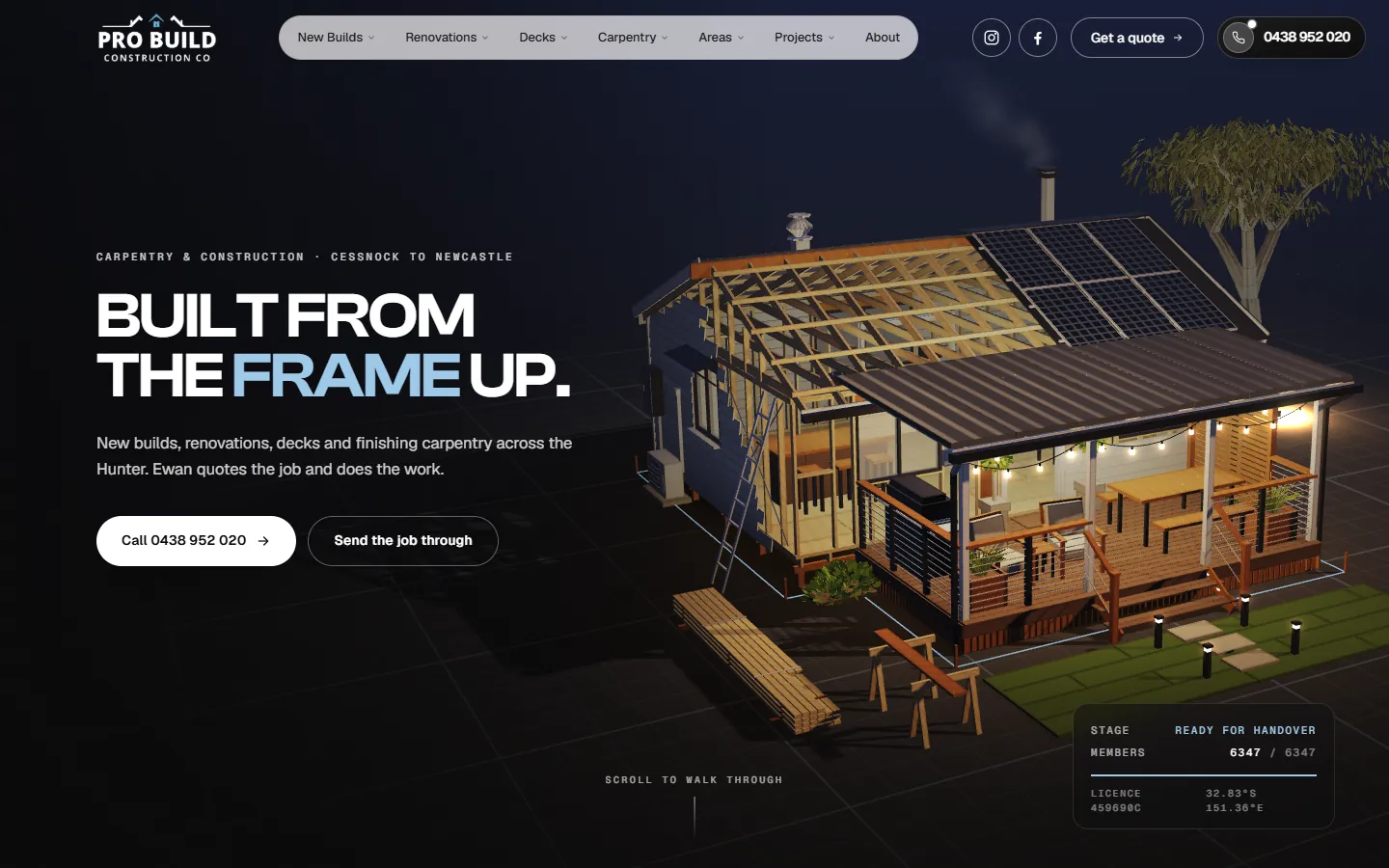 Carpentry and construction Probuild Construction Co Cessnock, NSW
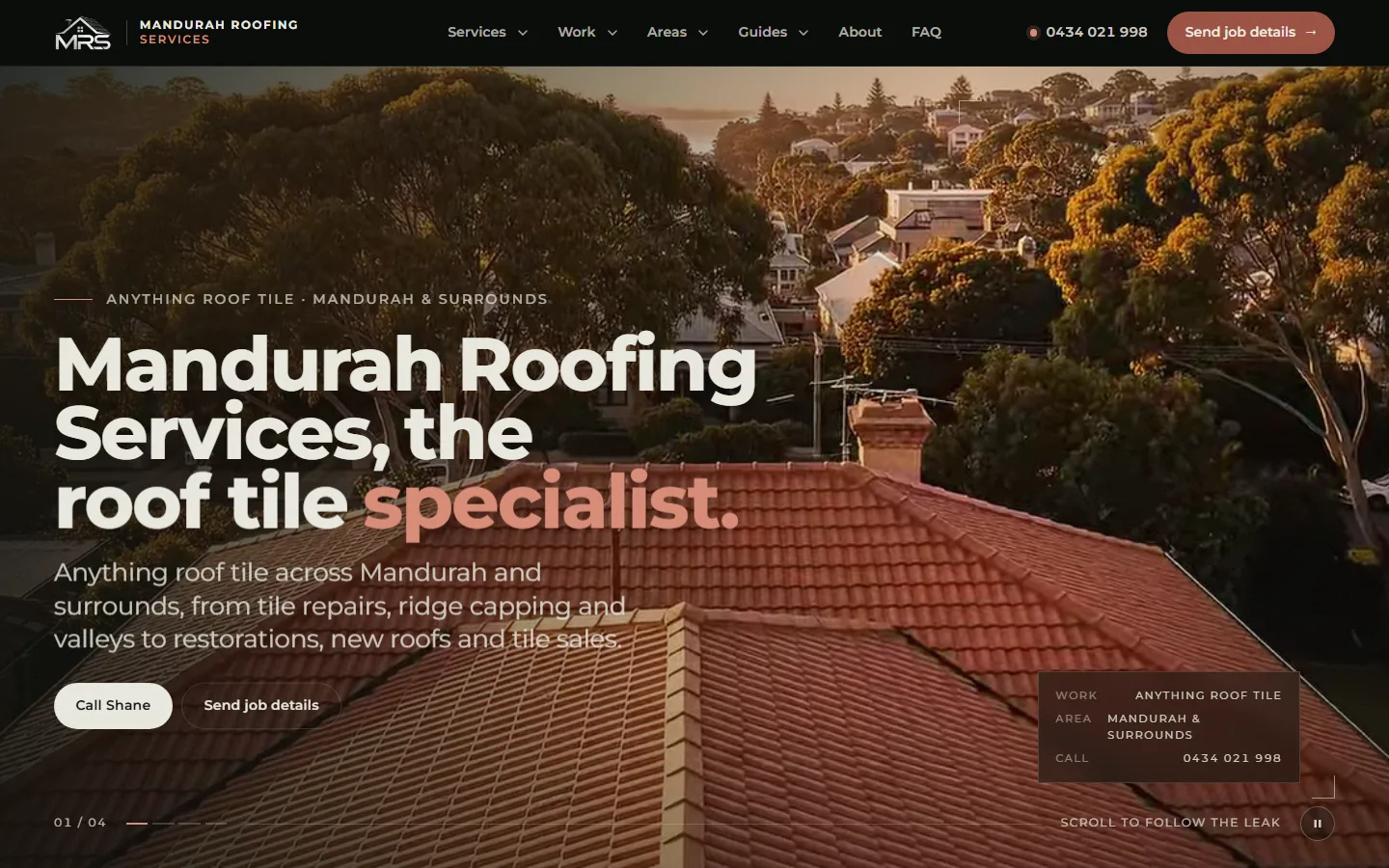 Roof tile repairs and restorations Mandurah Roofing Services Mandurah, WA
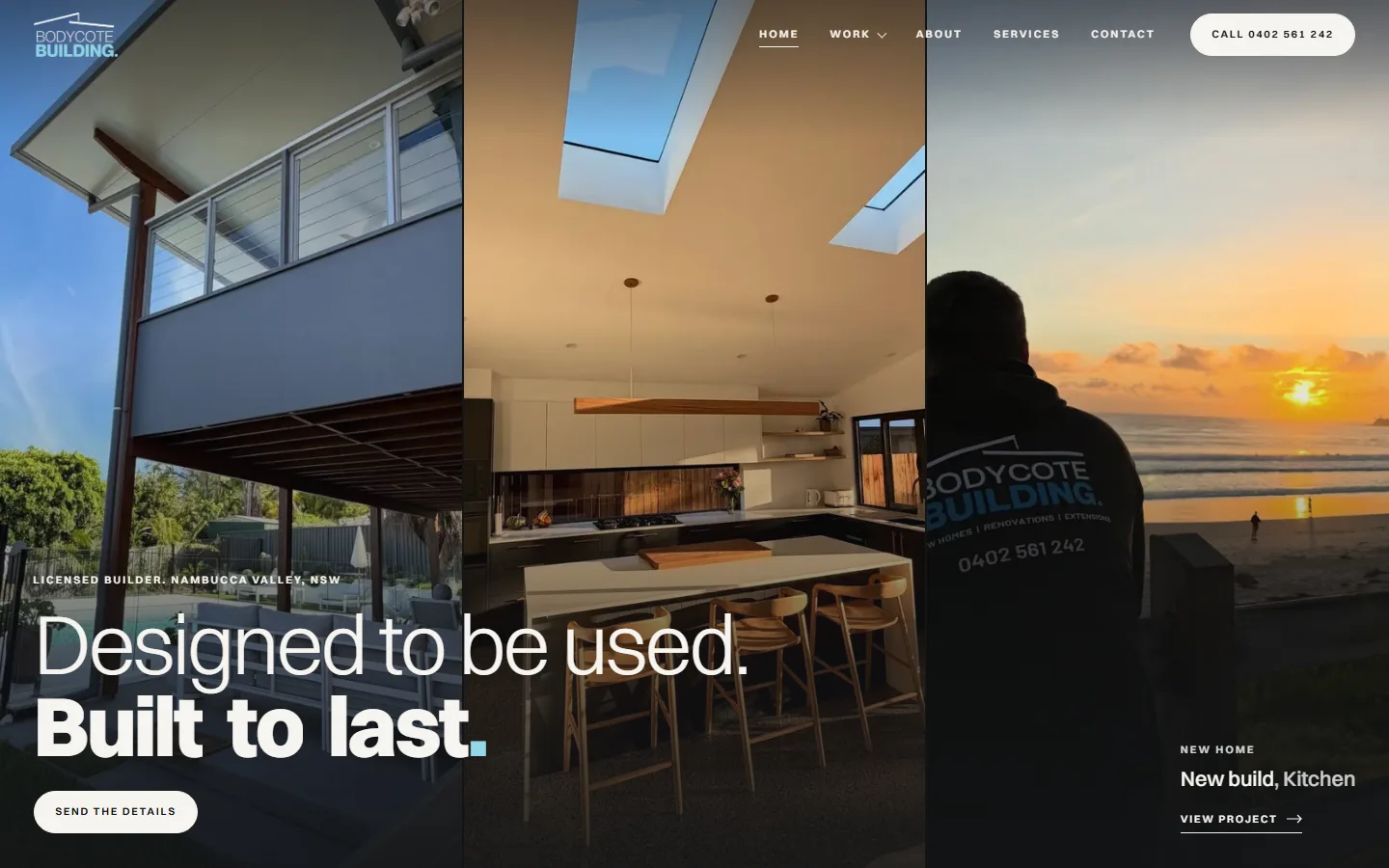 Licensed builder Bodycote Building Nambucca Valley, NSW
 Independent greengrocer The Fruit Basket Mount Pleasant, Perth
// the numbers
Checked before the first 10pm call, measured from launch.
Mobile, accessibility and technical search checks recorded before launch
/ Launch QA
Agreed enquiry events and available search data reported against the baseline
/ Client reporting
// prices and terms
What a website for plumbers costs.
- Website build
- A$500 to A$1,000, quoted in writing for the pages and integrations the business needs. A Premium build for a bigger site starts at A$1,000. What Premium covers.
- Hosting and edits
- A$97 a month covers hosting, security, backups and unlimited edits. What website maintenance covers.
- SEO and Google Business Profile
- From A$197 a month, adding Business Profile work, Search Console, directory listings, review requests and a monthly report. SEO for plumbers.
A quote-scoped one-off build is available without ongoing services, which are quoted separately. The client owns the website, content, domain and source code. Optional ongoing services are month-to-month with no minimum term. The client may cancel at any time, effective at the end of the current paid month. Full pricing and terms.
// straight answers
What plumbers and gas fitters ask before a quote.
- Should a Perth plumbing website show the weekday and 10pm call-out fees?
- Yes, if you want the after-hours job. Publish both fees next to the number, and say what the fee covers before anyone arrives. Labour, parts and a Rheem or Rinnai unit stay quote items. The call-out is the figure a burst-pipe search is trying to compare.
- How should a plumbing site show gas work and the gas permit?
- On its own page, with the gasfitting permit number at the top of that page and beside the plumbing licence in the footer. Gas pipework, appliances and gas hot water read better apart from water work, because the buyer is checking a different ticket. If you do not hold a gas permit, leave gas appliances, gas pipework and gas hot water off the site rather than implying the work. Building and Energy's gasfitting permit page sets out the permit classes, so check it before the gas page goes live.
- Do burst pipes, hot water and blocked drains need separate pages?
- Yes, because the search and the clock are different. Burst and leak work is a tap-to-call path with a call-out. Hot water is a product page for storage, continuous flow and heat pump units people already type (Rheem, Rinnai, Bosch, Dux). Blocked drains are CCTV and jetting, often booked next day. One services list cannot rank for all three.
- Is backflow testing worth its own URL on a plumbing website?
- Yes if you lodge tests with Water Corporation. An RPZD or other testable device is a calendar job, not an emergency. A dedicated page can name the device, the report, and a from-rate for a single test so a strata manager does not have to decode a generic commercial paragraph.
- What belongs on a plumbing suburb page in Perth besides the suburb name?
- The pipe stock and the failure that actually happens there. Older coastal brick still carries galvanised and ageing copper. 90s estates are full of storage cylinders that die in winter. Inner-suburban terracotta drains pick up root invasion. Name that, then link to the matching service. A footer list of suburbs is not a page.
- How much does a website for plumbers cost?
- A standard plumbing build costs A$500 to A$1,000, quoted in writing on the pages the business needs: burst pipes, hot water, blocked drains, gas work and the suburbs you cover. A Premium build, for a bigger site built to a higher finish, starts at A$1,000. Ongoing work is optional: A$97 a month covers hosting, security, backups and unlimited edits, and from A$197 a month adds SEO and Google Business Profile work.
- Does the plumber own the website, or is it rented?
- The plumber owns it. The client owns the website, content, domain and source code from launch. That includes the job and suburb pages, the photos, and the licence and gas permit numbers shown on them. The monthly plans are month to month with no minimum term, and cancelling takes effect at the end of the current paid month.
- Will the site rank for hot water and blocked drain searches?
- No quote includes a ranking, because Google decides that. What the build controls is the page Google reads: urgent calls split from planned jobs, and hot water, drains and gas on pages of their own, with structured data and a fast mobile layout underneath. After launch, the SEO plan keeps the Business Profile, directory listings and review requests current and checks Search Console every month, with a report on what changed.
// the framework
Scope the clock on the job, not a mixed wrench grid.
A plumbing and gas site built around the clock on the job rather than a mixed services grid. How the five scoped areas work.
The same build sits behind all Kovus websites for tradies, scoped here to plumbers.
// practical guides
Field guides for plumbing and gas
- Marketing for Plumbers in Australia: What to Do FirstMarketing for plumbers in Australia, in order: the free Google profile, the hours you answer, job and suburb pages, licences, reviews, then paid leads.
- Plumber Website Design: 10 Examples from Real Plumbing SitesPlumber website design in 10 examples from two live Australian plumbing sites, each with a screenshot, what it shows and why a plumber's customer needs it.
- What a Tradie Website Needs to Support Local Search in AustraliaA practical framework for tradie website pages, enquiry paths, machine-readable facts, useful content and measurement, with links to every trade guide.
- Tradie and Local Business Website Examples: Six Kovus TeardownsTradie website examples: six real Australian builds, five trades and a greengrocer, annotated for the hero, proof, navigation, local SEO and enquiries.
// shipped work
Shipped plumbing work
Donza Plumbing
A Mannering Park plumbing and gas company running quotes entirely through Instagram DMs, with no website at all, went live on its own domain with 139 pages covering 100 suburbs from the northern Central Coast through Lake Macquarie to Newcastle, with its NSW Fair Trading accreditations published as structured data. The site has since grown to 150 pages and 103 suburbs.
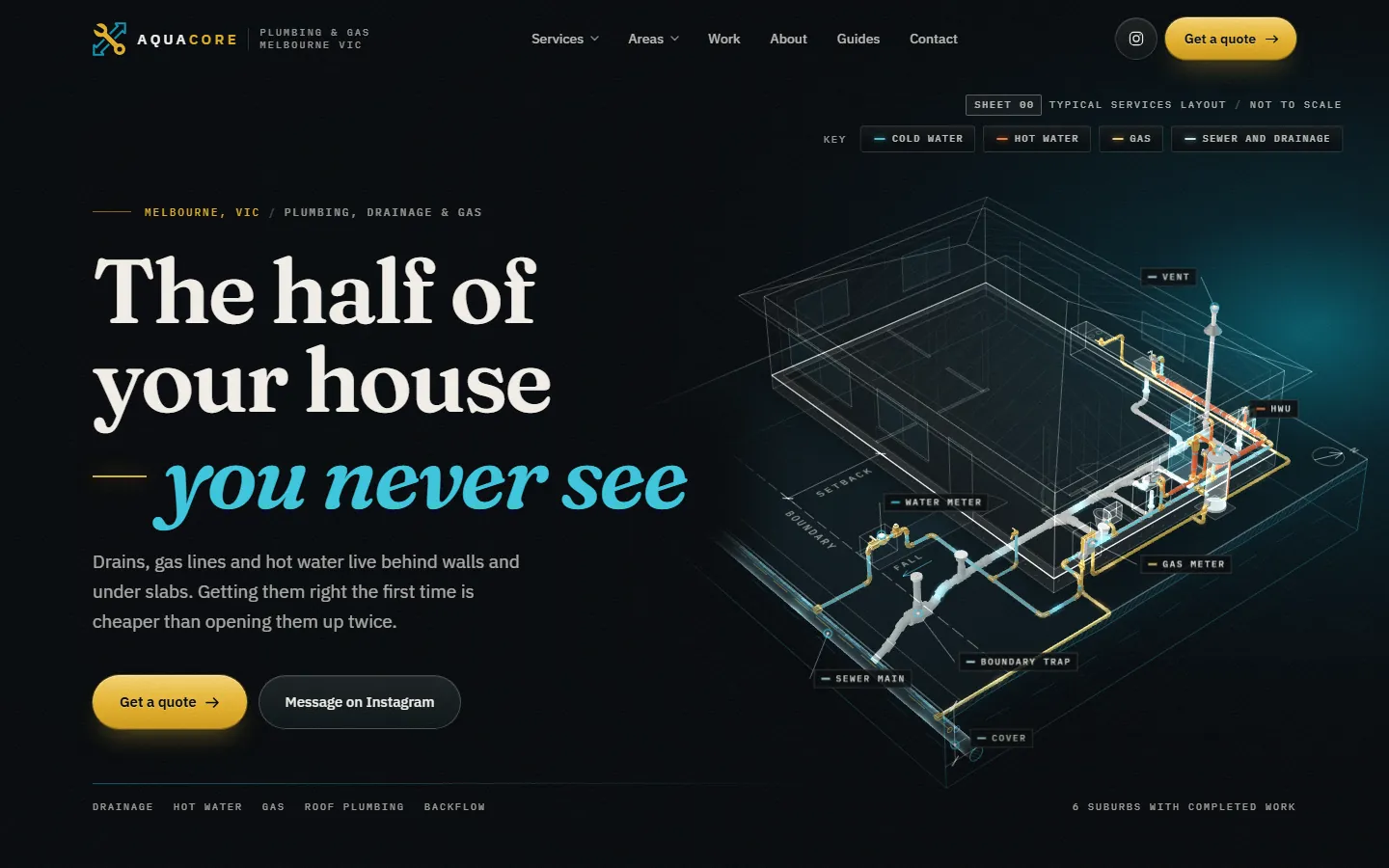
AquaCore Plumbing
A Melbourne plumbing company that took bookings only through Instagram direct messages, with no website, no Google Business Profile and no published phone or email, went live at aquacore-plumbing.com.au with 43 pages: eight service pages, 22 suburb pages, five guides and a job record linked to the original posts.
// built from Perth
A coastal copper leak is not a 90s-estate cylinder swap.
Kovus is based in Perth. How plumbing search splits across the metro is covered on Web Design Perth.
Scope a plumbing site that splits the 10pm call.
Send your licence and gas permit numbers, the suburbs you cover and the jobs you want more of. Josh comes back with a written quote for the pages that split them.
Or call Josh on 0423 155 979 or email josh@kovus.dev.