// joondalup and the northern corridor
Web design in Joondalup for businesses that get found by the suburb, not the city.
Someone in Kingsley looking for a trade does not type Perth. They type the suburb, or they let their phone do it for them. A site built for the whole metro area competes with every agency in the state and lands nowhere in particular. A site built for the northern corridor competes where the customer actually is. Website design for a Joondalup business costs A$500 to A$1,000 to build; see pricing.
/ How local search behaves up here
Local SEO is proximity plus relevance. Your address alone is not a strategy.
A local search returns two different things stacked on one screen. The map listings at the top, the short list of businesses shown with pins on a map, are drawn from Google Business Profiles and weigh how close the business is to the person searching, alongside how complete and how active that profile is. The organic results underneath are drawn from web pages, and they weigh what the page is about and whether anything credible points at it. They are separate systems with separate inputs, and a business can sit first in one and nowhere in the other.
Proximity is the part most owners underestimate. A business operating out of Wangara can be excellent and still not appear for someone standing in Sorrento, because a closer competitor with a filled-in profile is a better answer to that particular search. You cannot argue with distance. What you can do is give Google pages that make the case for the areas you genuinely serve, so that when proximity is not the deciding factor, relevance is.
That is why a Joondalup site that works is narrower than the marketing version. Twenty near-identical suburb pages built out of a template are the kind of copied page Google's own spam policies warn against. The pages worth building are the ones that can say something specific: the jobs done in Iluka, the access constraints in the older Duncraig streets, the travel time that makes Alkimos viable or not, the questions that only come up in a beachside suburb. Where none of that exists yet, the suburb belongs in the service area rather than in a page of its own.
The City of Joondalup sits in Perth's north-west corridor, with its southern boundary 15 kilometres from the Perth CBD. It is close enough to share a metro market and far enough that a search from this corridor is not the same as a search from the CBD.
The 2021 Census counted 160,003 people in the Joondalup local government area. For a trade, that is a large residential market inside one council, and the jobs in it differ from the older Duncraig streets to the beachside suburbs.
The City Centre sits 25 minutes north of Perth on the Mitchell Freeway and the Perth-Joondalup train line. The City also publishes 17 kilometres of coastline. Those two facts sit behind the way people search up here: by the suburb they are standing in, not by Perth as a whole.
Almost 40 per cent of residents were born overseas, on the City's figures, which is worth remembering when the pages are written: plain words, the job named the way a customer would say it, and photos that show the work rather than describe it.
City of Joondalup
Joondalup, Currambine, Kinross, Iluka, Burns Beach, Ocean Reef, Heathridge, Edgewater, Connolly, Beldon, Craigie, Padbury, Hillarys, Mullaloo, Sorrento, Duncraig, Greenwood, Warwick, Kingsley, Woodvale
North, into the City of Wanneroo
Clarkson, Butler, Merriwa, Quinns Rocks, Mindarie, Alkimos
/ Work delivered in this corridor
A Currambine crew that had no website at all.

CJH Concrete pours exposed aggregate, honed floors, slabs and shed pads out of Currambine, which sits inside the City of Joondalup. When the build started there was no website and, unusually, no Google Business Profile either. The entire public presence was an Instagram account with the phone number in the captions. A homeowner two suburbs away could not find the business in Google at all.
What shipped is a 44 page site structured around the two things a concrete buyer decides on: the finish they can see, and whether the crew works in their suburb. Sixteen service-area pages run from Alkimos south to Beeliar, each telling Google which suburb it serves rather than leaning on a shared footer list. Eight service pages split the trade by finish. The mobile number and the ABN are published on every page.
The change so far is going from a business Google could not find to one with a page for each suburb the crew works in, measured from launch.
More client builds, labelled by where each business is.
In Perth
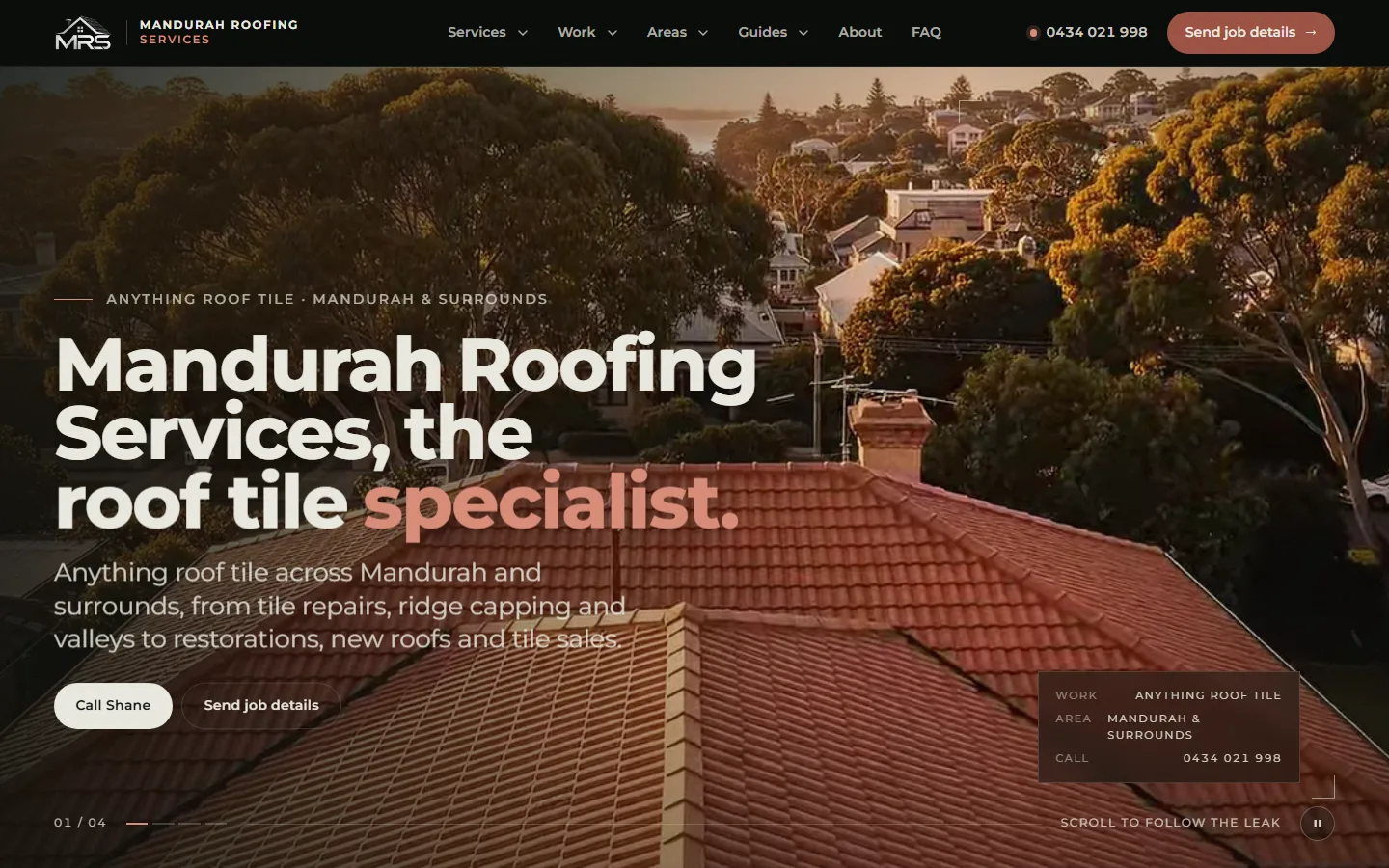 Mandurah, WAMandurah Roofing ServicesRoof tile repairs and restorations. 19 area pages from Rockingham to Pinjarra and eleven job stories linked to the original posts.Read the case study
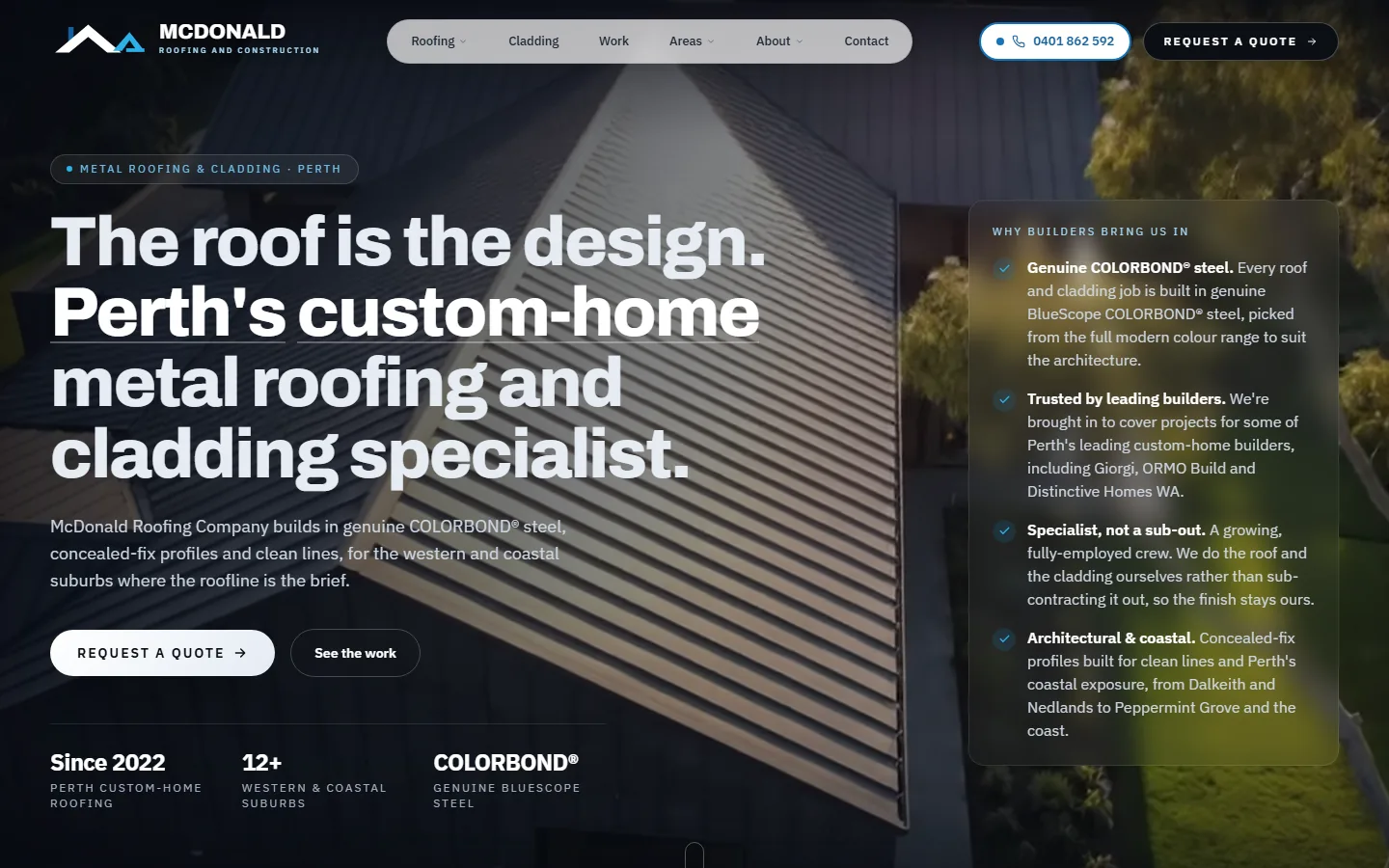 Wangara, PerthMcDonald Roofing CompanyMetal roofing and cladding. 12 service-area pages grouped into three Perth regions.Read the case study
 Mount Pleasant, PerthThe Fruit BasketIndependent greengrocer. 18 delivery-area pages, a produce range by category and online ordering for delivery and pickup.Read the case study
Interstate
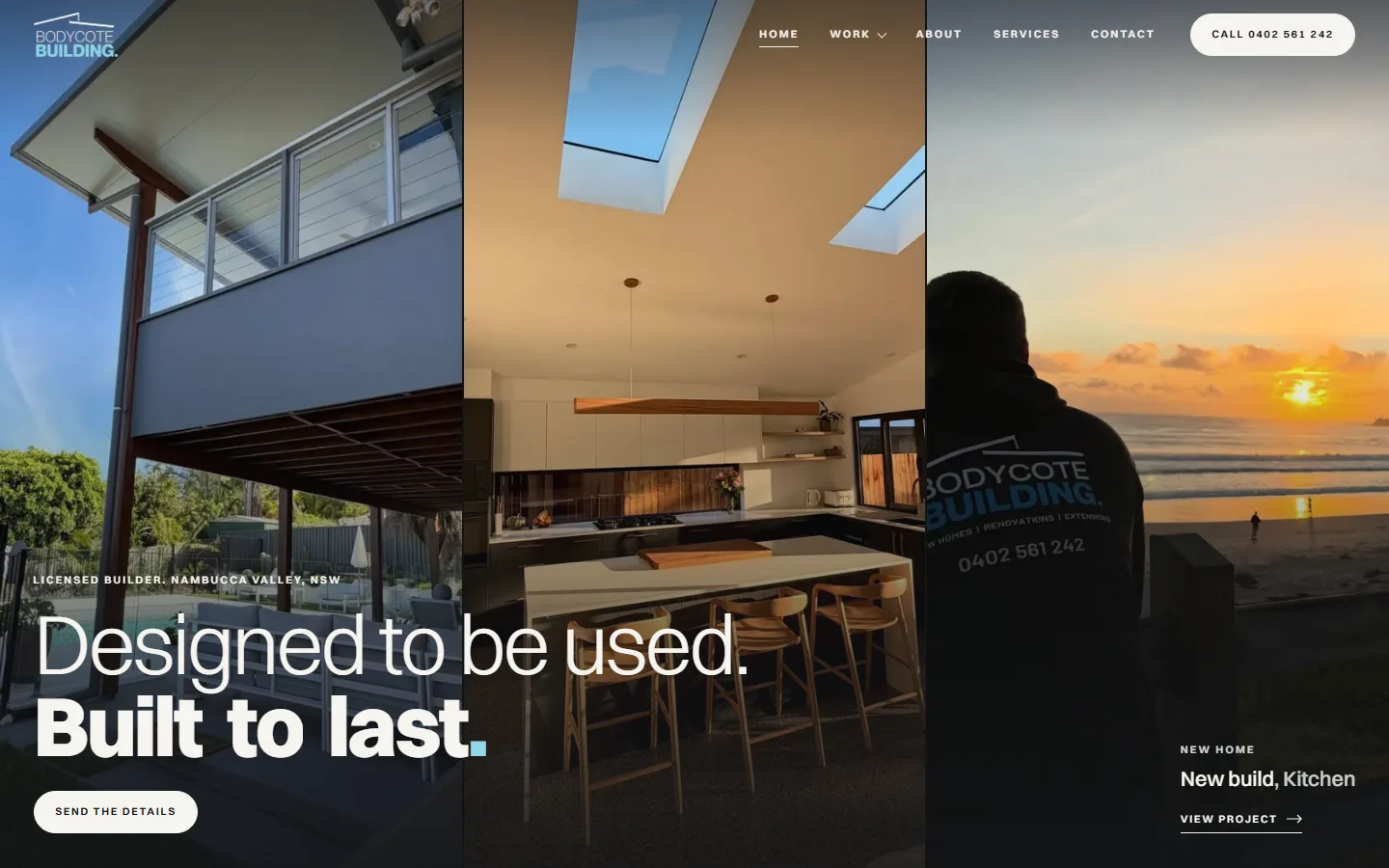 Nambucca Valley, NSWBodycote BuildingLicensed builder. Three project pages split by the kind of job: a new home, an elevated deck and a full renovation.
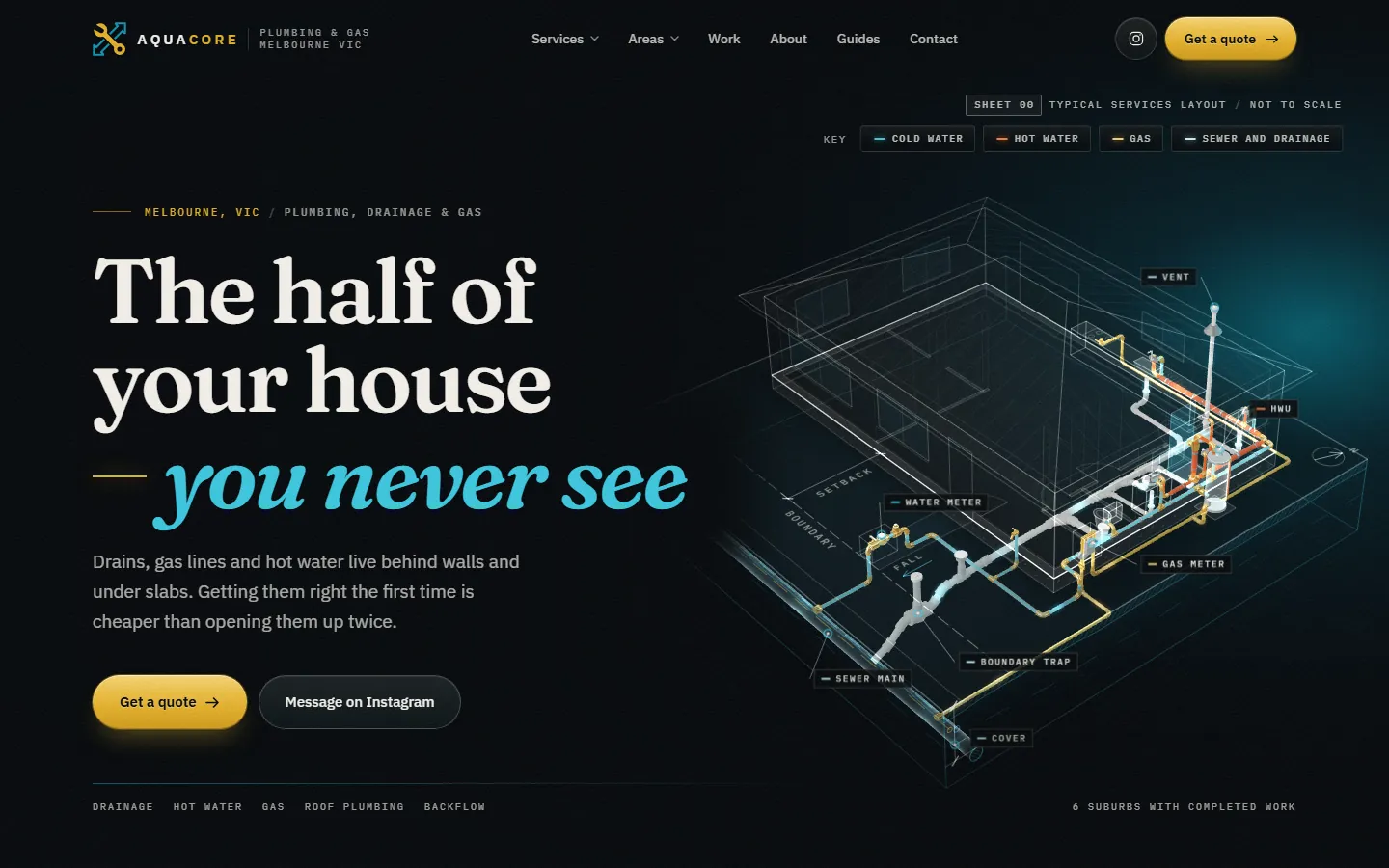 Melbourne, VICAquaCore PlumbingPlumbing. 22 suburb pages and a job record linked to the original Instagram posts.
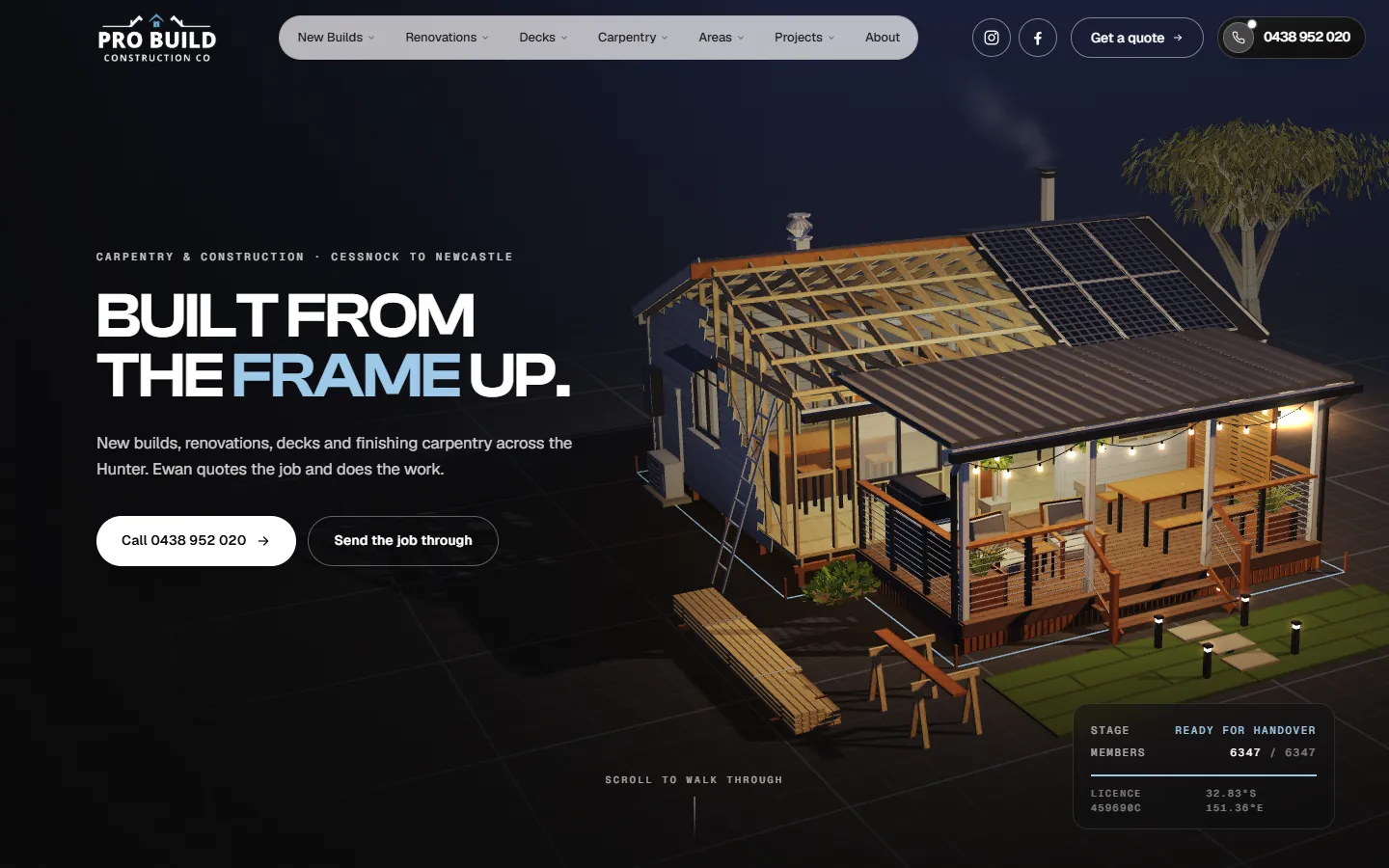 Cessnock, NSWProbuild Construction CoCarpentry and construction. 14 suburb pages across the Hunter and four project pages from real jobs.
 Mannering Park, NSWDonza PlumbingPlumbing and gas. 100 suburb pages at launch, from the northern Central Coast to Newcastle.
What a Joondalup build actually includes.
A Joondalup build uses the same written scope as any Kovus Perth site: service and location architecture, Google Business Profile support for the map listings, mobile speed, structured data, a working enquiry path and ownership in writing. The full list is on the Web design Perth page. What changes here is the corridor the pages are written for, not the build itself.
- Website build
- A$500 to A$1,000, quoted in writing for the pages and integrations the business needs. A Premium build for a bigger site starts at A$1,000. What Premium covers.
- Hosting and edits
- A$97 a month covers hosting, security, backups and unlimited edits. What website maintenance covers.
- SEO and Google Business Profile
- From A$197 a month, adding Business Profile work, Search Console, directory listings, review requests and a monthly report. SEO in Joondalup.
Both monthly plans are optional and month to month with no minimum term. You own the website, content, domain and source code. Full pricing and terms.
/ After launch
Ongoing work, month to month.
Once a site is live, ongoing local search work is optional and month to month, with no minimum term. What it covers for a business in this corridor, from the Google Business Profile to genuine reviews and consistent business details, is set out on the SEO in Joondalup page.
The accepted quote lists which tasks are included and how often they happen. Search and enquiry figures are reported separately from the work delivered, and no quote promises a position in Google. Every price is on the pricing page.
Questions from owners in the northern suburbs.
Can one website rank in Joondalup and in the suburbs around it?
How long does local SEO take to show up?
Do I need a separate page for every suburb I work in?
Why work with someone in Perth rather than a larger agency?
What happens to my site if I stop the retainer?
How much does web design in Joondalup cost?
Who owns the website, and is there a contract?
/ Elsewhere in Perth
Other Perth corridors with their own page.
- Web design across Perth
- Baldivis and the Kwinana growth corridor
- Bayswater and the north-eastern suburbs
- Canning Vale and the south-eastern estates
- Cannington and the Albany Highway corridor
- Cockburn and the suburbs from Atwell to the coast
- Mandurah and the Peel region
- Melville and the suburbs south of the river
- Rockingham and the south-west coast
- Subiaco and the inner western suburbs
/ The next step
Tell me where you work, and what search is costing you.
What the business does, which suburbs the work actually comes from, and what the current site fails to do. I will reply with the sensible next step and what is needed for an exact scope.
Or call Josh on 0423 155 979 or email josh@kovus.dev.
/ Perth based · Written scope · You own the website