Mortgage broker website design that answers before the first call.
A first home buyer, someone refinancing and an investor ask a broker different questions. A mortgage broker website gives each kind of loan its own page, shows the credit licence details a borrower can check with ASIC, and asks what a first call needs to cover. Builds cost A$500 to A$1,000; see pricing.
A mortgage broker site, page by page
- HomeWho the broker helps, where, the credit licence details and one way to book a call.
- First home buyersDeposits, what a pre-approval needs and how long it takes.
- RefinancingWhen a refinance is worth a look and what the broker compares.
- Investment loansLoan structures and what lenders ask an investor for.
- How the broker is paidCommissions and any fee, explained before the first meeting.
- Book a callA form that asks the loan purpose, the timing and the deposit.
// the problem
What a borrower checks before calling a broker.
An aggregator template with the same pages as other brokers
Many brokers start with a website supplied through their aggregator or licensee, built from pages shared across its network. A borrower comparing three brokers then reads the same loan explainers on each site, and none of them says who the broker actually helps or where.
One loans page for every borrower
A first home buyer worried about the deposit, a family refinancing off a fixed rate and an investor buying a second property search for different things. A single page that lists every loan type gives each of those searches the same general answer, and the reader cannot tell which work the broker wants.
Licence details in the fine print
A broker works under an Australian credit licence, its own or a licensee's, and ASIC's registers let a borrower look up both licensees and credit representatives. Details printed in grey under the footer, or left off, make a careful borrower go looking. They belong where the broker introduces themselves.
A contact form that books the wrong call
Name, email and message tells a broker nothing about the loan. Before a call is worth booking, a broker needs the loan purpose, the rough timing and whether there is a deposit or equity to work with. Asking for those up front makes the first call about the borrower, not about paperwork.
A borrower often finds a broker in the middle of a decision: a couple saving for a first home, an owner coming off a fixed rate, someone buying a second property. Before they hand over payslips and bank statements, they want to see that this broker helps people in their position, how the broker is paid, and that the licence details check out.
Those borrowers search for their situation, not for a broker by name. A first home loan with a small deposit, refinancing before a fixed rate ends, a broker in their suburb. Each of those needs a page that answers what that borrower asks first: what a pre-approval needs, what the broker compares, and how long it takes. A homepage with every loan type in one grid gives each of those searches the same general answer.
Trust gets checked, so the facts go where they can be checked. A broker works under an Australian credit licence, its own or a licensee’s, and ASIC’s registers let a borrower look up licensees and credit representatives. The guide to credit licence numbers on a mortgage broker website shows where those numbers go on the site, how ASIC’s guidance writes them, and the wording to leave off a broker’s pages.
Many brokers start with a website supplied through their aggregator or licensee. It can be the right call, and it keeps the licensee close to what the site says. The trade-off is that the pages are shared across the network and the site stays with it. A Kovus build is quoted in writing at A$500 to A$1,000, the broker owns the website, content, domain and source code, and any review the licensee needs is written into the scope.
It is the structure behind the Kovus client builds for trade businesses, with borrowers’ situations in place of jobs: a page for each, the licence details where they can be checked, and a booking form that asks what the first call needs. Accountants, real estate agencies and law firms are covered on websites for professional services.
// built by Kovus
Built by Kovus for trades.
These are real client sites for trades, each linked to its case study, and the same approach carries over to a mortgage broker site.
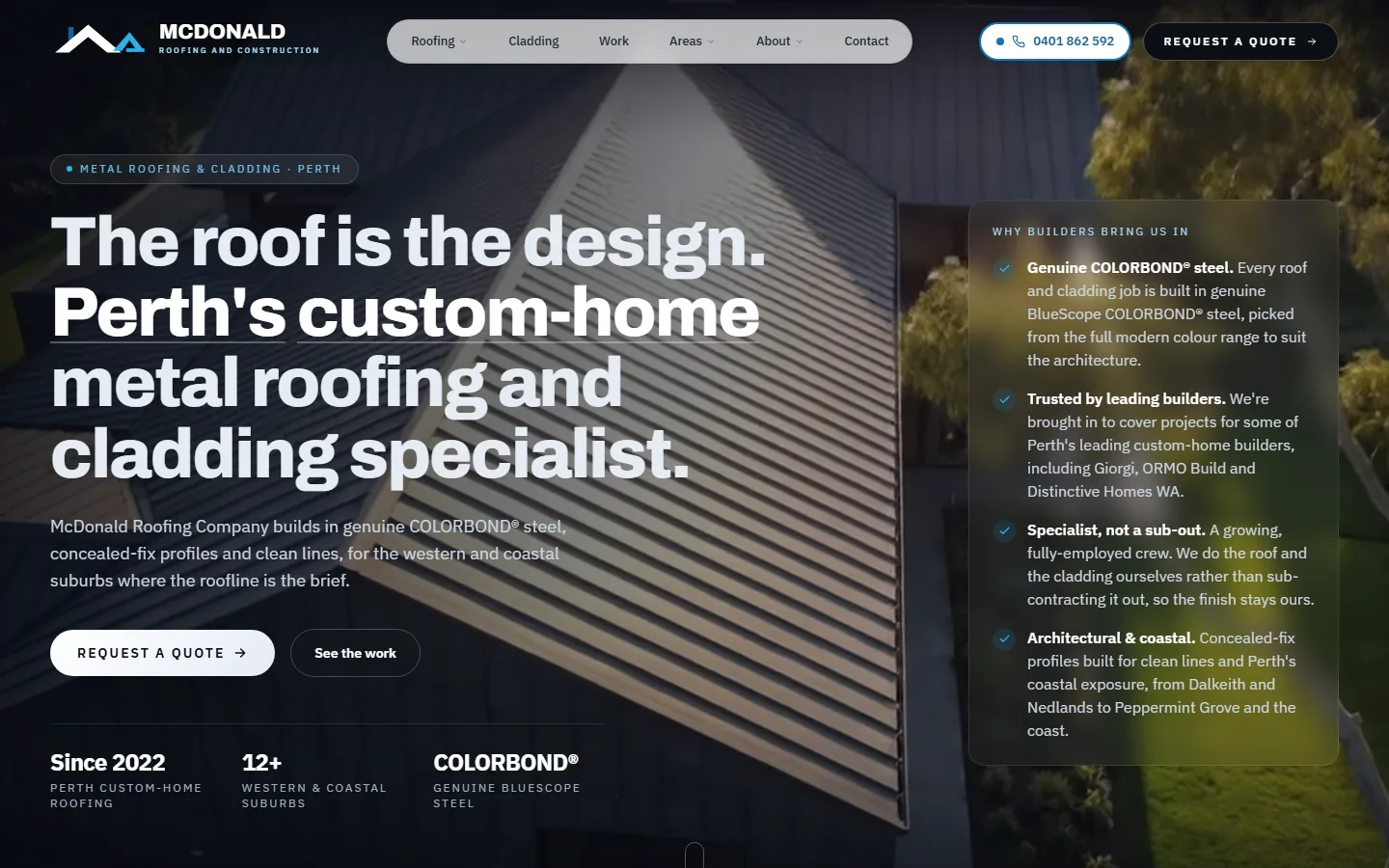 Metal roofing and cladding McDonald Roofing Company Wangara, Perth 12 service-area pages grouped into three Perth regions. Read the case study
 Exposed aggregate and honed concrete CJH Concrete Currambine, Perth
 Plumbing and gas Donza Plumbing Mannering Park, NSW
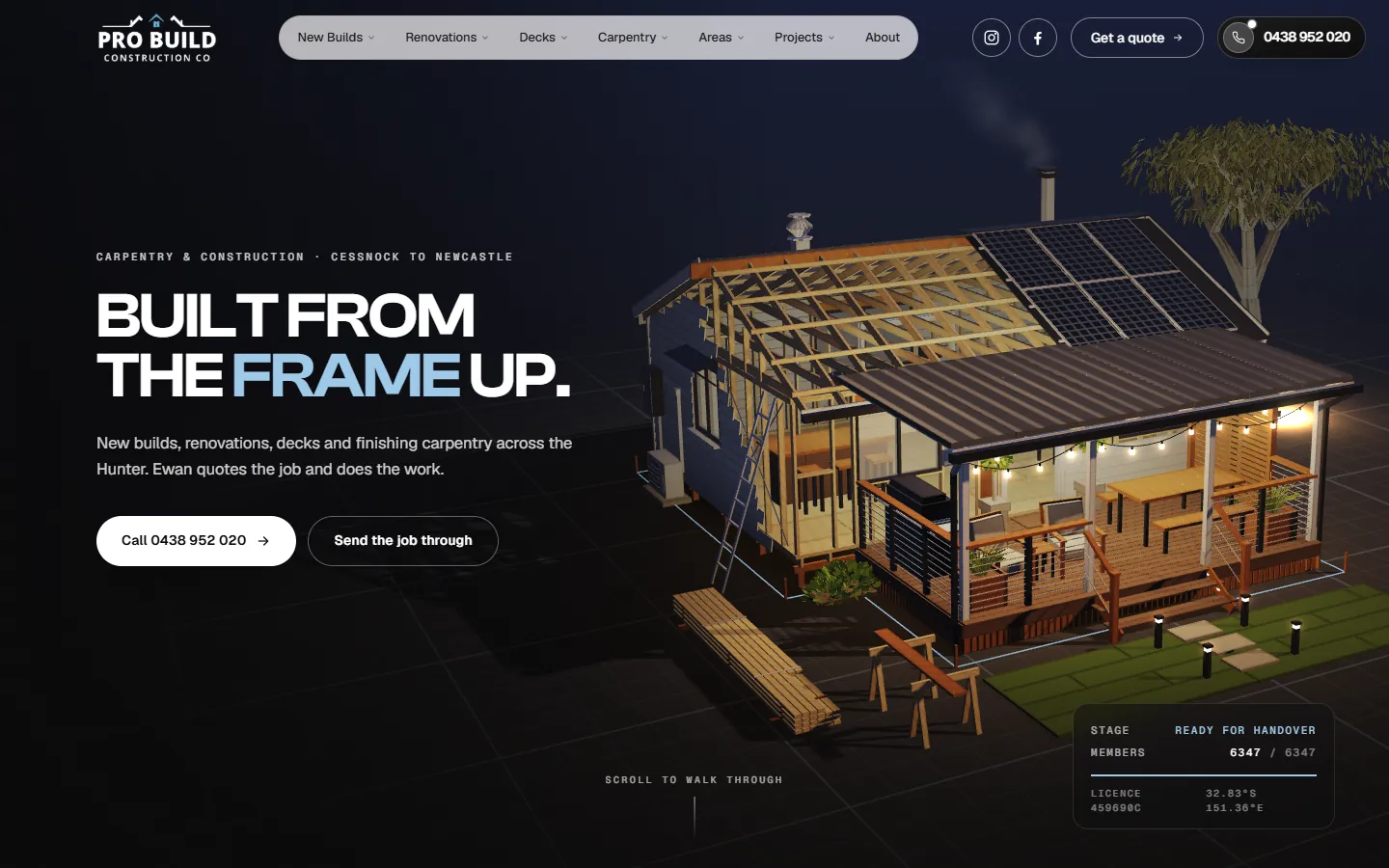 Carpentry and construction Probuild Construction Co Cessnock, NSW
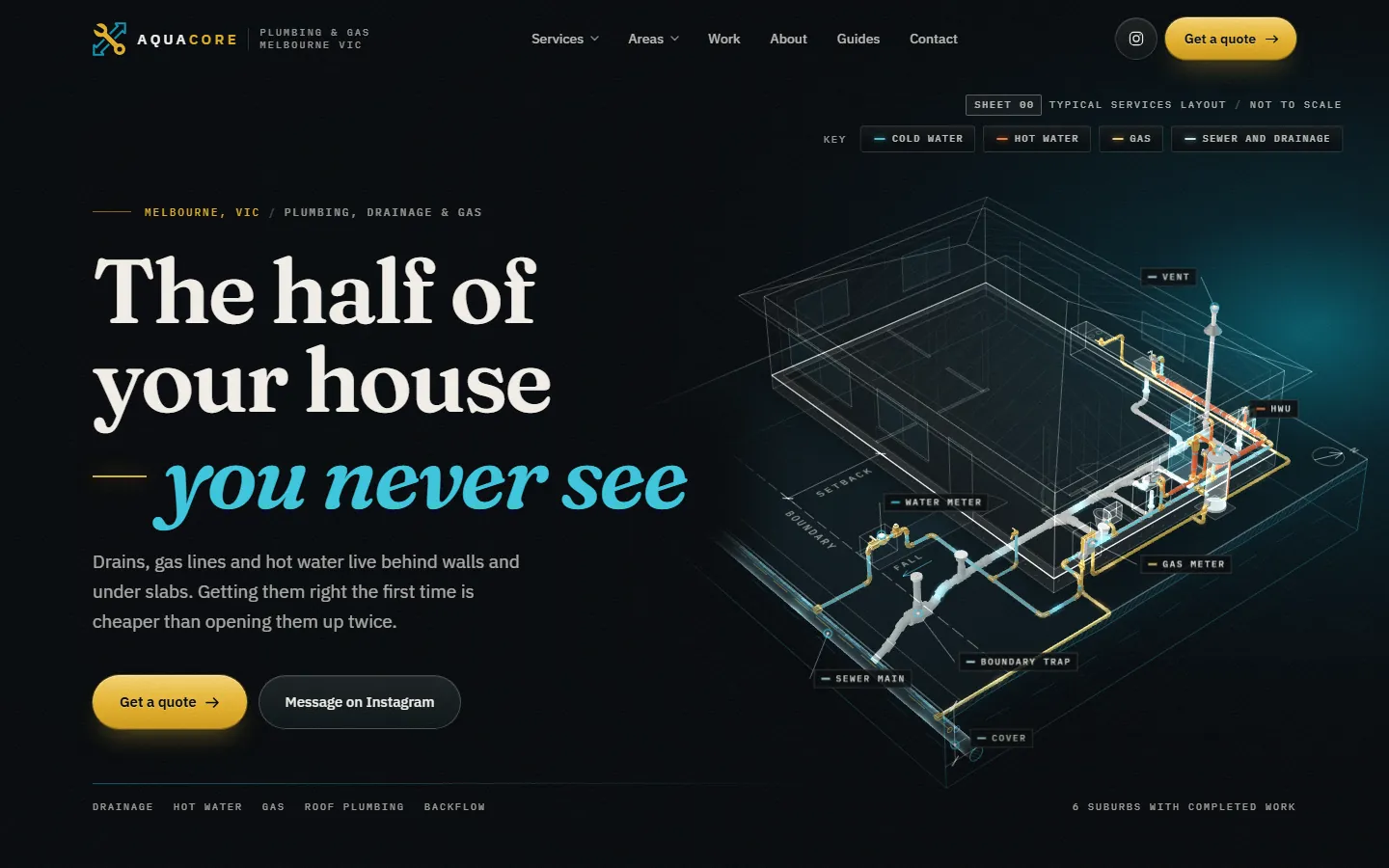 Plumbing AquaCore Plumbing Melbourne, VIC
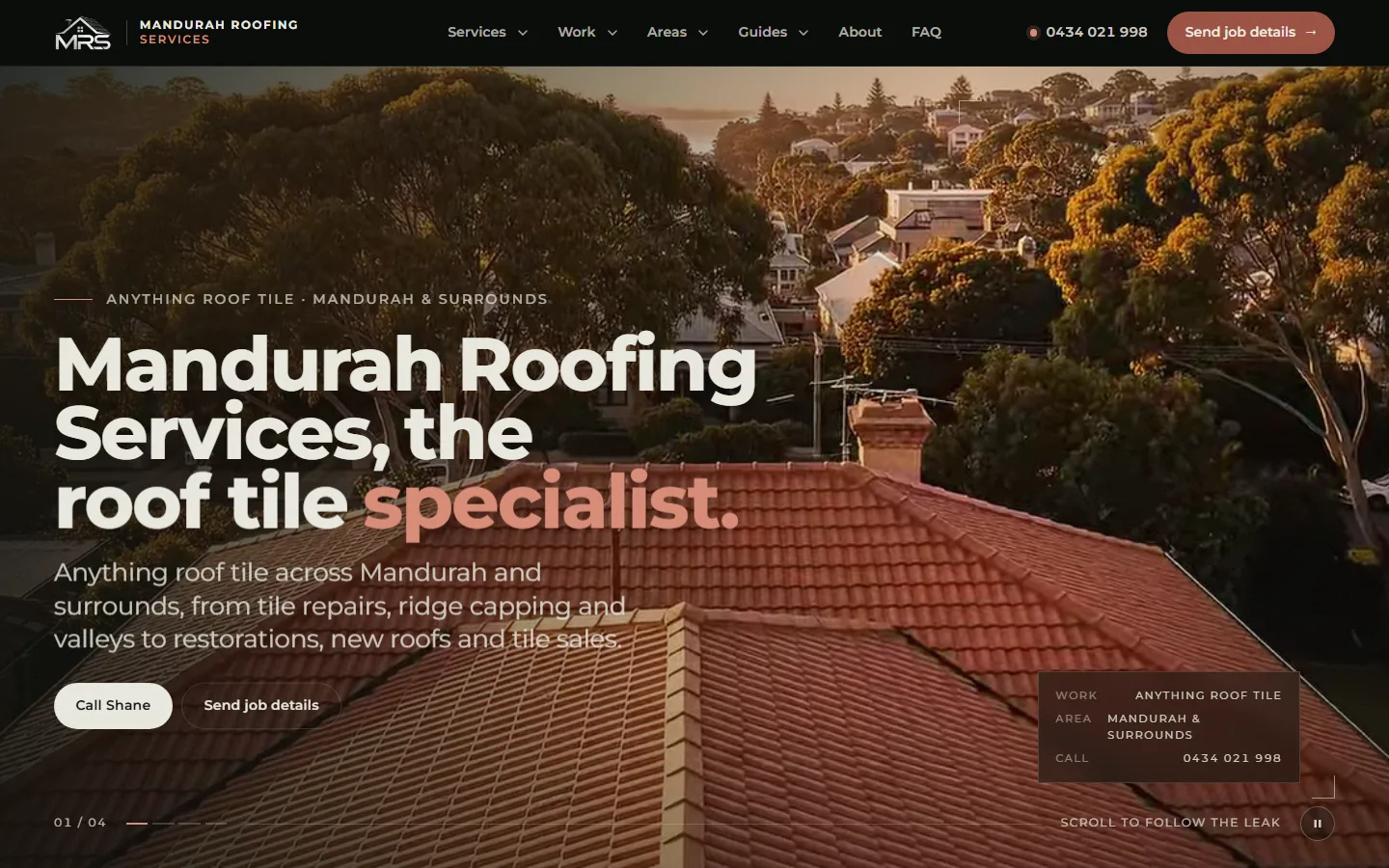 Roof tile repairs and restorations Mandurah Roofing Services Mandurah, WA
// the numbers
Tested before the first enquiry, tracked after launch.
Mobile, accessibility and technical search checks recorded before launch
/ Launch QA
Agreed enquiry events and available search data reported against the baseline
/ Client reporting
// prices and terms
What a website for mortgage brokers costs.
- Website build
- A$500 to A$1,000, quoted in writing for the pages and integrations the business needs. A Premium build for a bigger site starts at A$1,000. What Premium covers.
- Hosting and edits
- A$97 a month covers hosting, security, backups and unlimited edits. What website maintenance covers.
- SEO and Google Business Profile
- From A$197 a month, adding Business Profile work, Search Console, directory listings, review requests and a monthly report. What the SEO plan covers.
A quote-scoped one-off build is available without ongoing services, which are quoted separately. The client owns the website, content, domain and source code. Optional ongoing services are month-to-month with no minimum term. The client may cancel at any time, effective at the end of the current paid month. Full pricing and terms.
// straight answers
What mortgage brokers ask before a quote.
- What pages should a mortgage broker website have?
- A homepage that says who the broker helps and where, a page for each kind of loan the broker writes, a page that explains how the broker is paid, a profile with the credit licence details, and one clear way to book a call. Calculators and rate tables are optional, and a rate table brings the comparison rate rules with it. A page that answers the borrower's questions in plain words does more.
- Where does the credit licence number go on a mortgage broker website?
- In a disclosure line in the footer, written in full the way ASIC's guidance shows it: the licensee's name, then Australian credit licence and the number, with the broker's credit representative number where they have one. Each broker's number also goes on the team page, in the credit guide and in the structured data, so a borrower who checks ASIC's register finds the same details. The guide to credit licence numbers on a mortgage broker website sets out each one.
- Can a broker have a website outside the aggregator's template?
- Usually, yes. A licensee takes reasonable steps to make sure its representatives comply with the credit law, and its agreement or policies may set a marketing approval process. Ask the licensee what it needs to see before launch. The written scope then includes that review, so the site goes live with the licensee's sign-off rather than being changed afterwards.
- Is a template site good enough for a mortgage broker?
- It can be, if the broker has time to rewrite the shared pages in their own words and keep the details current. A template supplied through an aggregator also stays tied to that network. A Kovus build is quoted once, in writing, at A$500 to A$1,000, and the broker owns the website, content, domain and source code.
- Can Kovus build a website for a mortgage broker outside Perth?
- Yes. Kovus works with businesses Australia-wide by phone and video, with on-site meetings across the Perth metro area. Every build is scoped and quoted in writing.
- How much does a website for mortgage brokers cost?
- A standard broker build costs A$500 to A$1,000, quoted in writing with a page per loan type, such as first home loans, refinancing and investment loans, and an enquiry form that scopes the first call. A Premium build, for a bigger site built to a higher finish, starts at A$1,000. Ongoing work is optional: A$97 a month covers hosting, security, backups and unlimited edits, and from A$197 a month adds SEO and Google Business Profile work.
- Who owns a broker website built by Kovus?
- The broker does. The client owns the website, content, domain and source code from launch. That covers the loan-type pages and the credit licence details shown on them. The monthly plans are month to month with no minimum term, and cancelling takes effect at the end of the current paid month.
- Will the site rank for first home and refinance searches?
- Google decides rankings, so no quote includes one. The build gives each loan type its own page, shows the credit licence details a borrower can check, and includes structured data and a fast mobile layout. The SEO plan then works on the Business Profile, Search Console and directory listings each month, with a report on what changed.
// the framework
Scope the loan types, the licence details and the first call.
A mortgage-broker-specific Kovus install, organised around the borrowers the broker helps rather than a list of loan products. How the five scoped areas work.
It is the build behind every Kovus site, scoped here to mortgage brokers. The other fields are on websites for professional services.
// practical guides
Field guides for mortgage broker websites
// built from Perth
A first home in Baldivis is not a refinance in Applecross.
Kovus is based in Perth and builds for brokers Australia-wide. How search splits across the Perth metro is covered on Web Design Perth.
Scope a broker site that answers before the first call.
Send the loan types you write and where your borrowers are. Josh comes back with a written quote for a page per loan type.
Or call Josh on 0423 155 979 or email josh@kovus.dev.