Carpenter website design that labels the project.
Websites for carpenters sell a planned job. A merbau deck or a custom kitchen is a five-figure quote with no panic call behind it. Owners shortlist from labelled photos of decks, kitchens and built-ins, then only enquire if the form can qualify the job. Builds cost A$500 to A$1,000; see pricing.
// the problem
Why a carpenter site cannot hide behind an after-hours call.
No after-hours call to hide a weak site
A carpenter does not get the 11pm burst-pipe job that fills a plumber's week. The owner has days to compare crews on a phone, and they pick the one whose own deck, kitchen or wardrobe is labelled with timber, suburb and constraint. An unlabelled Instagram dump looks like everyone else's feed.
Decks, kitchens and fit-out on one homepage
A merbau deck in Mindarie, a Polytec kitchen in Subiaco and a shop fit-out in Osborne Park are different searches, different drawings and different decision-makers. Mixing them under 'we do carpentry' makes the builder looking for commercial joinery bounce, and the homeowner looking for a built-in robe bounce too. Each lane needs its own page and its own photos.
Quote forms that cannot price a deck
You cannot price a deck without m2, timber species, balustrade type and whether it is ground-level or first-floor. You cannot price a kitchen without a plan, a finish (two-pack, laminate, timber veneer) and a suburb. A three-field contact form dumps unscoped tyre-kickers into the inbox and burns the measure visit.
Structural tickets pasted onto joinery
If you frame, alter load-bearing walls or take on additions that need a building permit, a builder looks for AS 1684, NCC notes, public liability and your building registration. Timber decks, cabinet-making and second-fix joinery are sold on different proof. Mixing those two stories on one trust block makes the structural buyer distrust the joinery, and the wardrobe buyer bounce off a licence they did not need to see.
Carpentry is not an emergency trade. Nobody rings you at midnight because a spotted-gum deck did not get built this afternoon. The owner has a Pinterest board, three screenshots of other Perth decks, and a weekend to decide who gets the measure. They type “merbau deck cost per m2 Perth”, “custom kitchen joiner Subiaco”, “built in wardrobes Joondalup” or “shop fit out carpenter Osborne Park”. Then they open the first three sites on a phone.
If yours is a stock photo of a bloke with a circular saw and a services grid that lists decks, kitchens, framing, doors, pergolas and “handyman” in the same breath, they keep scrolling. The crew whose own first-floor merbau deck in Mindarie is on the page, labelled with species, m2 and balustrade, gets the enquiry. Hipages will still sell the same lead to every carpenter on the job. Your own site is the only place the labelled project can do the shortlisting without a lead fee.
The work itself splits by buyer, not by the fact that it involves timber. A treated-pine or merbau deck is sold on timber, height, balustrade and how it meets the house. A kitchen or a run of built-ins is sold on finish, two-pack, Laminex or Polytec, timber veneer, and whether the drawings already exist. Commercial fit-out and custom joinery are sold to builders and shopfitters who want programme, access and a carpenter who has done a tenancy before, not a pergola. One homepage cannot carry all of that.
Each lane needs its own page and its own proof: species and m2 on the deck jobs, carcass and door finish on the kitchens, linear metres and material on the joinery. Perth winter is when indoor kitchens and robes get quoted. Late spring and summer is when the outdoor decks move. If those two calendars land on the same generic “we do carpentry” page, both buyers leave. AS 1684 and NCC notes belong on the framing and structural pages, not pasted across a wardrobe gallery that never touches a wall frame.
The registration story splits the same way. A carpentry business registered as a building contractor shows its number on the framing, structural and additions pages, where a builder or an owner checks for it, and in the footer of every page. The deck, kitchen and joinery pages lead with the work. Building and Energy’s guide to who needs to register sets out which work needs a registered builder, and the guide to licence numbers on WA tradie websites shows where the number can sit on a site. This is general information about what to show on a website, not legal advice, so check the current rules with Building and Energy or your own adviser before you publish. Builders and construction companies running new homes and extensions have their own page: construction websites.
The quote path has to match how you actually price. A deck quote needs m2, species, ground-level or first-floor, balustrade, and a suburb so you know if you are towing a drop-saw to Two Rocks or walking into a Nedlands backyard. A kitchen quote needs drawings or a photo of the existing run, the finish, and whether the appliances are already bought. Joinery needs linear metres and material.
If the form only asks name, email and “how can we help”, you will keep driving across the metro for jobs that were never a fit, while the owner who did have a 32 m2 merbau deck and a plan waits. A from-rate per square metre on the deck pages and per linear metre on the joinery pages, clearly marked as a starting point, is what those searches already expect. The five-figure kitchen still gets a site measure and a written breakdown. The site has to stop the unscoped enquiry and surface the one that is ready to book a measure.
The page-by-page walkthrough is the carpentry website field guide.
// built by Kovus
Client sites built by Kovus for other trades.
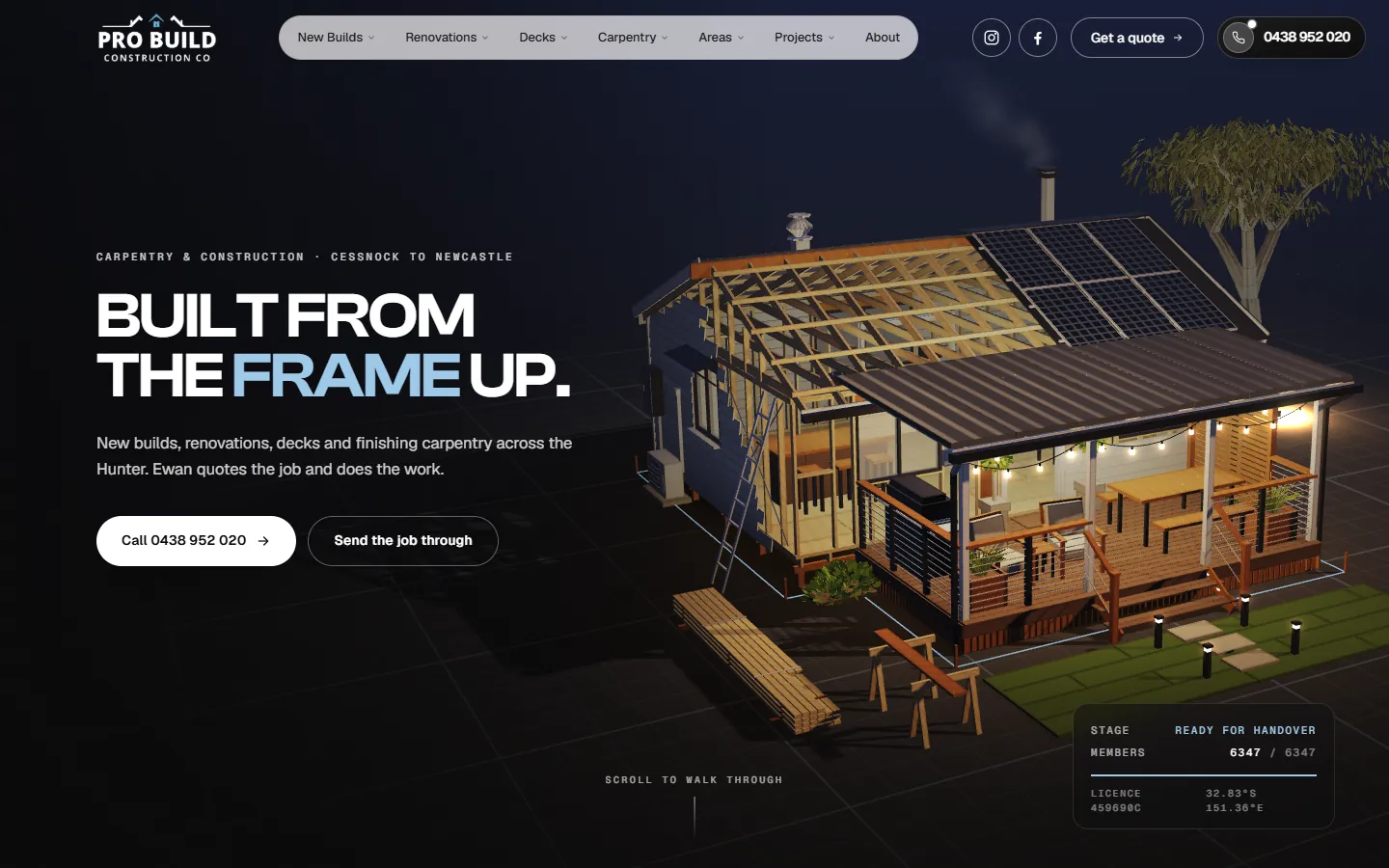
The carpentry build on this page is Probuild Construction Co. These are client sites for other trades, each linked to its case study.
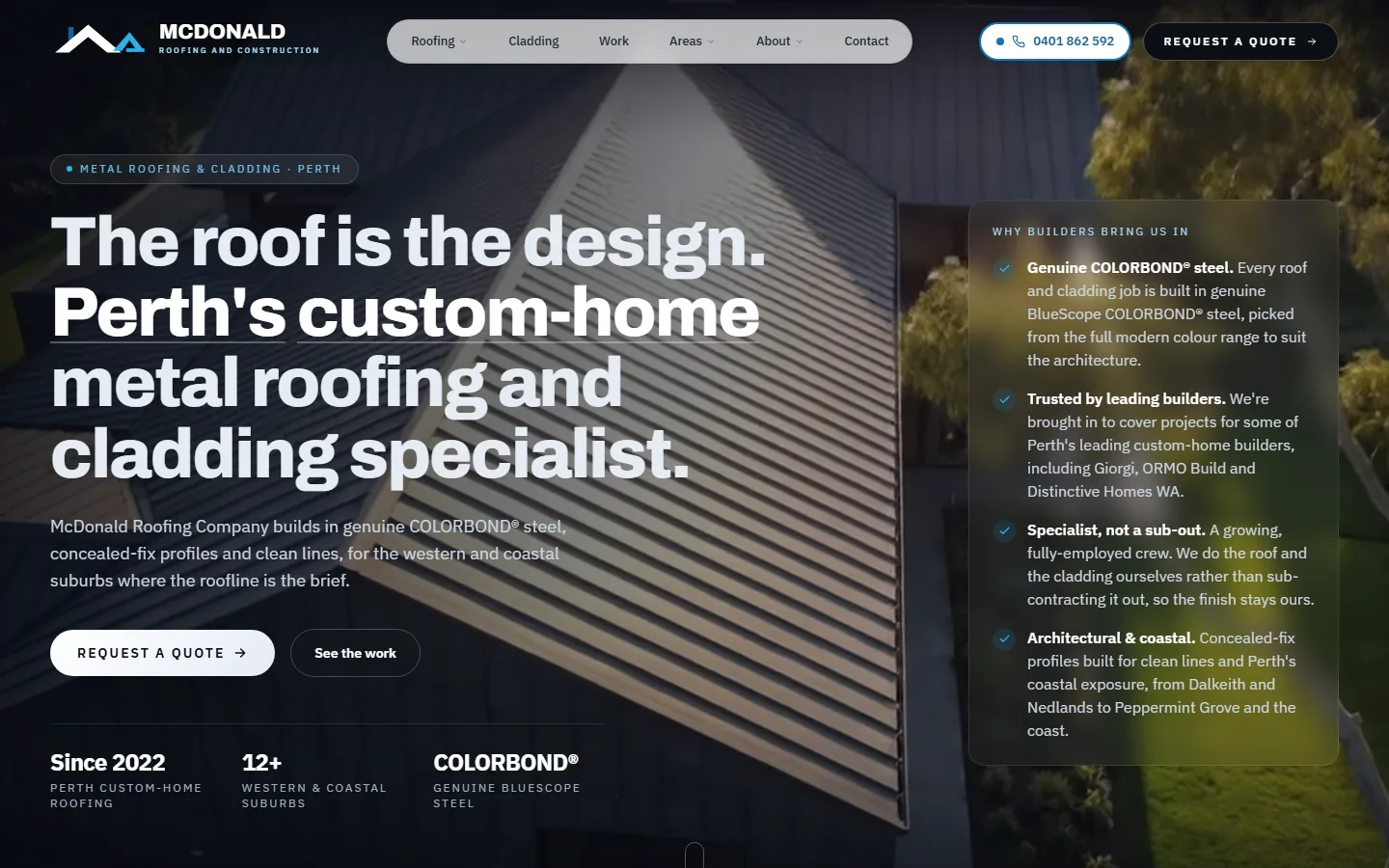 Metal roofing and cladding McDonald Roofing Company Wangara, Perth 12 service-area pages grouped into three Perth regions. Read the case study
 Exposed aggregate and honed concrete CJH Concrete Currambine, Perth
 Plumbing and gas Donza Plumbing Mannering Park, NSW
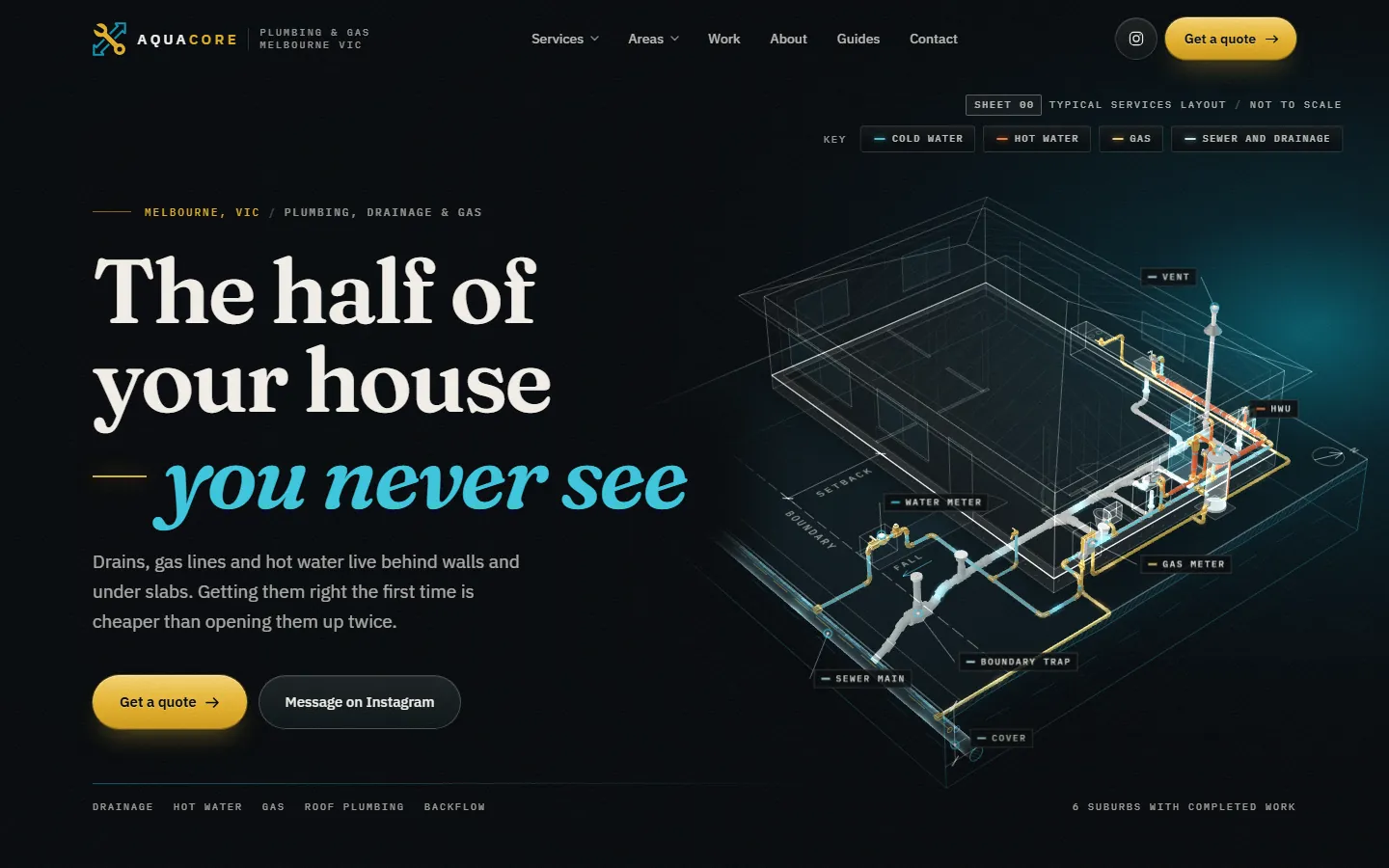 Plumbing AquaCore Plumbing Melbourne, VIC
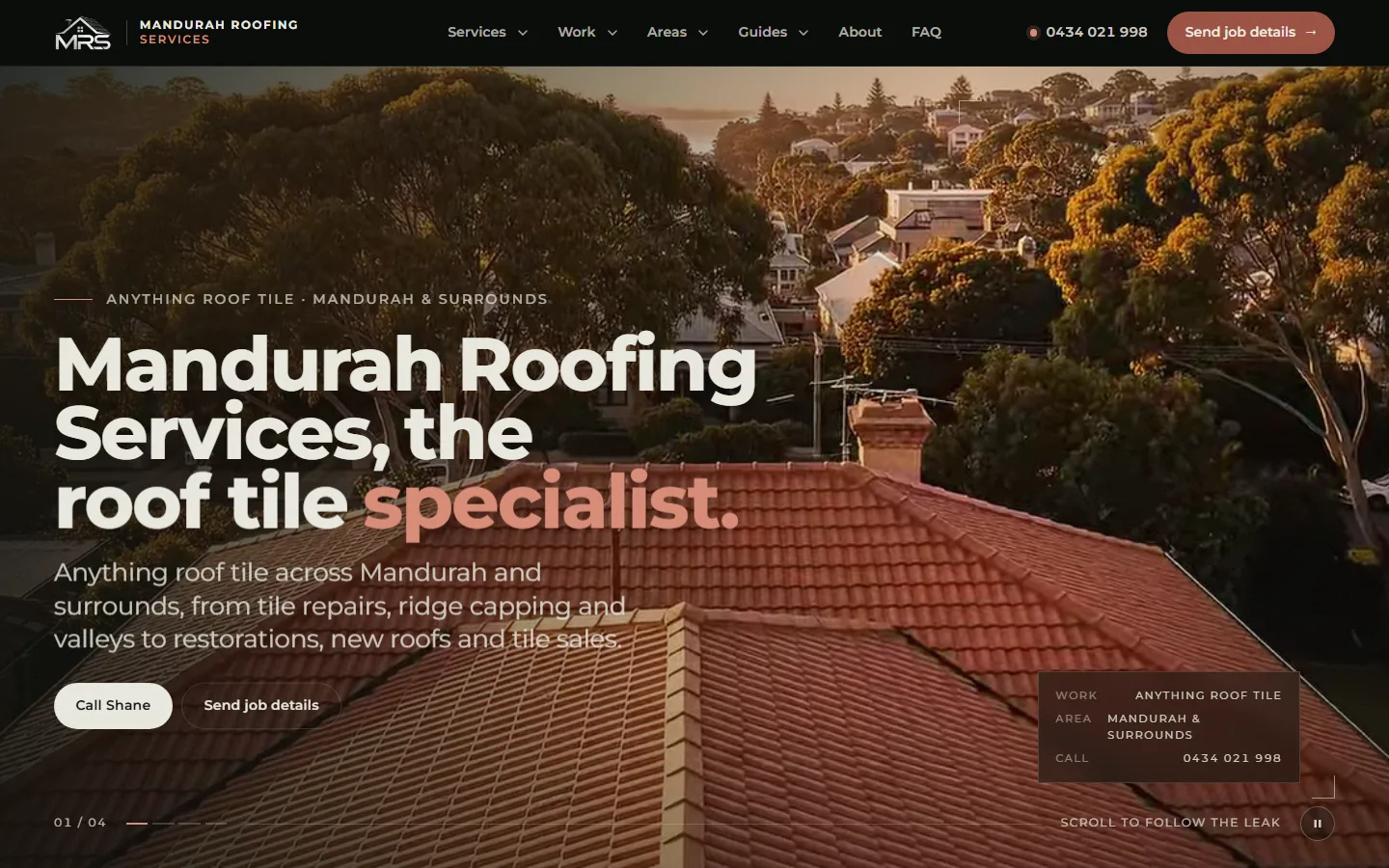 Roof tile repairs and restorations Mandurah Roofing Services Mandurah, WA
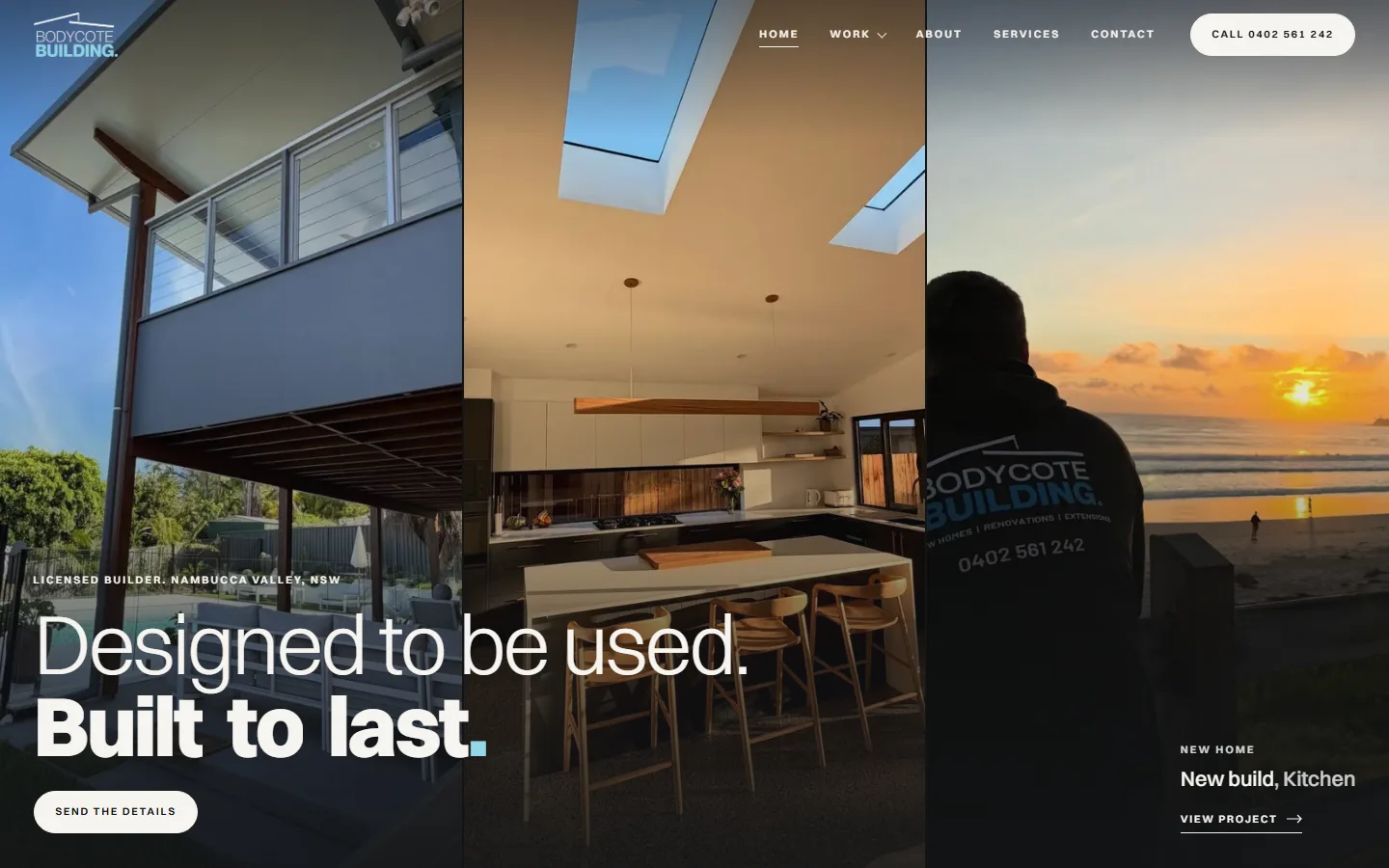 Licensed builder Bodycote Building Nambucca Valley, NSW
// the numbers
Checked before the first measure is booked, measured after.
Mobile, accessibility and technical search checks recorded before launch
/ Launch QA
Agreed enquiry events and available search data reported against the baseline
/ Client reporting
// prices and terms
What a website for carpenters costs.
- Website build
- A$500 to A$1,000, quoted in writing for the pages and integrations the business needs. A Premium build for a bigger site starts at A$1,000. What Premium covers.
- Hosting and edits
- A$97 a month covers hosting, security, backups and unlimited edits. What website maintenance covers.
- SEO and Google Business Profile
- From A$197 a month, adding Business Profile work, Search Console, directory listings, review requests and a monthly report. SEO for tradies.
A quote-scoped one-off build is available without ongoing services, which are quoted separately. The client owns the website, content, domain and source code. Optional ongoing services are month-to-month with no minimum term. The client may cancel at any time, effective at the end of the current paid month. Full pricing and terms.
// straight answers
What carpenters ask before a quote.
- Which registration belongs on a carpentry website?
- The one you hold, on the pages for the work it covers. If you are registered for structural work, additions or other jobs that need a building permit, put the number on those pages and in the footer, where a builder or an owner will look for it. Deck, kitchen and joinery pages can lead with your own photos, public liability and your trade qualification instead. Never put a Building Services Board number on a wardrobe page if you do not hold one. Building and Energy sets out which work needs registration in WA, so check its guide before the number goes up.
- What should a carpentry quote form ask so I am not driving across Perth for a tyre-kicker?
- Project type first, then the fields that let you price that type. Deck jobs need m2, species, ground-level or first-floor, and balustrade. Kitchens need drawings or a photo, the finish, and whether appliances are already bought. Joinery needs linear metres and material. Suburb and a photo upload belong on every branch so you know if you are towing a drop-saw to Two Rocks or walking into a Nedlands backyard.
- Should I put deck cost per m2 on the website?
- A from-rate per square metre for treated pine or merbau, and a from-rate per linear metre for joinery, is what Perth owners already type into Google. It does not have to be the final quote. Mark it as a starting point so a first-floor hardwood deck does not arrive expecting a ground-level pine price. Custom kitchens still go to a site measure and a written breakdown.
- How do I show decks, kitchens and commercial fit-out without looking like a handyman?
- Give each lane its own page and only put a project on the page it belongs on. Label every photo with the service, timber or finish, suburb and the constraint (tight access, first-floor, matching existing skirtings). A builder looking for shop fit-out should never land on a pergola gallery.
- Is AS 1684 worth putting on a carpentry website?
- Yes, if you actually frame or do structural timber work to AS 1684 and the National Construction Code. Put it on the framing and structural pages next to public liability, not across a wardrobe gallery that never touches a wall frame. Certificate III in Carpentry is the trade qualification to name when it is held. The current code is CPC30326, which replaced CPC30220 in September 2026, so an older certificate carries the old code. Do not name the timber framing code if you only do second-fix and furniture.
- How much does a website for carpenters cost?
- A standard carpentry build costs A$500 to A$1,000, quoted in writing with a page per lane, such as decks, kitchens and joinery, and a quote form that asks enough to scope the job. A Premium build, for a bigger site built to a higher finish, starts at A$1,000. Ongoing work is optional: A$97 a month covers hosting, security, backups and unlimited edits, and from A$197 a month adds SEO and Google Business Profile work.
- Who owns the carpentry site and the project photos?
- The client owns the website, content, domain and source code from launch. For a carpenter, that means the deck, kitchen and joinery pages and the labelled project photos on them. The monthly plans are month to month with no minimum term, and cancelling takes effect at the end of the current paid month.
- Will the site rank for deck and kitchen searches?
- Google decides rankings, and no quote includes one. The build gives decks, kitchens and joinery separate pages with labelled photos, and covers the structured data and mobile speed search engines read. From there, the SEO plan handles the Business Profile, Search Console, listings and review requests month by month, and the report shows what moved.
// the framework
Scope decks, kitchens and joinery as separate lanes.
Kovus builds a carpentry site around the labelled project, with a separate lane for each kind of job. How the five scoped areas work.
The same build sits behind all Kovus websites for tradies, scoped here to carpenters.
// practical guides
Field guides for carpentry websites
- Carpentry Website Project Proof and Scope: A Field GuideA practical walkthrough of labelled project proof, residential and commercial service paths, local pages and scope-aware enquiry forms.
- What a Tradie Website Needs to Support Local Search in AustraliaA practical framework for tradie website pages, enquiry paths, machine-readable facts, useful content and measurement, with links to every trade guide.
- Tradie and Local Business Website Examples: Six Kovus TeardownsTradie website examples: six real Australian builds, five trades and a greengrocer, annotated for the hero, proof, navigation, local SEO and enquiries.
// built from Perth
A Mindarie merbau deck is not a Subiaco kitchen.
Kovus is based in Perth. How carpentry search splits across the metro is covered on Web Design Perth.
Scope a carpentry site that labels the project.
Send labelled photos of your decks, kitchens or joinery and the suburbs you cover. Josh comes back with a written quote for a page per lane.
Or call Josh on 0423 155 979 or email josh@kovus.dev.