Electrician website design for the 90-second check.
Websites for electricians get compared on three tabs after a burning smell: the contractor licence number and the call-out fee. Fail that check and the switchboard upgrade, the smoke-alarm job and the EV charger never get a chance to quote. Builds cost A$500 to A$1,000; see pricing.
// comparable licensed trade
A comparable licensed-trade build
The closest Kovus build is Donza Plumbing, another licensed trade: credentials on the first screen, urgent-call paths and a page for every suburb it works. The same structure carries over to an electrician site: the contractor licence in the header, a fault-finding path that is a phone number, and planned work on its own pages.
// concept build
Concept build
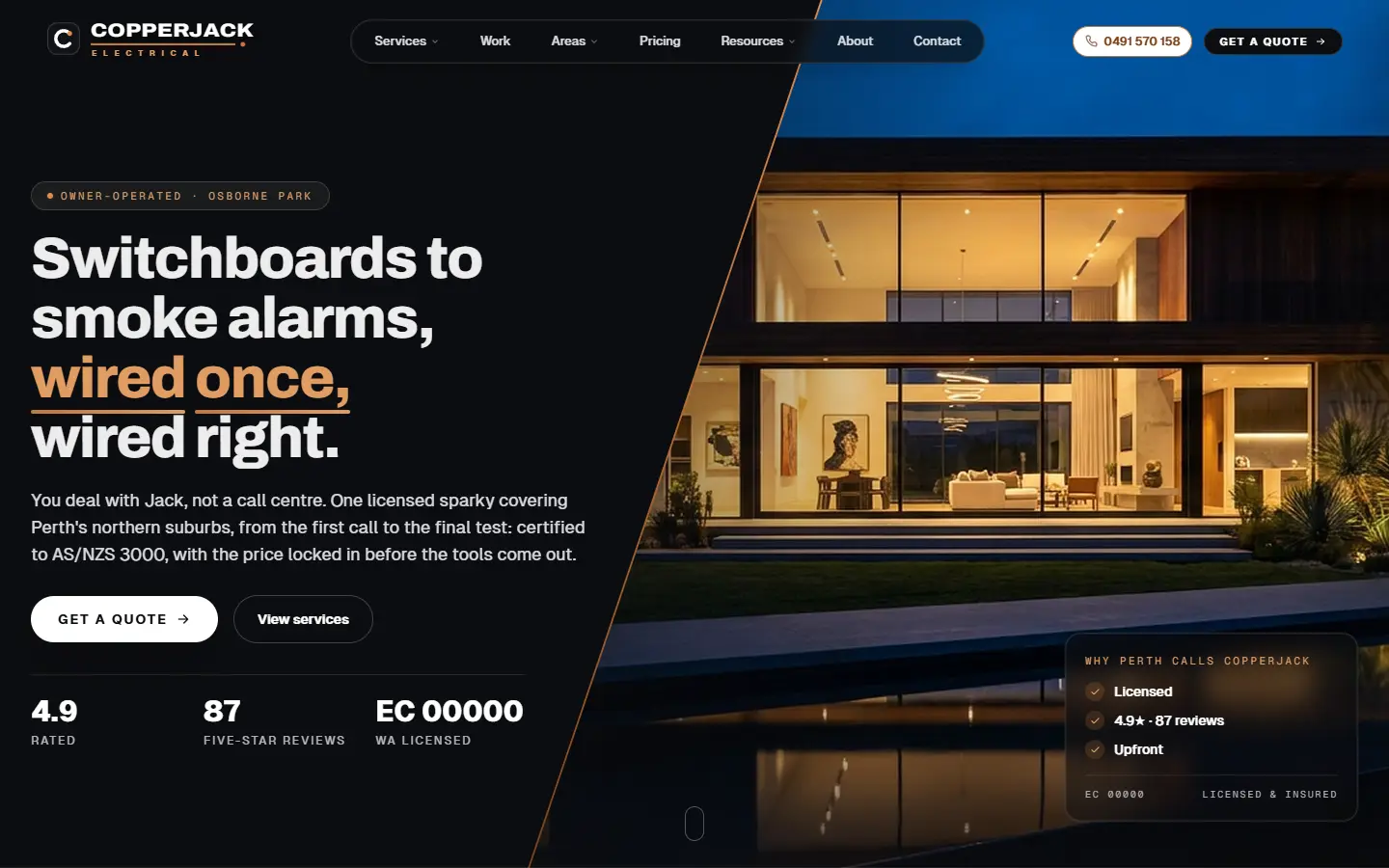
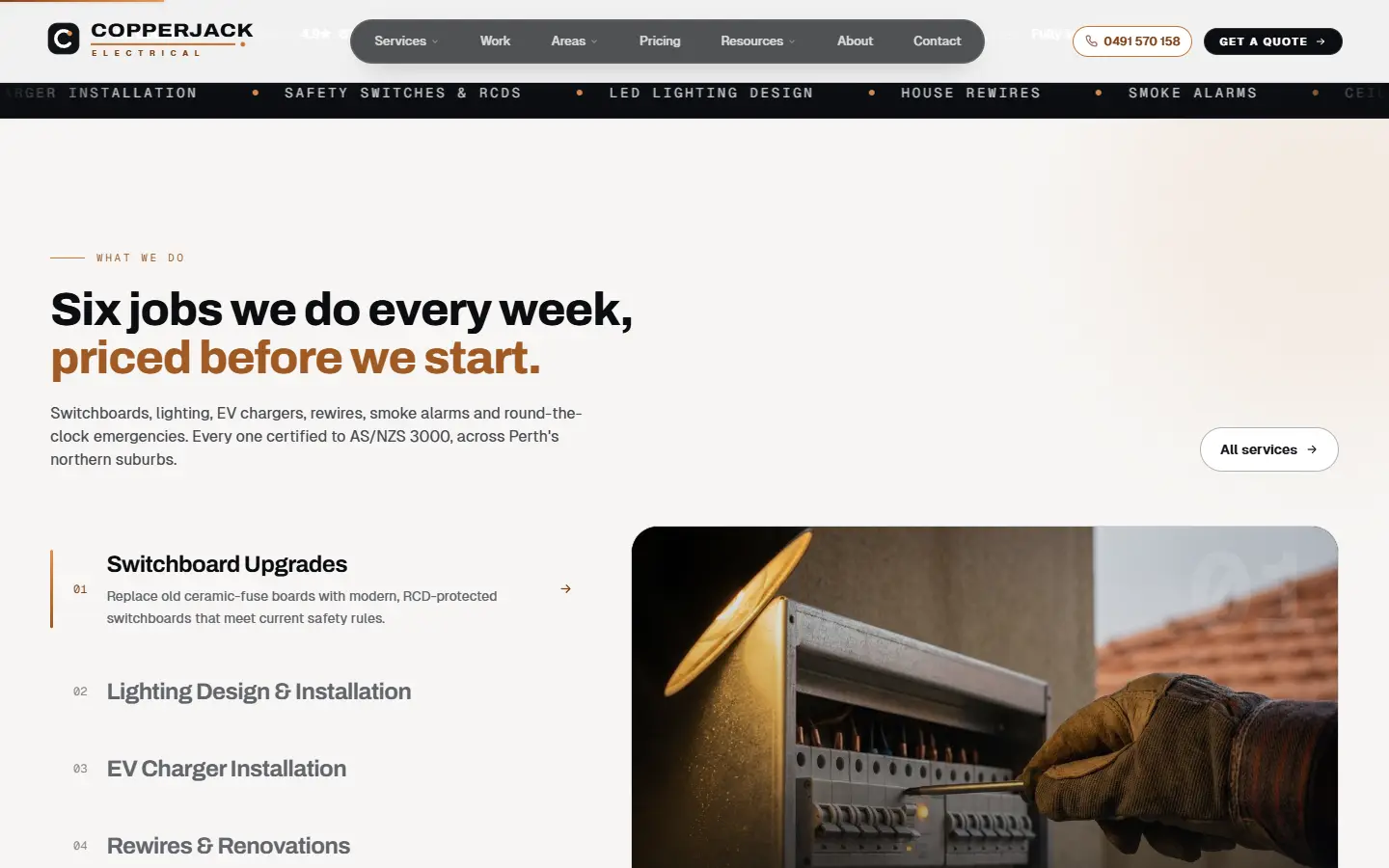
// the problem
What a burning-smell search checks on an electrician site.
The 90-second check fails in the header
Someone who smells burning plastic at the board opens three electrician tabs and looks for a contractor licence, a number they can tap, and a call-out fee. A worker licence in the footer, a contact form, and a photo of a van do not survive that pass. The next sparky whose contractor number is in the header takes the fault-finding call and often the board upgrade that follows it.
Contractor licence and worker licence treated as the same ticket
On an electrician's advertising, the contractor licence is the number a buyer is looking for. The worker licence is who holds the tools. Publishing the worker number, or neither, is how a first-time buyer decides you cannot lodge the eCoC. Put the contractor number where it can be read without scrolling, and keep the worker licence for the about page if you want it there at all.
Switchboards, smoke alarms and solar on one grid
A ceramic-fuse board, a beeping hallway alarm, a Tesla Wall Connector and a Sungrow battery are different buyers with different credentials. A six-icon 'we do everything' grid makes the burning-smell search land on panels and makes the EV buyer land on RCDs. Split the lanes or you bid against yourself for the wrong job.
eCoC, RCD and smoke-alarm rules never make the page
Residential work in WA lives under AS/NZS 3000, residual current devices, and mains-powered interconnected smoke alarms to AS 3786. Buyers look for a plain explanation of the eCoC or Notice of Completion, not a stock photo of sparks. If the site cannot say what gets lodged after a board upgrade or a hardwired alarm, the careful owner rings a contractor who will.
Someone who smells burning plastic at the switchboard does not read a six-icon grid. They open three electrician tabs on a phone, look for a contractor licence number, a number they can tap, and a call-out fee, then they ring. That pass is short. A worker licence buried in the footer, a “contact us” form and a photo of a van fail it. Planned work is slower and just as specific: “switchboard upgrade Perth ceramic fuses”, “RCD not working”, “hardwired smoke alarm electrician”. Each of those is a different job and a different price unit to an EV charger or a battery. When they all land on the same homepage paragraph, the burning-smell buyer and the solar buyer both leave. The commercial cost is the fault-finding call you never get, and the board upgrade, RCBO fit-off or interconnected alarm job that usually sits behind it.
The two electrical tickets do different jobs, and the website has to keep them apart. The electrical contractor licence belongs in the header and in schema. The worker licence belongs to the person on the tools. Mixing them, or publishing neither, is how a first-time buyer decides you cannot lodge the eCoC. Building and Energy expects the contractor licence number on an electrical contractor’s advertising, and the guide to licence numbers on WA tradie websites covers where it can sit and how large it should be. That is general information about what to show on a website, not legal advice: check the current requirements with Building and Energy before you publish.
In the Perth tradie website study, 66 of the 80 Perth and WA electrician homepages I checked by hand in October 2026 (83%) showed an EC licence number, as text or in an image.
Residential work then has to read like AS/NZS 3000: residual current devices (Type A where the load needs it), RCBO boards, Hager or Clipsal or Schneider gear where that is what you fit, and mains-powered interconnected smoke alarms to AS 3786 in hallways and bedrooms. A short explanation of the Notice of Completion is more useful than a stock photo of sparks. A safety-switch trip is a different call to a burning smell, and the page should say so. Older Perth housing still hides VIR and rubber-sheathed cable behind ceramic fuse boards. Naming that stock on the switchboard page, and on the suburb pages where that housing actually sits, is how a generic electrician listing becomes the person who has already opened that board.
Solar, battery and EV charging are not a switchboard upgrade with extra icons. Those buyers arrive with a product already in mind (Tesla Wall Connector, Zappi, Powerwall, Sungrow, Fronius) and often a CEC accreditation question, a single-phase versus three-phase question, or a board-capacity question that is a separate quote. Give them their own URLs. A facilities manager looking for test-and-tag to AS/NZS 3760 does not belong on the same form as a parent whose hallway alarm is chirping at 1am.
An EV charger often needs the board upgraded first. That is a reason to link the two pages, not to merge them. Put the contractor number and the eCoC language on every path you actually offer. Publish the weekday and after-hours call-out fees on the fault-finding path only, and do not run a 24/7 banner if the phone goes to messagebank. Leave panels and inverters off “emergency electrician Joondalup” so a burning-smell search does not rank a solar page.
The page set for an electrician site
Put together, an electrician site comes down to four kinds of page:
- Suburb pages that name local hazards (VIR or rubber cabling, storm exposure, ageing switchboards) rather than one buried service-area list.
- A dedicated after-hours fault-finding path: contractor licence, tap-to-call, the weekday and after-hours call-out fees, and a plain eCoC or Notice of Completion note.
- Services split by buyer: residential (switchboards, RCDs, smoke alarms), commercial (three-phase, test-and-tag to AS/NZS 3760), specialist (EV chargers, solar and battery).
- Contractor licence in the header and near each call to action. The worker licence stays off the advertising.
Five checks to run on any electrician site from a phone:
- Contractor licence readable without scrolling.
- Fault-finding path is a phone number, not a form.
- Switchboard, smoke-alarm and EV or solar work are separate URLs.
- eCoC language matches what you actually lodge in WA.
- After-hours claim matches whether the phone rings.
How the service pages and the suburb pages share the work is set out in service pages versus suburb pages.
// built by Kovus
Built by Kovus for other trades.
The concept site above is for a fictional business. These are real client sites for other trades, each linked to its case study, and the same approach carries over to an electrician site.
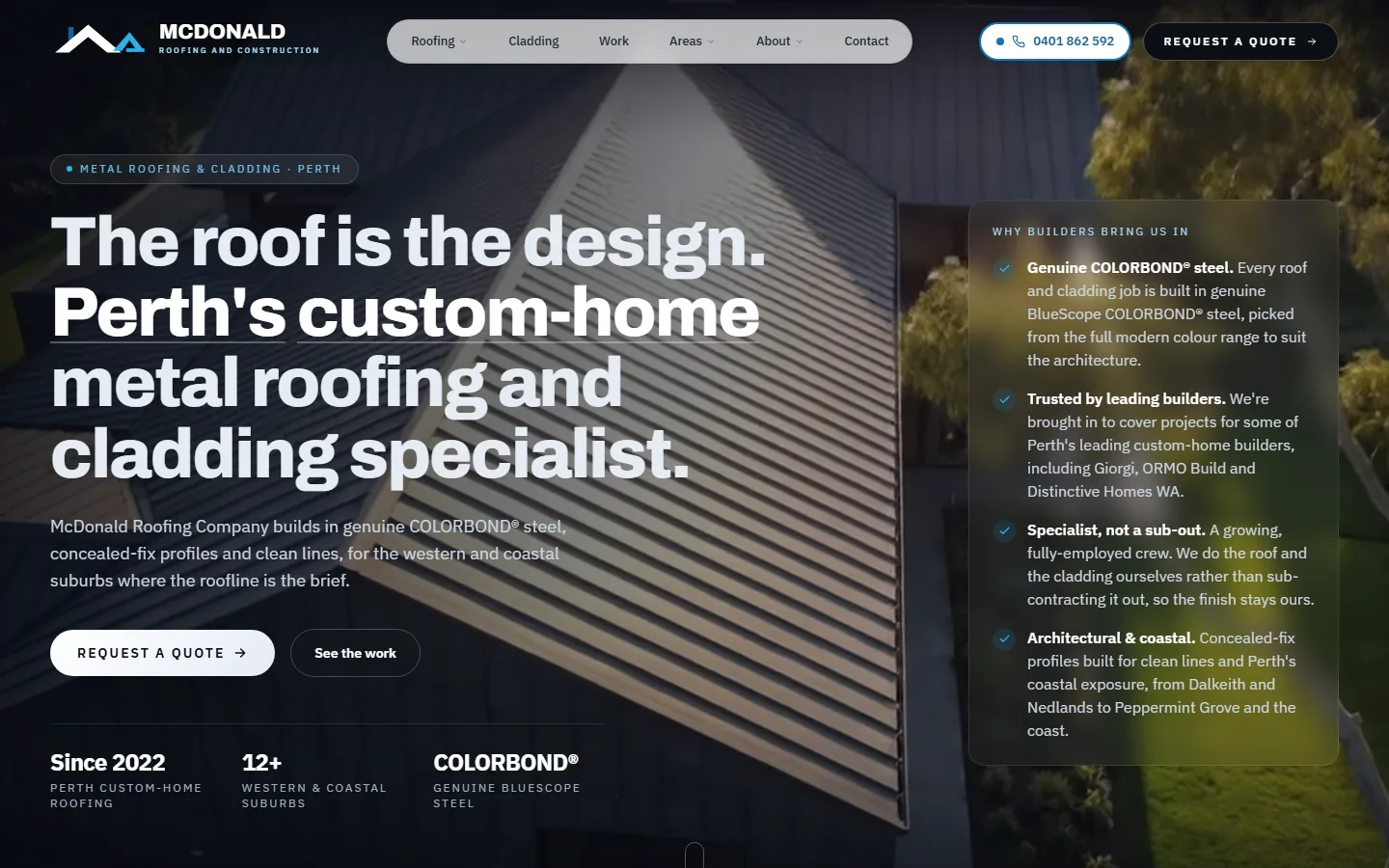 Metal roofing and cladding McDonald Roofing Company Wangara, Perth 12 service-area pages grouped into three Perth regions. Read the case study
 Exposed aggregate and honed concrete CJH Concrete Currambine, Perth
 Plumbing and gas Donza Plumbing Mannering Park, NSW
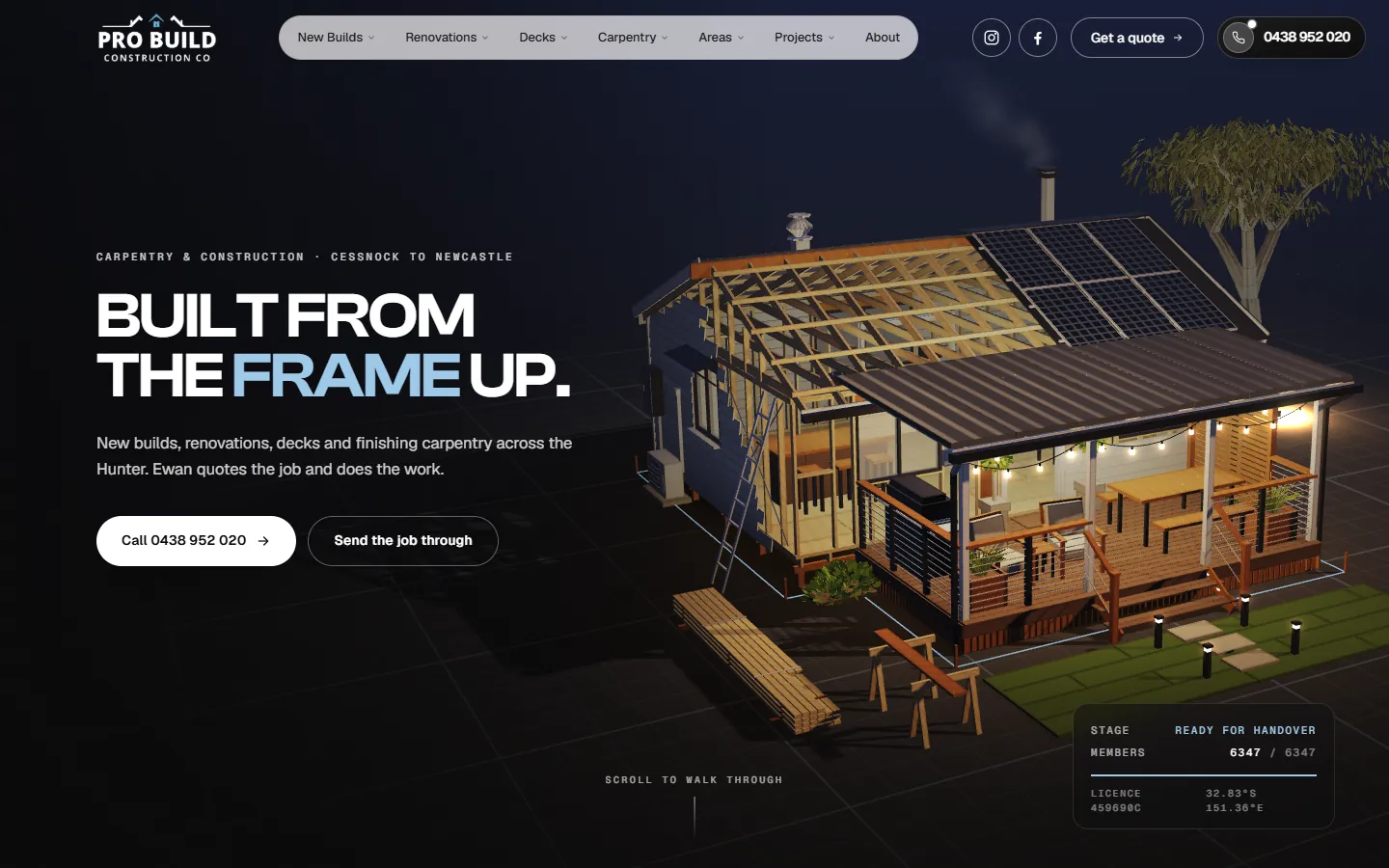 Carpentry and construction Probuild Construction Co Cessnock, NSW
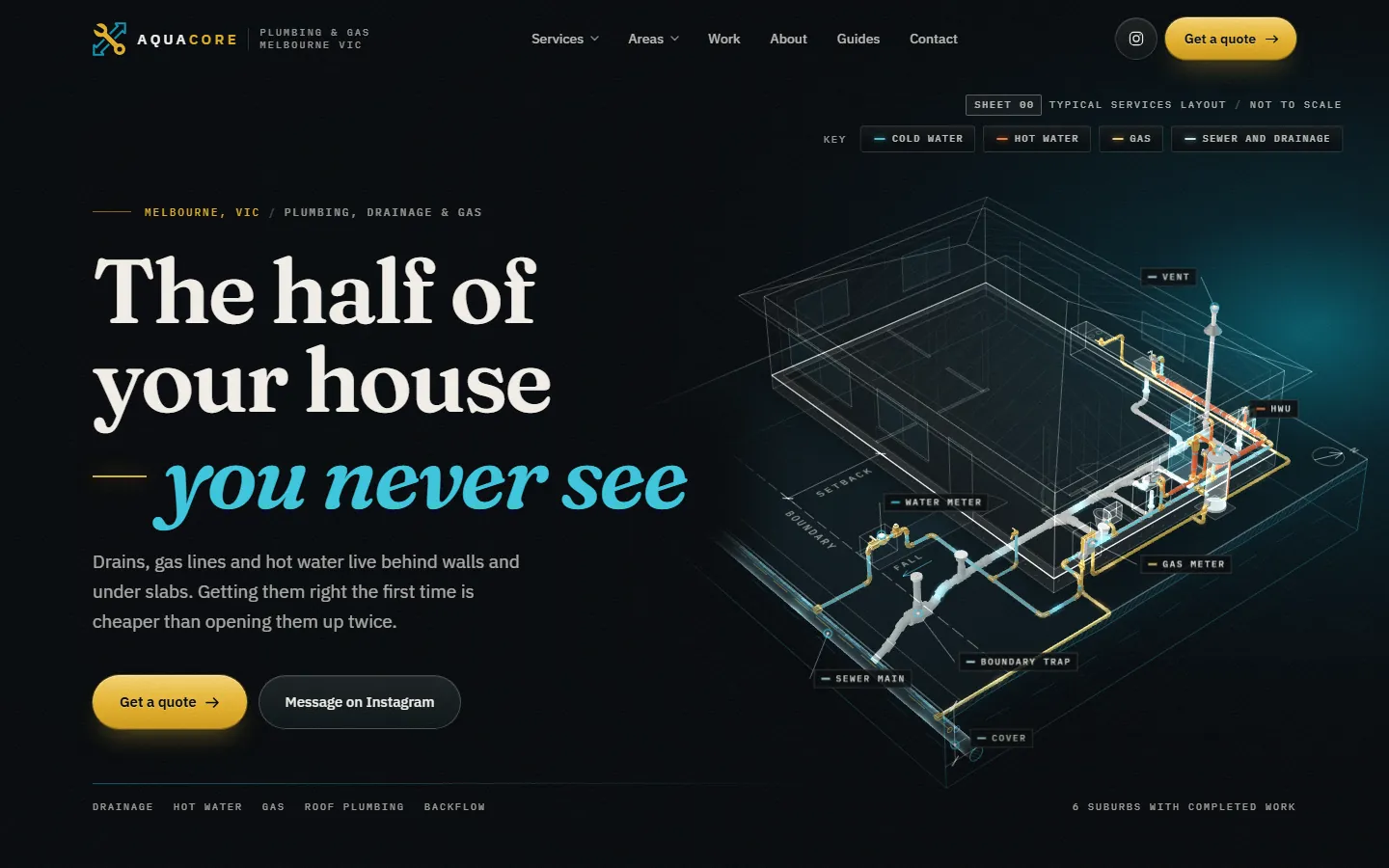 Plumbing AquaCore Plumbing Melbourne, VIC
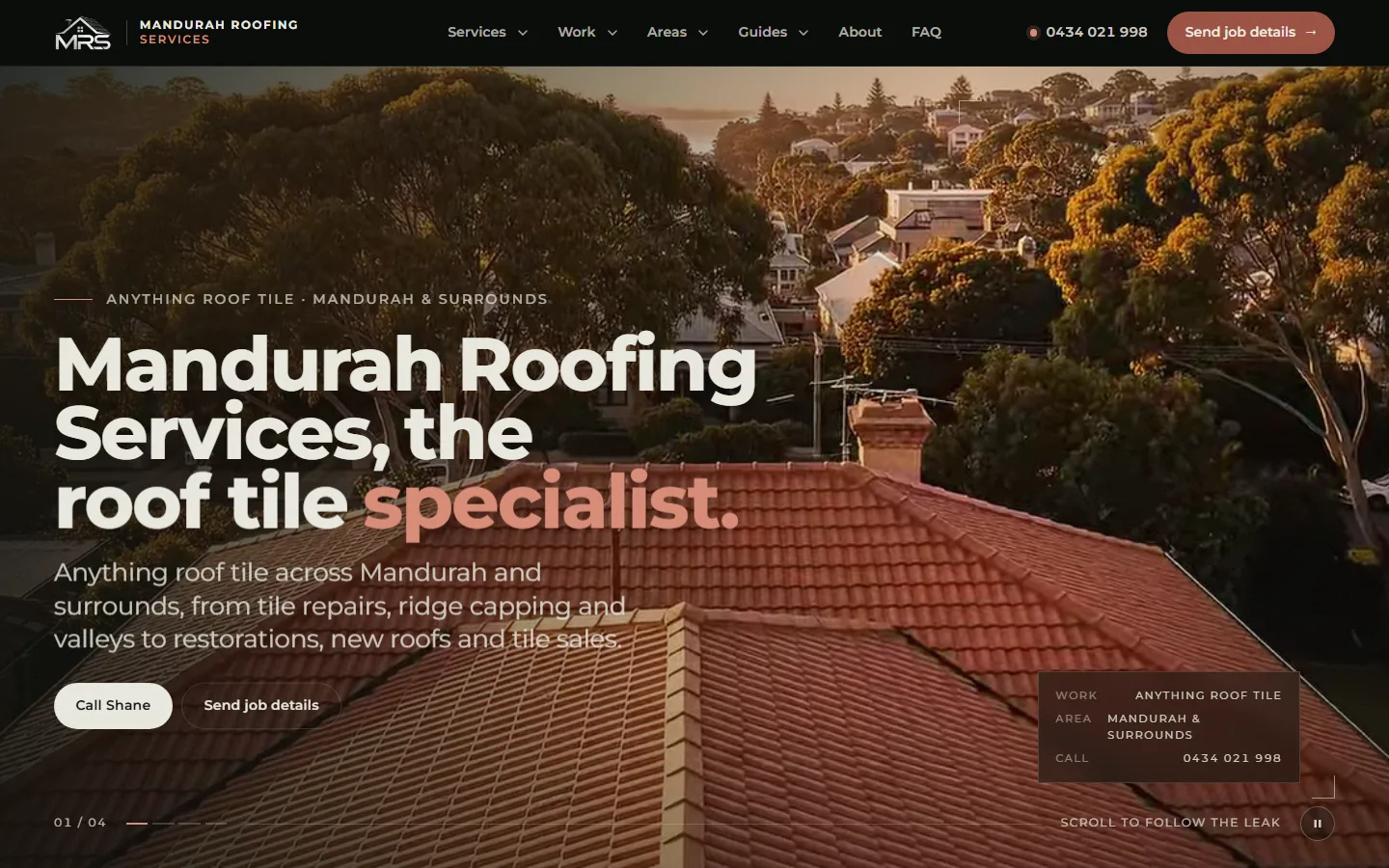 Roof tile repairs and restorations Mandurah Roofing Services Mandurah, WA
// the numbers
Tested on a phone before launch, measured once it is live.
Mobile, accessibility and technical search checks recorded before launch
/ Launch QA
Agreed enquiry events and available search data reported against the baseline
/ Client reporting
// prices and terms
What a website for electricians costs.
- Website build
- A$500 to A$1,000, quoted in writing for the pages and integrations the business needs. A Premium build for a bigger site starts at A$1,000. What Premium covers.
- Hosting and edits
- A$97 a month covers hosting, security, backups and unlimited edits. What website maintenance covers.
- SEO and Google Business Profile
- From A$197 a month, adding Business Profile work, Search Console, directory listings, review requests and a monthly report. SEO for tradies.
A quote-scoped one-off build is available without ongoing services, which are quoted separately. The client owns the website, content, domain and source code. Optional ongoing services are month-to-month with no minimum term. The client may cancel at any time, effective at the end of the current paid month. Full pricing and terms.
// straight answers
What electricians ask before a quote.
- Do I put the electrical contractor licence or the worker licence on an electrician website in WA?
- The contractor licence. That is the number Building and Energy expects on advertising, and it is the number a burning-smell search is trying to read in the header. The worker licence belongs to the person on the tools. Mixing them, or publishing only the worker number, makes it look like you cannot lodge the eCoC.
- What is a WA eCoC and should it appear on the site?
- It is the compliance paperwork for the job, in WA often talked about alongside the Notice of Completion lodged with Building and Energy. A short, plain explanation on the switchboard and alterations pages is enough. Promise the document you actually lodge. Do not borrow another state's certificate name if you do not issue it.
- Should solar, battery and EV charger work have their own pages on an electrician site?
- Yes, because those buyers are not searching for a fuse-board upgrade. They already have a product in mind (Tesla Wall Connector, Zappi, Powerwall, Sungrow, Fronius) and often a CEC accreditation question. Keep them off the emergency and RCD paths so a 10pm fault does not rank a panel page.
- How does an electrician website catch burning-smell and power-outage searches after hours?
- With a fault-finding path that is a phone number, not a form. Put the contractor licence and both call-out fees, weekday and after hours, on that path, and say whether someone is actually on call. A '24/7' banner with a messagebank loses the job to the sparky whose number rings.
- Do RCD and smoke-alarm rules belong on a Perth electrician website?
- Yes if you want the residential work that sits behind the panic call. Owners search 'RCD not working', 'safety switch tripping' and 'hardwired smoke alarm electrician' as separate jobs. A page that names Type A devices, RCBO boards, and mains-powered interconnected alarms to AS 3786 answers those queries without pretending they are a solar install.
- How much does a website for electricians cost?
- A standard electrician build costs A$500 to A$1,000. The written quote lists every page before work starts, from the fault-finding path to switchboard upgrades, smoke alarms and EV chargers, so the price follows the work you want more of. A Premium build, for a bigger site built to a higher finish, starts at A$1,000. Ongoing work is optional: A$97 a month covers hosting, security, backups and unlimited edits, and from A$197 a month adds SEO and Google Business Profile work.
- Who owns an electrician website once it is live?
- The client owns the website, content, domain and source code from launch. For an electrician, that covers the fault-finding and switchboard pages, the job photos and the licence details shown on them. The monthly plans are month to month with no minimum term, and cancelling takes effect at the end of the current paid month.
- Will the site rank for switchboard and EV charger searches?
- Google decides rankings, so no quote includes one. The build gives switchboard upgrades, smoke alarms and EV chargers a page each, keeps fault-finding on its own path for the after-hours call, and covers the structured data and mobile speed search engines read. The SEO plan then works on the Business Profile, Search Console, directory listings and review requests each month, with a report on what changed.
// the framework
Scope the 90-second check before the planned work.
An electrician site built to survive the 90-second check after a burning smell, then to quote the planned work that follows. How the five scoped areas work.
The same build sits behind all Kovus websites for tradies, scoped here to electricians.
// practical guides
Field guides for electrician websites
// built from Perth
Joondalup board upgrades are not a Fremantle coastal stock job.
Kovus is based in Perth. How electrician search splits across the metro is covered on Web Design Perth.
Scope an electrician site that survives the 90-second check.
Send your contractor licence number, the suburbs you cover and the work you want more of, from fault-finding to switchboards and EV chargers. Josh scopes the pages around that and quotes them in writing.
Or call Josh on 0423 155 979 or email josh@kovus.dev.