// subiaco and the inner west
Web design in Subiaco for Perth practices judged before the first call off Rokeby Road and Hay Street.
The inner west buys on credibility. A specialist near the medical precinct, a solicitor in West Leederville, a boutique on Rokeby Road: the choice is usually made on a phone, quietly, against three neighbours doing the same thing a short walk away. In Subiaco the website is the waiting room a client sees first. Website builds cost A$500 to A$1,000; see pricing.
/ How local search behaves in the inner west
Everything here is close together, so being close stops deciding it.
Density is the thing that makes Subiaco unusual in Perth. In most of the metro area a local search is settled largely by who is nearest, because the alternatives are ten minutes apart. Between Subiaco, Shenton Park, Daglish, Jolimont and West Leederville the alternatives are a few streets apart, and a searcher standing outside the underground station is close to almost all of them at once. Distance stops separating the options, so the other inputs take over: how completely a Business Profile is filled in, how recently it has been touched, what reviews say, and what the page behind the listing is genuinely about.
The commercial mix here is not the one most local search advice assumes. Rokeby Road and Hay Street run to professional services, medical specialists, allied health, boutique retail and hospitality rather than vans and service areas. King Edward Memorial Hospital, the QEII Medical Centre and the University of Western Australia in Nedlands and Crawley anchor a weekday population of staff, students and patients who search for something specific and nearby, often once, often urgently. Those searches reward pages that answer plainly: what is treated, who does it, what an appointment involves, where to park. A brochure page about values does not survive that comparison.
Housing sets the other half of the demand. Subiaco and Shenton Park hold Federation and inter-war character stock with design controls attached, and Nedlands, Dalkeith, Claremont and Cottesloe carry the higher end of the same story, so the residential work skews to heritage renovation and restoration, high-end joinery and kitchens, painting, landscaping and pools on established blocks, and electrical and plumbing upgrades in houses that are a century old. Buyers are choosing judgement rather than a price, which means the pages that do the work are the ones showing comparable jobs in comparable houses, with the approvals and the constraints named.
Geography still matters at the edges, even inside a corridor this compact. Stirling Highway carries the whole run from Nedlands out through Claremont to Cottesloe and Mosman Park, and Thomas Street and Railway Road stitch Subiaco to the rest, so travel time rarely stops an enquiry. The Subi East redevelopment on the old Subiaco Oval site keeps changing what sits at the centre of the suburb, and searches near a redevelopment tend to be made on a phone, in the street, with no patience for a page that boots slowly. A Subiaco site earns its place by being fast, by being specific about which of these suburbs the work genuinely covers, and by leaving out the ones it does not.
City of Subiaco, Town of Cambridge and the Leederville edge
Subiaco, Shenton Park, Daglish, Jolimont, West Leederville, Leederville, Wembley, Floreat
West to the coast, through Nedlands and Claremont
Nedlands, Crawley, Dalkeith, Claremont, Swanbourne, Cottesloe, Mosman Park
/ Work delivered in Perth
A Mount Pleasant grocer, and a structure that suits a Subiaco practice.
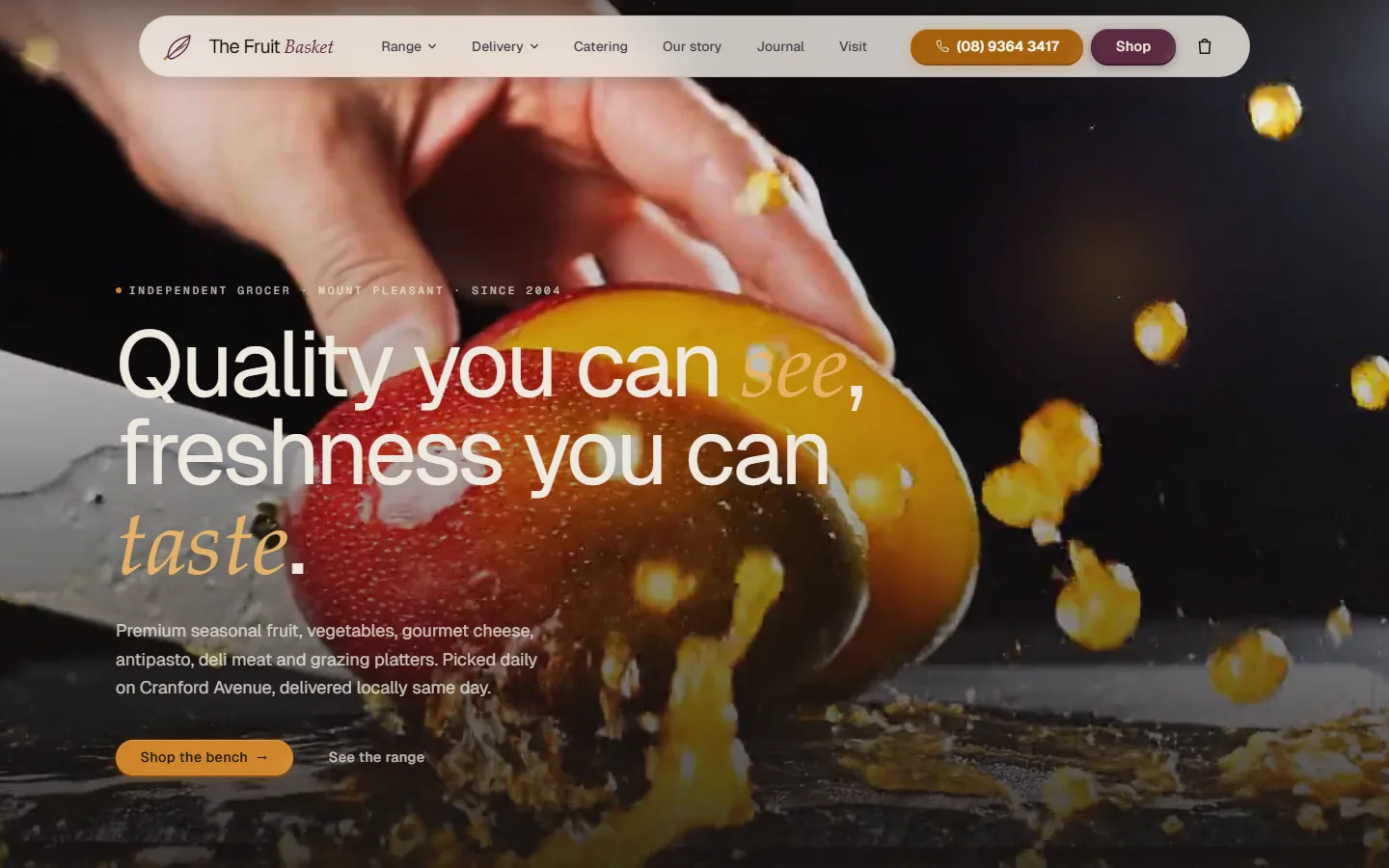
The Fruit Basket is an independent grocer on Cranford Avenue in Mount Pleasant, across the Swan, trading since 2004. Before the build, everything the shop actually did lived on a Facebook page and a Google Business Profile, an older e-commerce site from a previous owner had gone offline years before, and no analytics or Search Console was verified on any domain, so nothing about the business was being measured.
What shipped is a site with 18 hand-written delivery pages, one per suburb the shop genuinely reaches, each carrying its own distance, drive time, same-day cut-off, landmark list and local notes rather than one paragraph listing every suburb it would like. Each of those pages answers its own delivery questions in a form Google can read, and every page tells Google the business is a grocery store, alongside a produce-led range section and a catering page.
What transfers to a Subiaco practice or shopfront is the structure rather than the trade. A specialist rooms, a legal firm or a boutique on Rokeby Road has the same problem the grocer had: real substance that search cannot see, and no measurement to tell anyone which part is working. On that build, Search Console verification and analytics going live the same day produced the shop's first search data in its history. The site, the pages and the domain belong to the business from day one.
Read the Fruit Basket case study and its Search Console results →
More client builds, labelled by where each business is.
In Perth
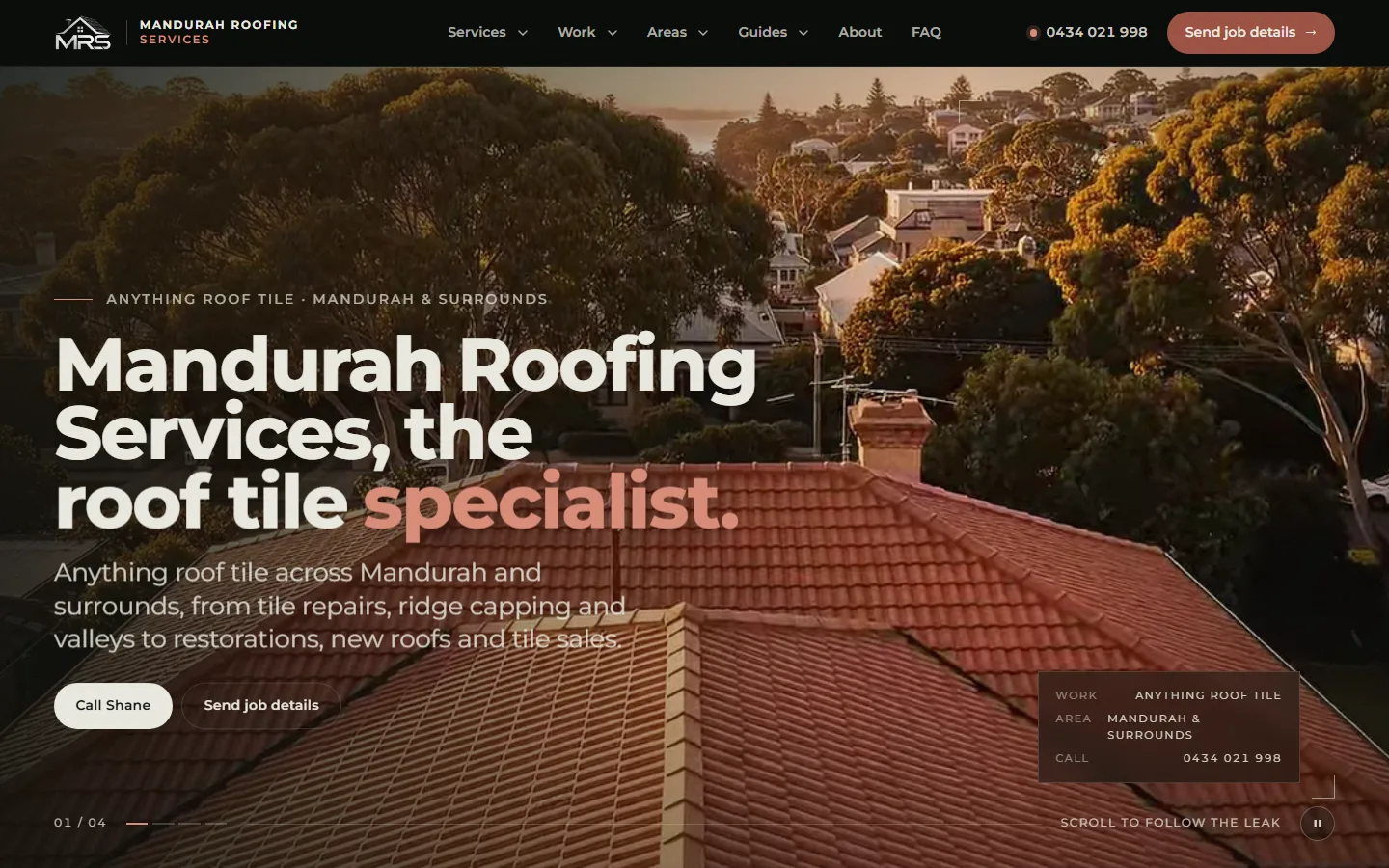 Mandurah, WAMandurah Roofing ServicesRoof tile repairs and restorations. 19 area pages from Rockingham to Pinjarra and eleven job stories linked to the original posts.Read the case study
 Currambine, PerthCJH ConcreteExposed aggregate and honed concrete. 16 service-area pages, from Alkimos south to Beeliar.Read the case study
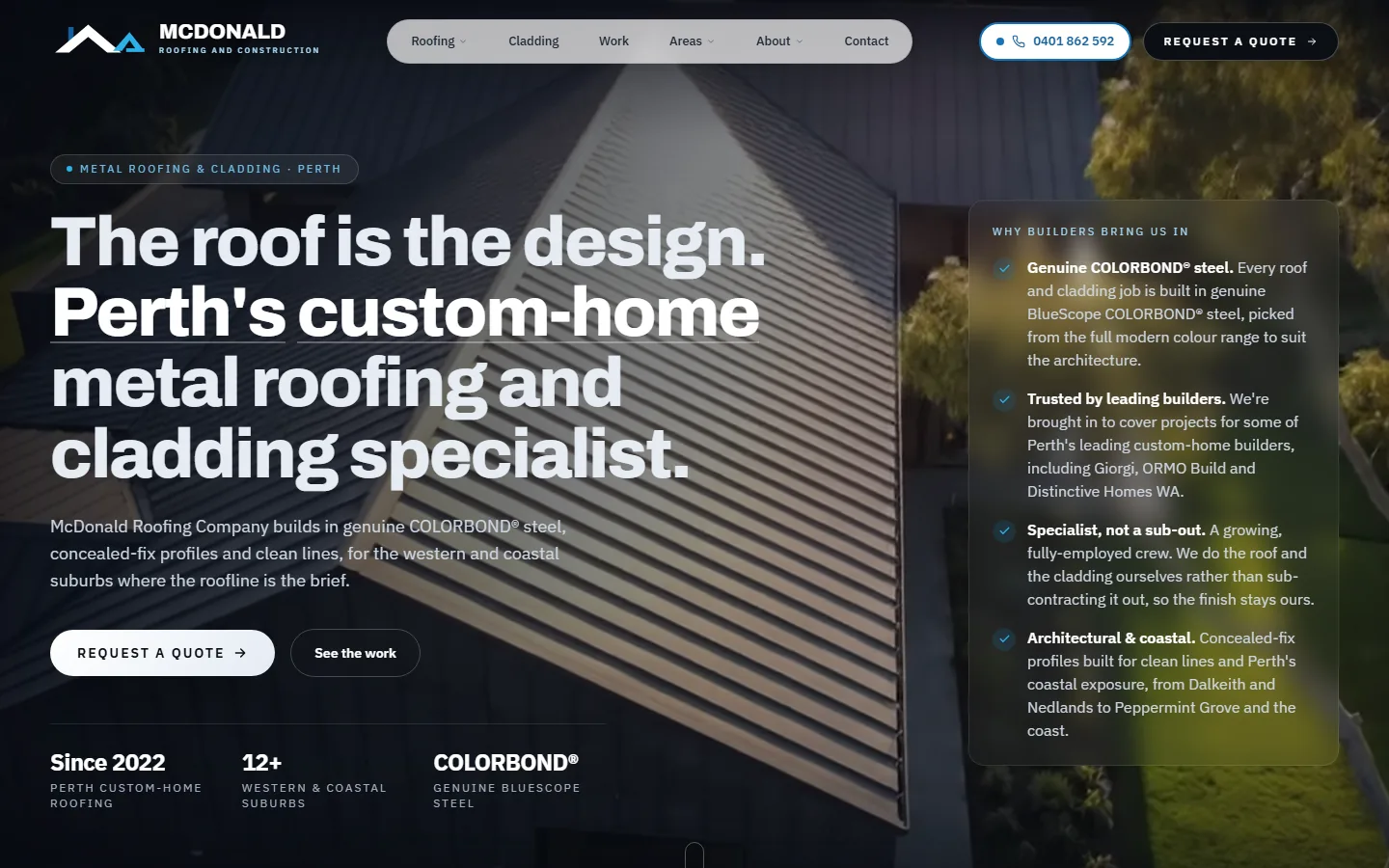 Wangara, PerthMcDonald Roofing CompanyMetal roofing and cladding. 12 service-area pages grouped into three Perth regions.Read the case study
Interstate
 Mannering Park, NSWDonza PlumbingPlumbing and gas. 100 suburb pages at launch, from the northern Central Coast to Newcastle.
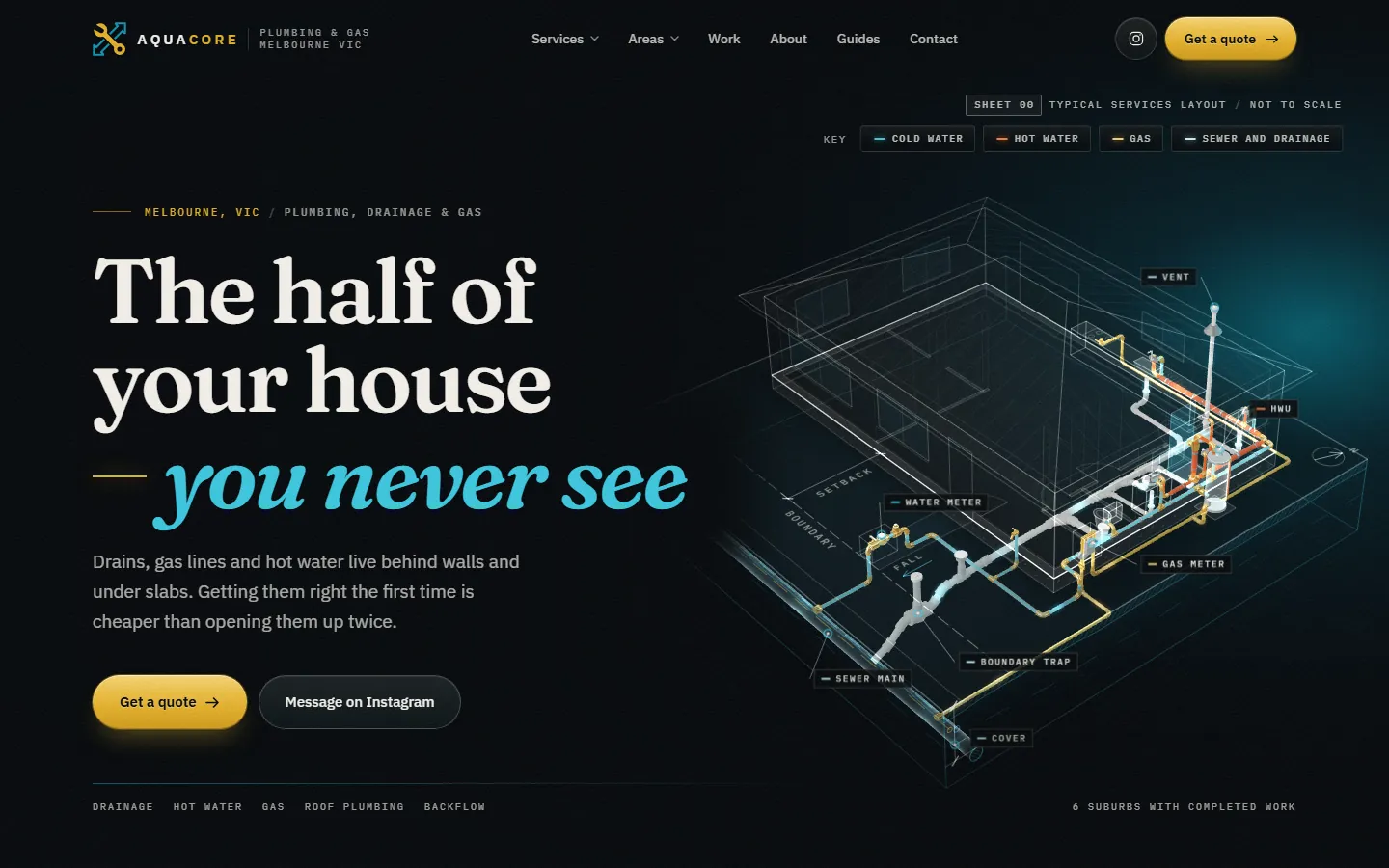 Melbourne, VICAquaCore PlumbingPlumbing. 22 suburb pages and a job record linked to the original Instagram posts.
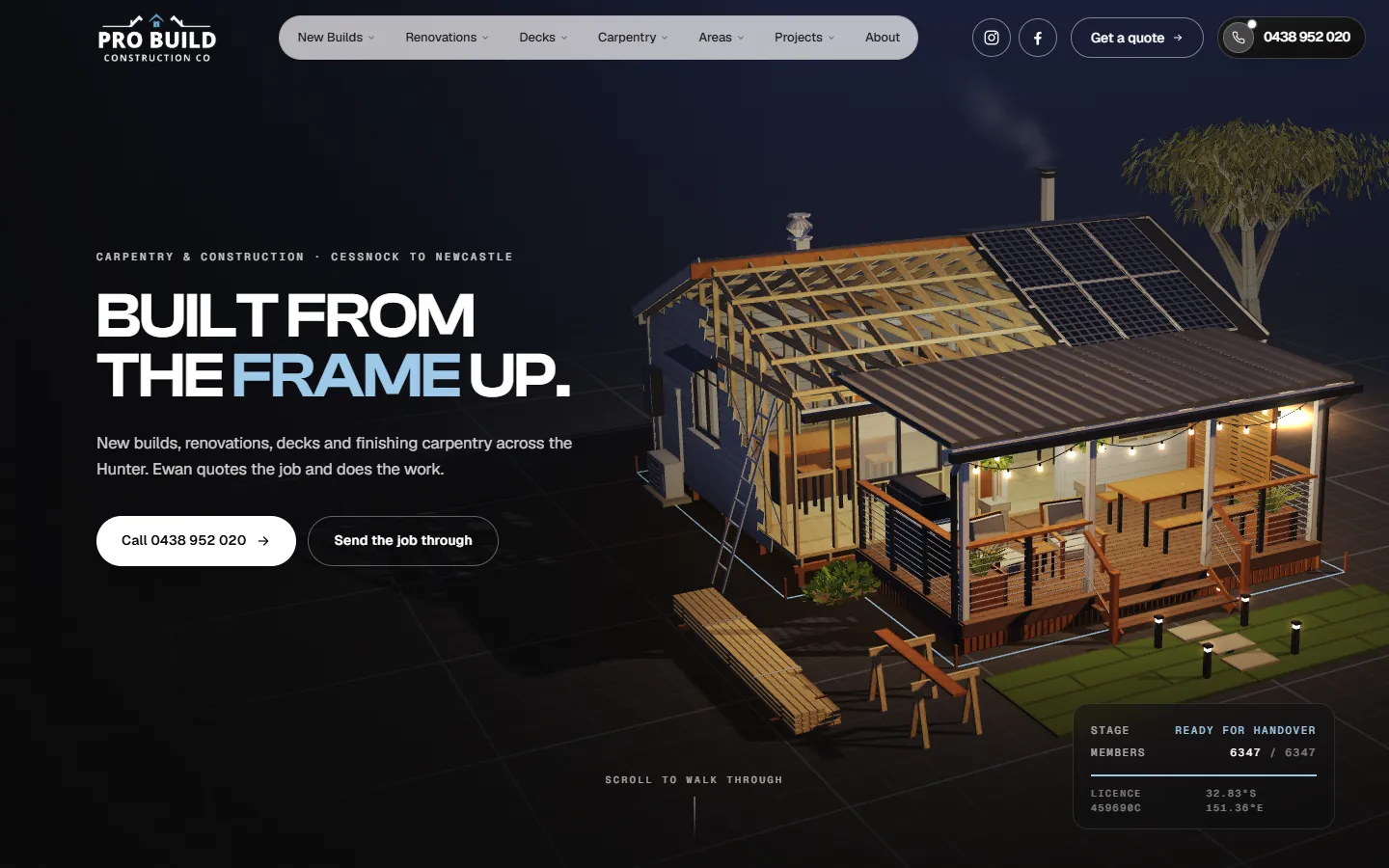 Cessnock, NSWProbuild Construction CoCarpentry and construction. 14 suburb pages across the Hunter and four project pages from real jobs.
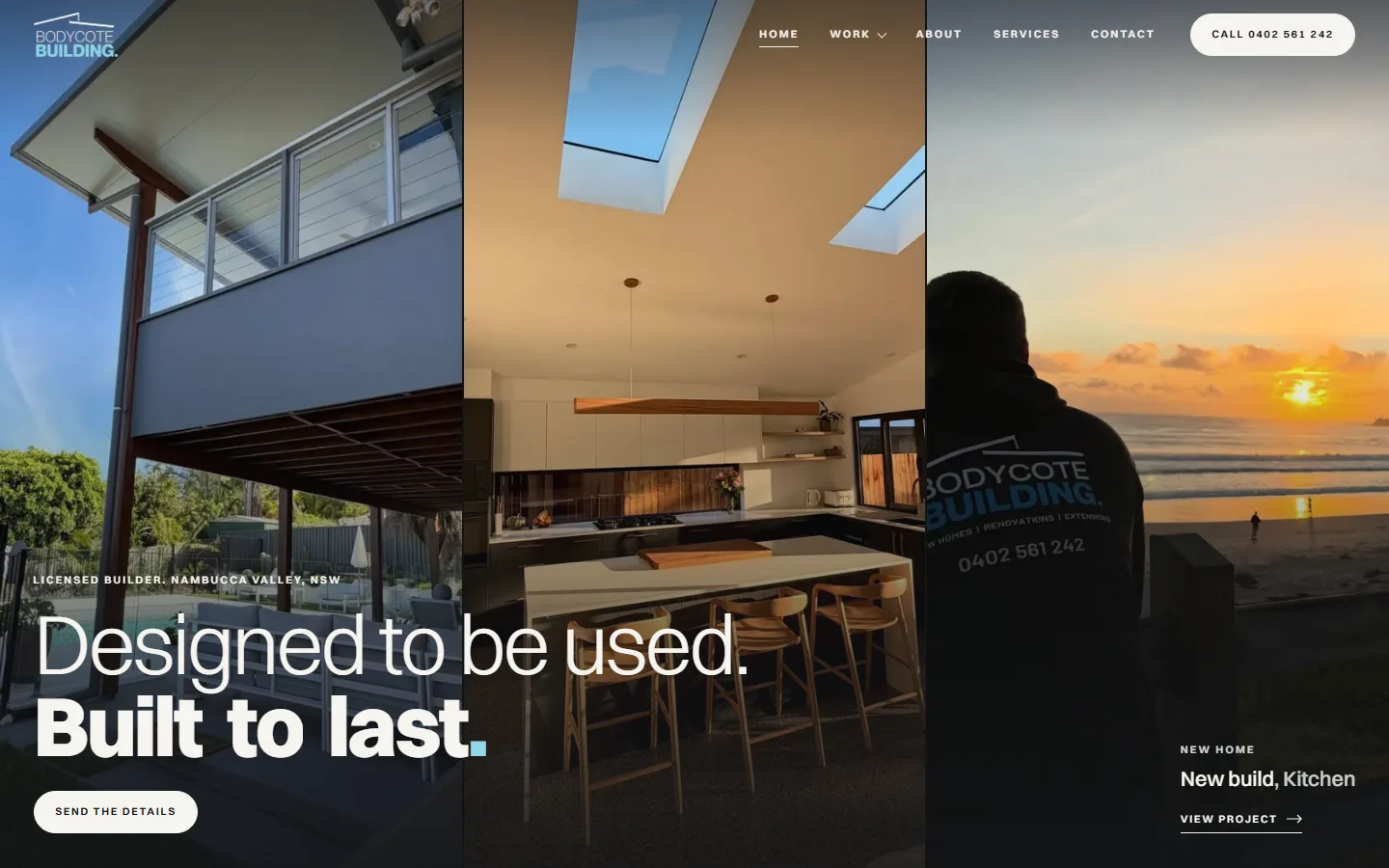 Nambucca Valley, NSWBodycote BuildingLicensed builder. Three project pages split by the kind of job: a new home, an elevated deck and a full renovation.
What a Subiaco build actually includes.
The scope is the same as any Kovus build: service and suburb pages, a website that supports the Google Business Profile, mobile speed, structured data, a short enquiry path and written ownership of the site. What changes in Subiaco is which suburbs earn a page and what each one says, which is the local work described above. The full list is on the Perth page, under everything a Kovus website build includes.
- Website build
- A$500 to A$1,000, quoted in writing for the pages and integrations the business needs. A Premium build for a bigger site starts at A$1,000. What Premium covers.
- Hosting and edits
- A$97 a month covers hosting, security, backups and unlimited edits. What website maintenance covers.
- SEO and Google Business Profile
- From A$197 a month, adding Business Profile work, Search Console, directory listings, review requests and a monthly report. What the SEO plan covers.
Both monthly plans are optional and month to month with no minimum term. You own the website, content, domain and source code. Full pricing and terms.
Questions from owners in the Subiaco area.
Everything in Subiaco is minutes apart. Does proximity still matter?
I run a medical or allied-health practice. What is different about that kind of site?
Does heritage renovation work need its own pages?
Should the site cover Claremont, Cottesloe and Nedlands too?
How long before a new Subiaco site is doing anything measurable?
How much does web design in Subiaco cost?
Who owns the website, and is there a contract?
Will the site rank on Google?
/ Elsewhere in Perth
Other Perth corridors with their own page.
- Web design across Perth
- Joondalup and the northern suburbs
- Baldivis and the Kwinana growth corridor
- Bayswater and the north-eastern suburbs
- Canning Vale and the south-eastern estates
- Cannington and the Albany Highway corridor
- Cockburn and the suburbs from Atwell to the coast
- Mandurah and the Peel region
- Melville and the suburbs south of the river
- Rockingham and the south-west coast
/ The next step
Tell me what the practice does, and where the current site lets it down.
What the business does, which inner-western suburbs the enquiries actually come from, and what the current site fails to do. I will reply with the sensible next step and what is needed for an exact scope.
Or call Josh on 0423 155 979 or email josh@kovus.dev.
/ Perth based · Written scope · You own the website