// for greengrocers & food retailers
Websites for greengrocers that publish this week's specials.
Independent fruit shops lose basket spend every week that this week's mangoes, stone fruit or citrus only exist on a Facebook post. A site that shows the shelves, the hours, and a pickup or delivery checkout stops regulars drifting to a supermarket that is still open at 8pm. Builds cost A$500 to A$1,000; see pricing.

// the problem
Why this week's mangoes cannot live only on Facebook.
This week's produce lives and dies on Facebook
A dated specials page is what locals actually search: cheap mangoes this week, WA stone fruit, boxes of citrus, a fruit box they can collect on the way home. A Facebook photo from Tuesday is gone by Saturday and never ranks. The shop that puts this week's per-kilo prices on a real URL keeps the shopper who opened Google, not the feed.
Stock salad bowls instead of your shelves
A greengrocer is bought on what is on the table today. A phone photo of your own mango crate, cherry punnets or the Saturday citrus stack beats a library image of someone else's apples. Shoppers comparing you with Coles or Woolworths can see the difference in one scroll. A generic 'fresh produce' hero tells them nothing about what is in this week.
Hours, pickup and delivery are a guess
The high-intent searches are 'fruit shop open now', 'fruit and veg Mount Lawley' and 'fruit box delivery Perth'. If trading hours, public-holiday closes and the pickup versus delivery split are wrong, Google sends that shopper to whoever looks open. Same-day delivery across half the metro is a claim most single shops cannot honour. A cut-off time, a suburb list and a minimum order is what the regular needs.
No checkout, so the Friday regular drifts
The loyal customer who used to duck in after work will order a fruit box from whoever can take the card at 8pm. An online checkout can run click-and-collect and local delivery without pretending you are a supermarket. Shopify suits some shops, and others take payment through a simpler checkout on their own site. Without one, the website is a brochure and the basket goes to Woolworths or a box scheme.
A greengrocer is not a trade with a quote form. The shopper on the phone is mid-errand, typing “fruit shop open now”, “fruit and veg Subiaco” or “mangoes this week Perth”, and they will go to whoever looks open, looks stocked, and can take the order before dinner. Coles, Woolworths and Aldi win that moment by default: hours on the pin, a cart, and a photo of produce even when the photo is a week old. The independent shop still wins on what is actually on the table (WA stone fruit in summer, citrus through winter, cherries in December, a mango tray from the Market City run) but only if that fact lives on a page, not in a Facebook post that vanished on Saturday. Basket spend walks out the door every week the specials are unsearchable and the hours on the website disagree with the door.
The photograph is the stock. A crate of your own Kensington Pride mangoes, a wet Saturday citrus stack, the cherry punnets before they sell out, shot in the shop lighting you already have, tells a local more than any styled salad bowl from a library. Date the specials page when you write the board: per kilo, per tray, per fruit box, and the week it applies, so last January’s cherries are not still sitting there in August. Trading hours belong next to that, including the early Saturday close and the public-holiday question people actually ring about.
Pickup versus delivery has to be split in language a regular understands. Click-and-collect with an order-by time is a different promise from a van that will not leave Canning Vale after 2pm. Mixing them on one “we deliver” line is how you get a Mount Lawley order you cannot pack and a one-star about a box that never arrived.
Checkout is what stops the Friday regular drifting: a fruit box, a card, a pickup slot or a short delivery list, without pretending the shop is a supermarket catalogue of two thousand lines. Shopify suits some shops. A single store can often do with less, as long as the cart takes the order and the shop packs it. The site should lead with what is in this week, then let the cart take a standing box for the suburbs you actually cover, with a minimum order that pays for the drive. Your food business registration with the local council, the street address and the hours should match Google Business Profile and the door, because that is what “open now” is built on. That is a shop that can be found, believed and paid before the supermarket app opens.
The pages a greengrocer site needs
The Fruit Basket in Mount Pleasant has the same parts: a range split by category, a page for each of its 18 delivery suburbs, a weekly specials structure and a shop that takes same-day delivery and pickup orders. For an independent shop the list runs:
- A produce-led hero using the shop’s own shelves, not a library salad bowl.
- A dated this-week specials page (per kilo, per tray, per fruit box) so last week’s cherries do not sit there in August.
- Separate pickup and delivery paths, each with a cut-off and the suburbs actually covered.
- Trading hours, including public holidays, kept in lockstep with the door and Google Business Profile.
The walkthrough is the greengrocer website field guide.
// built by Kovus
Client sites built by Kovus for trades.
The greengrocer build on this page is The Fruit Basket. These are client sites for trades, each linked to its case study.
 Metal roofing and cladding McDonald Roofing Company Wangara, Perth 12 service-area pages grouped into three Perth regions. Read the case study
 Exposed aggregate and honed concrete CJH Concrete Currambine, Perth
 Plumbing and gas Donza Plumbing Mannering Park, NSW
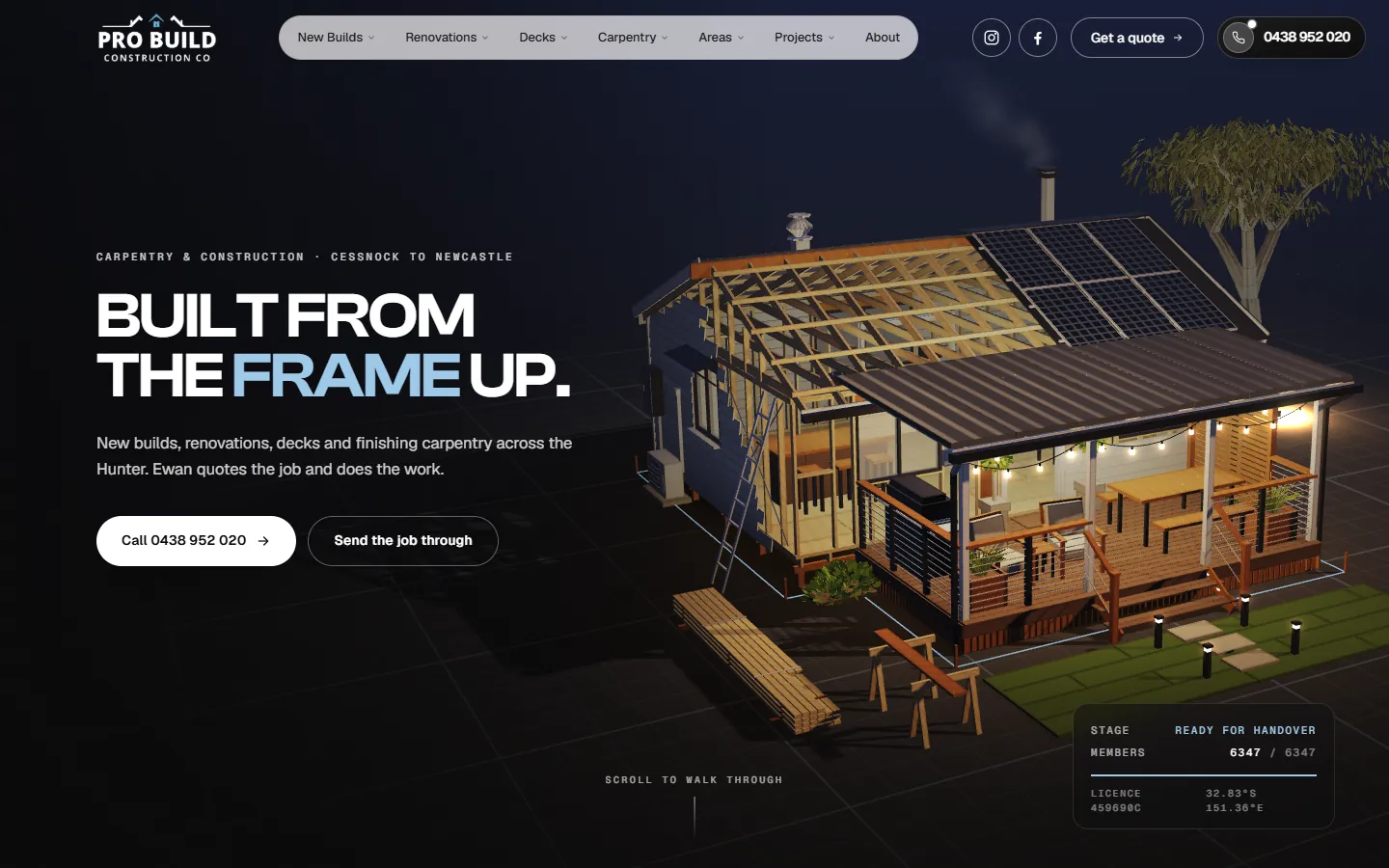 Carpentry and construction Probuild Construction Co Cessnock, NSW
 Plumbing AquaCore Plumbing Melbourne, VIC
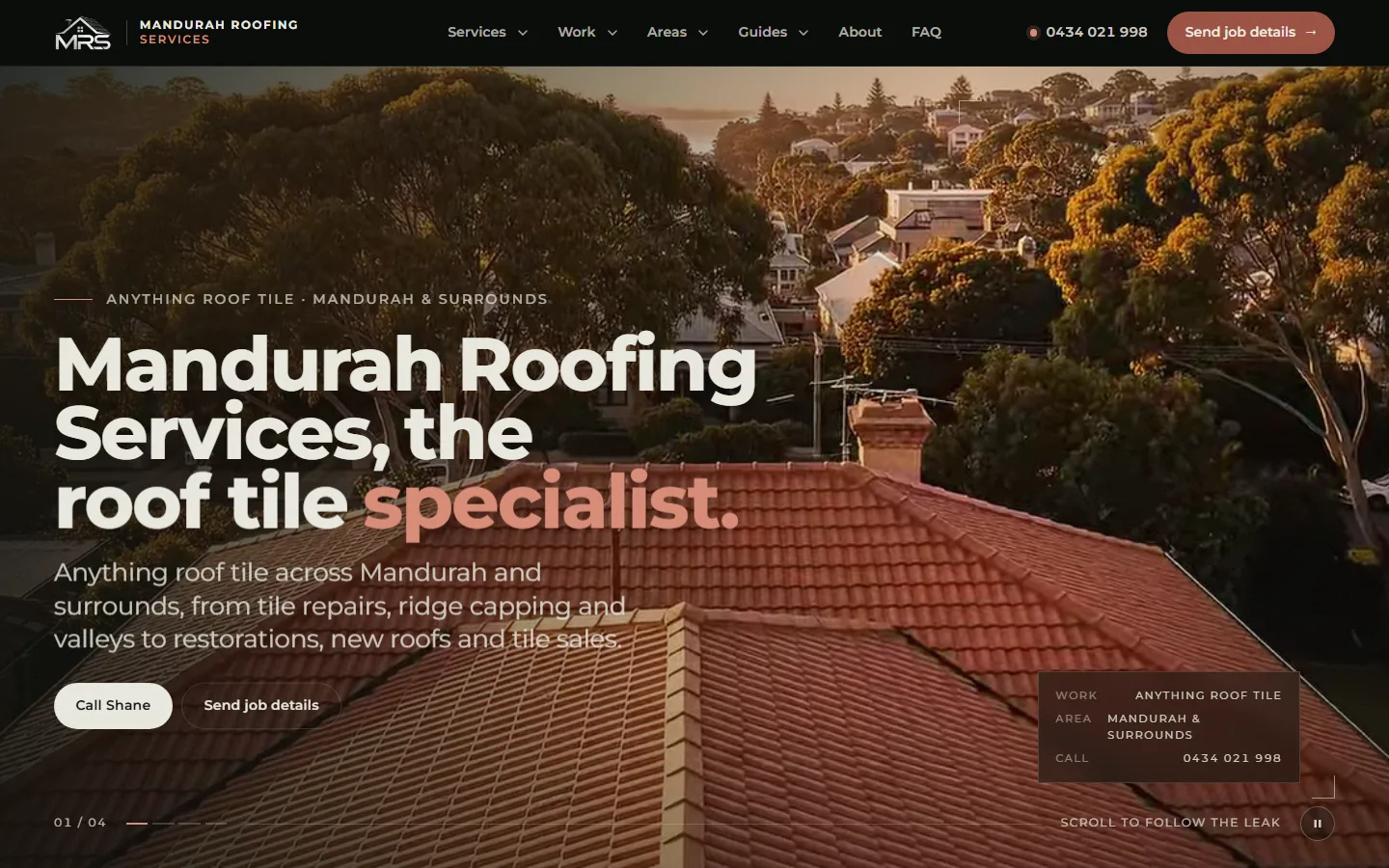 Roof tile repairs and restorations Mandurah Roofing Services Mandurah, WA
// the numbers
Checked before the shop goes online, measured from launch day.
Mobile, accessibility and technical search checks recorded before launch
/ Launch QA
Agreed enquiry events and available search data reported against the baseline
/ Client reporting
// prices and terms
What a website for greengrocers costs.
- Website build
- A$500 to A$1,000, quoted in writing for the pages and integrations the business needs. A Premium build for a bigger site starts at A$1,000. What Premium covers.
- Hosting and edits
- A$97 a month covers hosting, security, backups and unlimited edits. What website maintenance covers.
- SEO and Google Business Profile
- From A$197 a month, adding Business Profile work, Search Console, directory listings, review requests and a monthly report. What the SEO plan covers.
A quote-scoped one-off build is available without ongoing services, which are quoted separately. The client owns the website, content, domain and source code. Optional ongoing services are month-to-month with no minimum term. The client may cancel at any time, effective at the end of the current paid month. Full pricing and terms.
// straight answers
What greengrocers ask before a site is scoped.
- Do I need a website if my fruit shop already runs on Facebook and Google?
- Yes, if you want this week's specials and your hours to be findable outside the feed. Facebook does not rank for 'fruit shop Mount Lawley' or 'mangoes this week Perth', and Google Business Profile cannot hold a dated specials page, a pickup cut-off or a cart. The profile still matters for 'open now'. The site is where the produce photos, the hours and the order live together. A shop that is only a pin on Maps loses the shopper who wanted to check the citrus before they left work.
- How do I put weekly specials on a website without updating it every morning?
- You do not need a daily rebuild. A dated 'this week' page, updated when you set the board, is enough: mangoes, stone fruit, citrus, a price per kilo, per tray or per box. Stamp the week so last Thursday's cherries do not sit there in August. If a line sells out, take it down or mark it. The point is an indexable URL for the special, not a live stock feed. Most shops already write that list for Facebook. The same list belongs on the site.
- Does a single greengrocer need Shopify to take orders online?
- Not necessarily. Shopify suits some shops, particularly those with a large range to manage, and it can sit behind a produce-led site so a regular can order a fruit box, pay and pick up after work. A single shop can also take payment through a simpler checkout on its own site. The Fruit Basket in Mount Pleasant looked at Shopify, judged it overkill for one store at its volume, and takes same-day delivery and pickup orders through a Stripe checkout on its own shop page. Whichever you choose, only take orders you will pack: a browse-only range with a phone number is cleaner than a cart you never fulfil.
- How do I show up for 'fruit shop near me' without looking like a supermarket?
- Publish the real trading hours, the street, and photos of your own shelves, then keep Google Business Profile in lockstep with the site. Suburb or delivery pages should name the actual range (seasonal fruit and veg, and deli or platters only if you sell them) and the delivery minimum, not a fake aisle of products. Food business registration sits with your local council. It is not a marketing badge, but the name, address and hours on the site should match what the council and Maps already have.
- Should I offer delivery or just click and collect?
- Start with pickup if that is what the shop can pack. Click-and-collect with a cut-off (order by 11am, collect after 3pm) is how most single-store greengrocers keep Friday regulars without a van run they cannot staff. Delivery only works with a short suburb list, a same-day cut-off and a minimum order that covers the drive. Promising Mount Lawley to Mandurah by 5pm trains people to be angry. Write the area you actually cover, and send the rest to the counter.
- How much does a website for greengrocers cost?
- A standard greengrocer build costs A$500 to A$1,000, quoted in writing for the specials page, the range, the trading hours and the pickup or delivery checkout. A Premium build, for a bigger site built to a higher finish, starts at A$1,000. Ongoing work is optional: A$97 a month covers hosting, security, backups and unlimited edits, and from A$197 a month adds SEO and Google Business Profile work.
- Who owns the shop's website and specials page?
- The client owns the website, content, domain and source code from launch. For a fruit shop, that covers the specials and range pages, the shelf photos and the domain regulars type in. The monthly plans are month to month with no minimum term, and cancelling takes effect at the end of the current paid month.
- Will the shop's website rank on Google?
- Google decides that, so no quote includes a ranking. The build puts the hours, the range and this week's specials on the site, with the structured data search engines read and a layout checked on a phone. After launch, the SEO plan keeps the Business Profile, directory listings and review requests current and checks Search Console every month, with a report on what changed.
// the framework
Scope the specials page, the hours and the checkout.
Kovus builds a greengrocer's site around what is on the bench this week. How the five scoped areas work.
It is the build behind Kovus websites for tradies, scoped here to a shop that sells produce rather than call-outs.
// practical guides
Field guides for greengrocer websites
- Greengrocer Website Produce and Ordering: A Field GuideA practical walkthrough of current produce imagery, shop information, genuine location pages, specials and ordering or fulfilment paths.
- What a Tradie Website Needs to Support Local Search in AustraliaA practical framework for tradie website pages, enquiry paths, machine-readable facts, useful content and measurement, with links to every trade guide.
- Tradie and Local Business Website Examples: Six Kovus TeardownsTradie website examples: six real Australian builds, five trades and a greengrocer, annotated for the hero, proof, navigation, local SEO and enquiries.
// built from Perth
A Mount Pleasant regular is not a Mandurah delivery run.
Kovus is based in Perth. How greengrocer search splits across the metro is covered on Web Design Perth.
Perth client builds: The Fruit Basket.
Scope a greengrocer site that publishes this week's specials.
Send your trading hours, the suburbs you deliver to and a few photos of this week's shelves. Josh quotes the specials page, the range and the checkout in writing.
Or call Josh on 0423 155 979 or email josh@kovus.dev.