Marketing a trade business comes down to a short list of places a customer can find you. Some you own, some you earn and some you rent. The order matters, because renting before the owned and earned parts are in place leaves nothing behind when the spending stops. This guide puts the channels in order, says what each costs and links to the fuller guide for each one.
The numbers that matter most are your own: calls, enquiries and where each job came from.
Own, earn or rent
- Own: your Google Business Profile, your website, your listings. They stay when the spending stops.
- Earn: reviews, referrals and repeat customers. They come from the work itself.
- Rent: lead platforms and advertising. They work while you pay and stop when you stop.
- Google Business ProfileOwn · free The profile behind Google Maps and the map results. Services, hours, service areas and photos from your own jobs. A tradie with no shopfront can run one with the address hidden. The Business Profile guide →
- A website you ownOwn A page for each real service and suburb, your number on every page, on your own domain. What a tradie website needs →
- Google reviewsEarn · free Asked for after every job, with a link or QR code. Never paid for and never made up. Review request templates →
- Local SEOOwn · ongoing The monthly upkeep of the profile, the site, the listings and the report. Measured, not guaranteed. SEO for tradies →
- AI searchEarn ChatGPT and Google AI Overviews read the same business facts as everything else. Each platform decides what it includes. AI search for local businesses →
- Lead platformsRent hipages, ServiceSeeking and Airtasker. Useful when work is short. Judged on the cost of each job won. Is hipages worth it? →
- Google AdsRent You set a budget and pay when someone clicks. It runs while the budget runs. Only worth judging once calls and forms are tracked.
Two more sit outside the cards because they need no guide. Directory listings on Bing Places, Hotfrog and Localsearch are free at the basic level, and their job is to carry the same name and phone as everything else. Facebook and Instagram are free to post on and good for showing recent work to people who already know you.
The order to do it in
- Set up the Google Business ProfileIt is free. Use the real business name, list the services you do and the areas you travel to, and add photos from your own jobs.
- Ask every finished job for a reviewSend the review link the same day, while the customer still remembers the work.
- Get a website you ownA page for each real service, the phone number on every page, and credentials a customer can check.
- List the business on the free directoriesThe same name, phone and details as the profile and the site, everywhere.
- Track where each job comes fromCalls, form enquiries and a note on every job. Without this, no channel can be judged.
- Add paid channels lastLead platforms and ads, one at a time, with the cost of each won job worked out before you renew.
- Keep it currentNew job photos, changed hours, a new service. A profile and a site that match the business as it is now.
What each channel costs
| Channel | What it costs | Who controls it |
|---|---|---|
| Google Business Profile | Free | You manage it, Google hosts it |
| Website | A one-off build. Kovus builds cost A$500 to A$1,000, with optional hosting and edits at A$97 a month | You |
| Google reviews | Free | Your customers write them |
| Directory listings | Basic listings are free | Each directory |
| Local SEO | Kovus charges from A$197 a month. Other providers set their own prices | You |
| Lead platforms | A subscription, a charge per lead, or both. Get it in writing | The platform |
| Google Ads | The budget you set, paid per click | You set it, Google runs it |
| Facebook and Instagram | Free to post | The platform |
The Kovus prices are on the pricing page. What a website costs from other kinds of provider is covered in what a tradie website costs, and the builder option in Wix versus a custom site.
How Google decides who shows up locally
Google’s help page on local ranking names three things:
- Relevance: how well the profile matches what was searched.
- Distance: how far the business is from the person searching, or from the place they named.
- Prominence: how well known the business is, which takes in reviews and what the wider web says about it.
Google is clear that nobody can pay for a higher local ranking or ask for one. You can’t change where the business is, so the effort goes into the other two: a complete profile, real reviews and a website that says plainly what the business does.
Content for tradies
Content marketing for tradies mostly means writing down what the business already knows, on its own website, for the customer who is about to book. Google’s guidance on helpful, people-first content asks for the same thing: written for people, by someone who knows the work. Three kinds earn their place:
- Service pages that answer what a customer asks before booking: what the job involves, what changes the price, how long it takes and what the customer needs to sort out first.
- Job write-ups from real work: the suburb, the problem, what was done and photos from the job. They show a customer comparing businesses what the work looks like, and they give the Business Profile something true to post.
- Short guides to the questions customers keep asking on the phone, in the words they use.
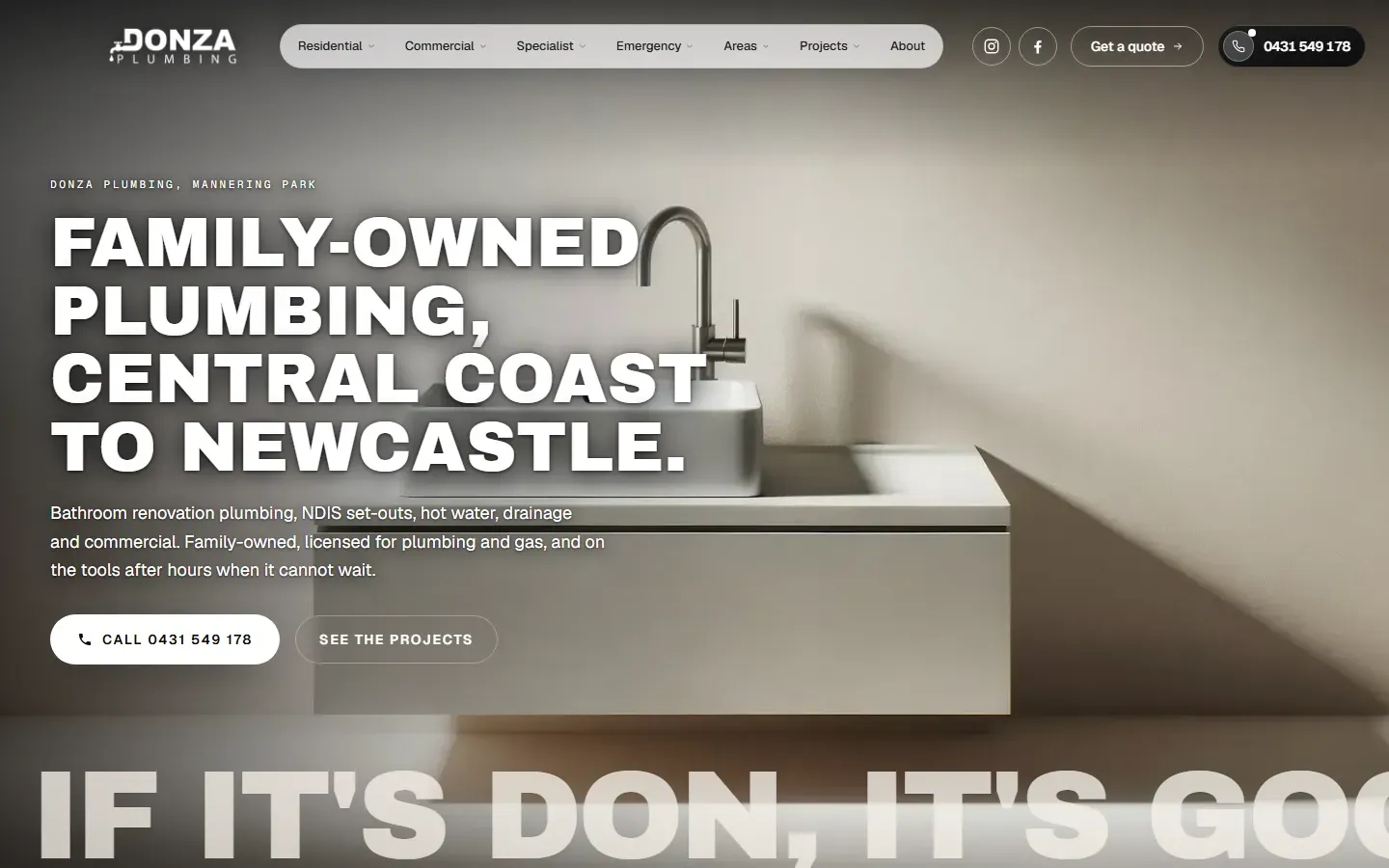
On Donza Plumbing’s site that came to eight project pages and seven guides at launch. On Probuild Construction Co’s, it was four project pages from real jobs and three guides. Leave out articles about work the business does not do, pages written around a keyword rather than a question, and text copied from a supplier.
What to measure
Each month, in one place
- Phone calls from the website and the profile
- Form enquiries
- Where each won job came from
- The cost of each won job on any paid channel
- Search Console: the searches that reached the site
- Business Profile numbers: calls, direction requests, website clicks
A channel that cannot be measured cannot be judged. The sum for a paid channel is set out in is hipages worth it, and it works the same way for ads.
What to skip
Leave these alone
- Paid, swapped or made-up reviews.
- Suburb pages for places you have never worked.
- Services and suburbs added to the business name on the profile. It breaks Google's guidelines and can get the profile suspended.
- Bought links.
- A long contract on any paid channel before you have three months of your own numbers.
- Anyone selling a guaranteed position on Google.
If the profile has already been suspended, the steps are in Google Business Profile suspended. When a suburb does earn its own page is covered in service pages versus suburb pages, and the 30-point local SEO checklist lists what to check on the site itself.
Where Kovus stands
Kovus builds websites and runs local SEO for trades, so it has an interest in the owned side of this list. Builds cost A$500 to A$1,000. The optional SEO plan is from A$197 a month, month-to-month with no minimum term. Google decides rankings, and they are not guaranteed.
Frequently asked questions
What is the best marketing for tradies?
Start with the things that are free and that you keep: a complete Google Business Profile and a habit of asking every customer for a Google review. Then a website you own, with a page for each real service. Paid channels such as lead platforms and Google Ads come after that, once calls and enquiries are being tracked.
How much should a tradie spend on marketing?
There is no fixed figure that suits every trade. The Google Business Profile, reviews and basic directory listings cost nothing. Decide any paid spend by working out what each won job costs on that channel and holding it against the profit in the job.
Does a tradie need a website if they already have Facebook or Instagram?
A social page shows recent work to people who already follow it. A website is where the Google Business Profile, the directory listings and search results point back to, and service and suburb pages answer searches a social page does not. They do different jobs.
Are lead sites like hipages worth it?
They can be when work is short and the jobs are large enough to carry the cost of each one won. The contract terms and the cost per won job decide it, and both are covered in the Kovus guide to whether hipages is worth it.
Is Google Ads worth it for a trade business?
It can bring enquiries while the budget runs, and it stops when the budget stops. It is only worth judging once calls and form enquiries are tracked, so the cost of each won job can be seen.
Where should tradies advertise?
Start with the free places that stay with the business: a Google Business Profile, a website it owns and basic listings on Bing Places, Hotfrog and Localsearch. Paid options come after that: lead platforms such as hipages, ServiceSeeking and Airtasker, and Google Ads. Judge each paid option on what each won job costs, which needs calls and enquiries tracked first.
What is the app for tradies?
There is no single one. Lead platforms such as hipages, ServiceSeeking and Airtasker each have an app for finding work. Job management apps such as ServiceM8, Tradify and Fergus handle quotes, scheduling and invoicing. The Google Business Profile is managed from Google Search and the Google Maps app, and it is the free one to set up first for marketing.
How long does marketing take to work?
It depends on the trade, the area and the starting point. A new Business Profile and a new website both take time to be picked up, and Google decides where they appear. Measure against your own baseline month by month and do not rely on a promised date.