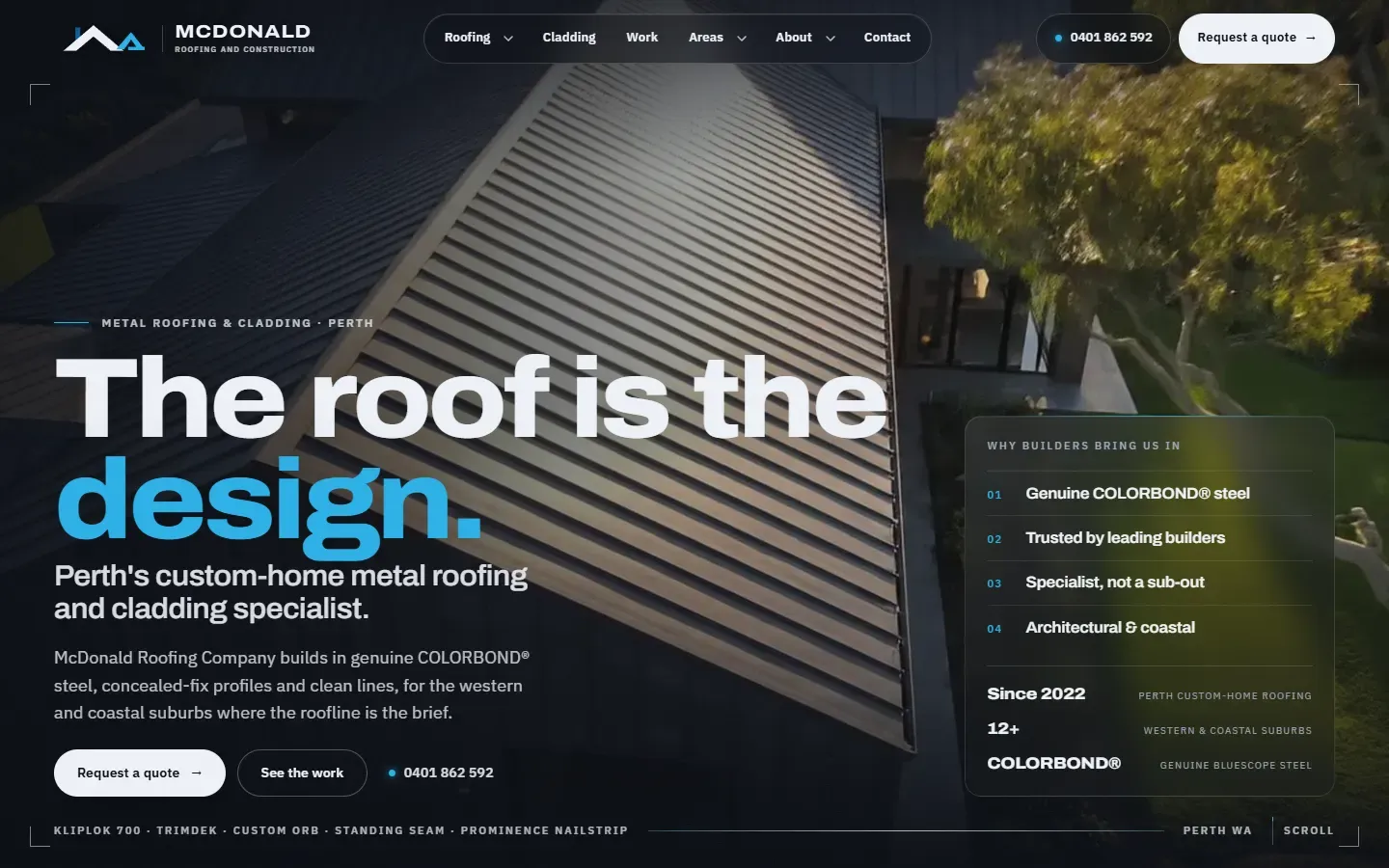
Ten roofing website design examples, taken from two roofing sites that are live now. Each one has a screenshot, what is on the screen and why a roofer’s customer needs it.
I built both sites, so I can say why each piece is there. The screenshots come from the live sites in October 2026, some on a desktop screen and some on a phone.
Metal roofing and cladding
McDonald Roofing Company
Based in Wangara, Perth. COLORBOND roofing and wall cladding for custom homes. mcdonaldroofingco.com.au, and the McDonald Roofing Company case study.
Roof tile
Mandurah Roofing Services
Based in Mandurah, WA. Tile repairs, ridge capping, valleys, restorations and new tile roofs. mandurahroofingservices.com.au, and the Mandurah Roofing Services case study.
If you would rather hand the build over, I do roofing website design for roofing businesses, for A$500 to A$1,000 and quoted in writing. It is the roofing side of the websites for tradies Kovus builds, and the monthly search work after launch is SEO for roofers.
The first screen: the trade, the area and the phone
1. A headline that names the trade and the town
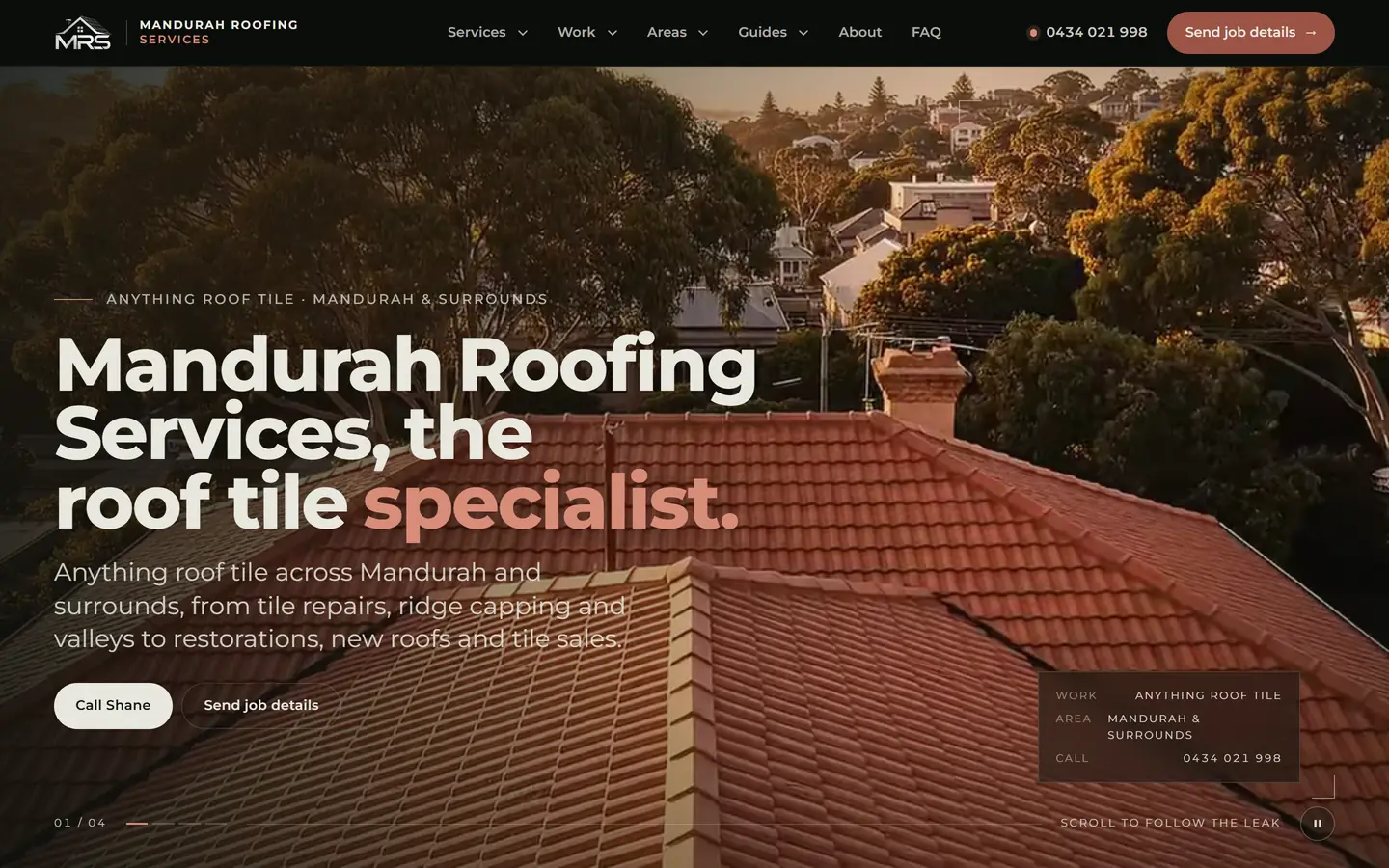
The first screen says three things before anyone scrolls: the trade (roof tile), the place (Mandurah and surrounds) and how to reach Shane. The line under the headline lists the work, from tile repairs, ridge capping and valleys to restorations, new roofs and tile sales. The phone number is in the header and again in the small panel at the bottom right.
Someone with a stain on the ceiling is deciding between a few roofers. They need to see that this one does tile roofs and works in their area, or they go back to the search results.
2. Proof beside the headline
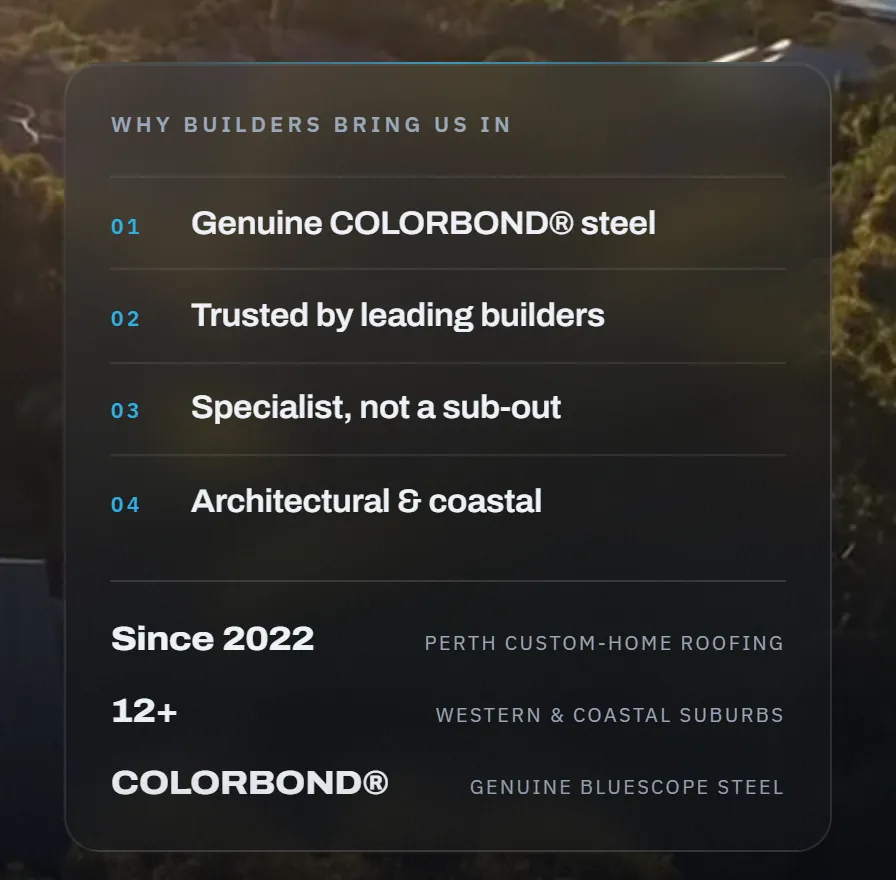
This panel sits on the first screen of the McDonald Roofing Company homepage, to the right of the headline shown at the top of this guide. It gives four reasons a builder brings the crew in, then three facts: trading since 2022, 12+ western and coastal suburbs, and genuine COLORBOND steel from BlueScope.
A custom-home builder choosing a roofing contractor wants the material and the kind of work before the phone number. With the panel beside the offer, nobody has to hunt for an About page to learn it.
3. A phone number that stays on screen
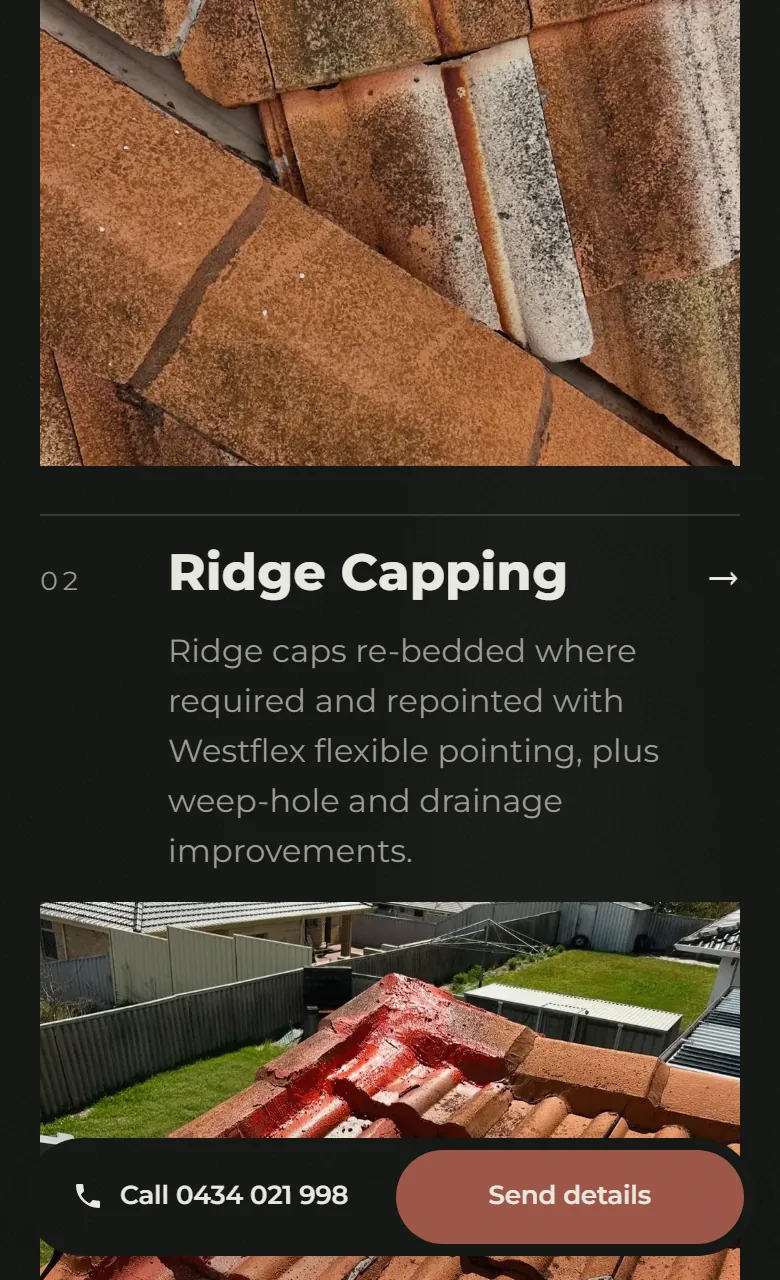
On a phone, the Mandurah Roofing Services site keeps a bar fixed to the bottom of the screen as you scroll: the number on the left and a Send details button on the right. This capture is partway down the services list and the bar is there. A homeowner reading about ridge capping does not have to scroll back to the top to ring.
Proof a customer can check
4. Named builders in place of star ratings
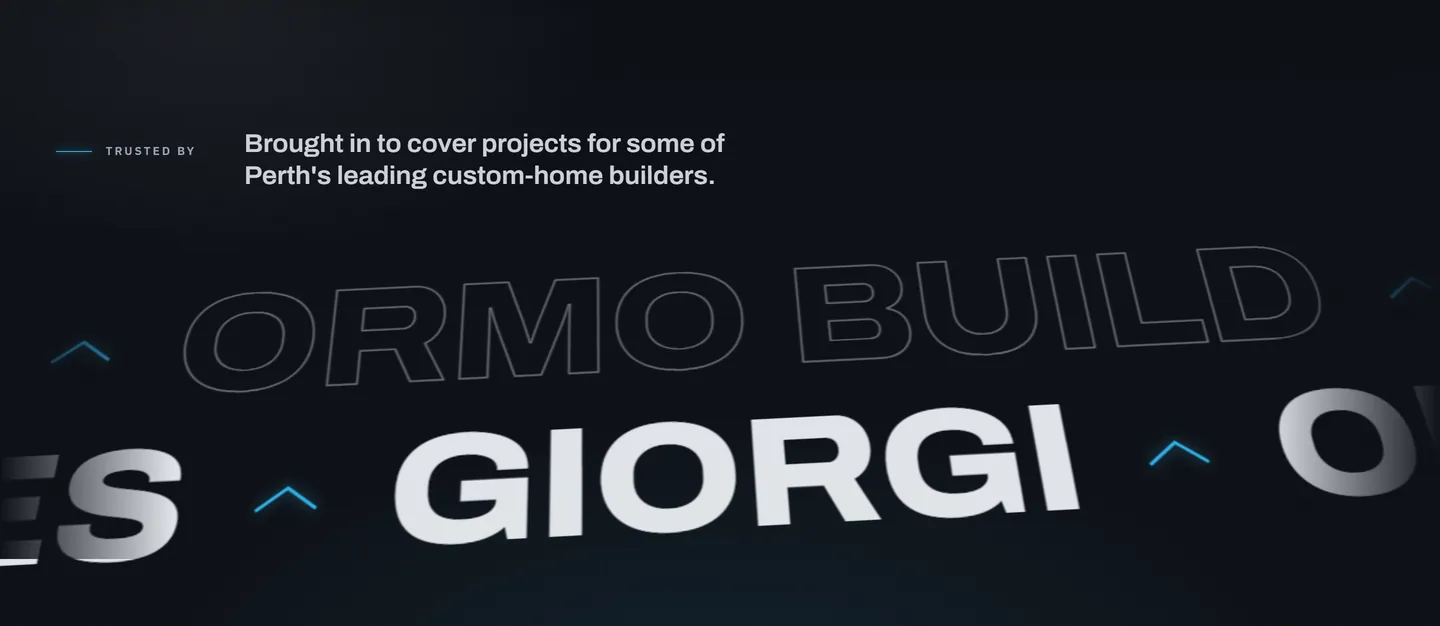
Under the hero, a band reads “Brought in to cover projects for some of Perth’s leading custom-home builders”, and the builders’ names move across it. Giorgi and ORMO Build are on screen in this capture. Distinctive Homes WA and Imperial Building Services follow.
McDonald Roofing Company had no public Google reviews to lean on when the site was built. So the site leads with something a builder can check: who else hires this crew. If you have reviews, show them. If you do not, name the proof you do have and leave the stars off.
5. Finished roofs labelled with the suburb
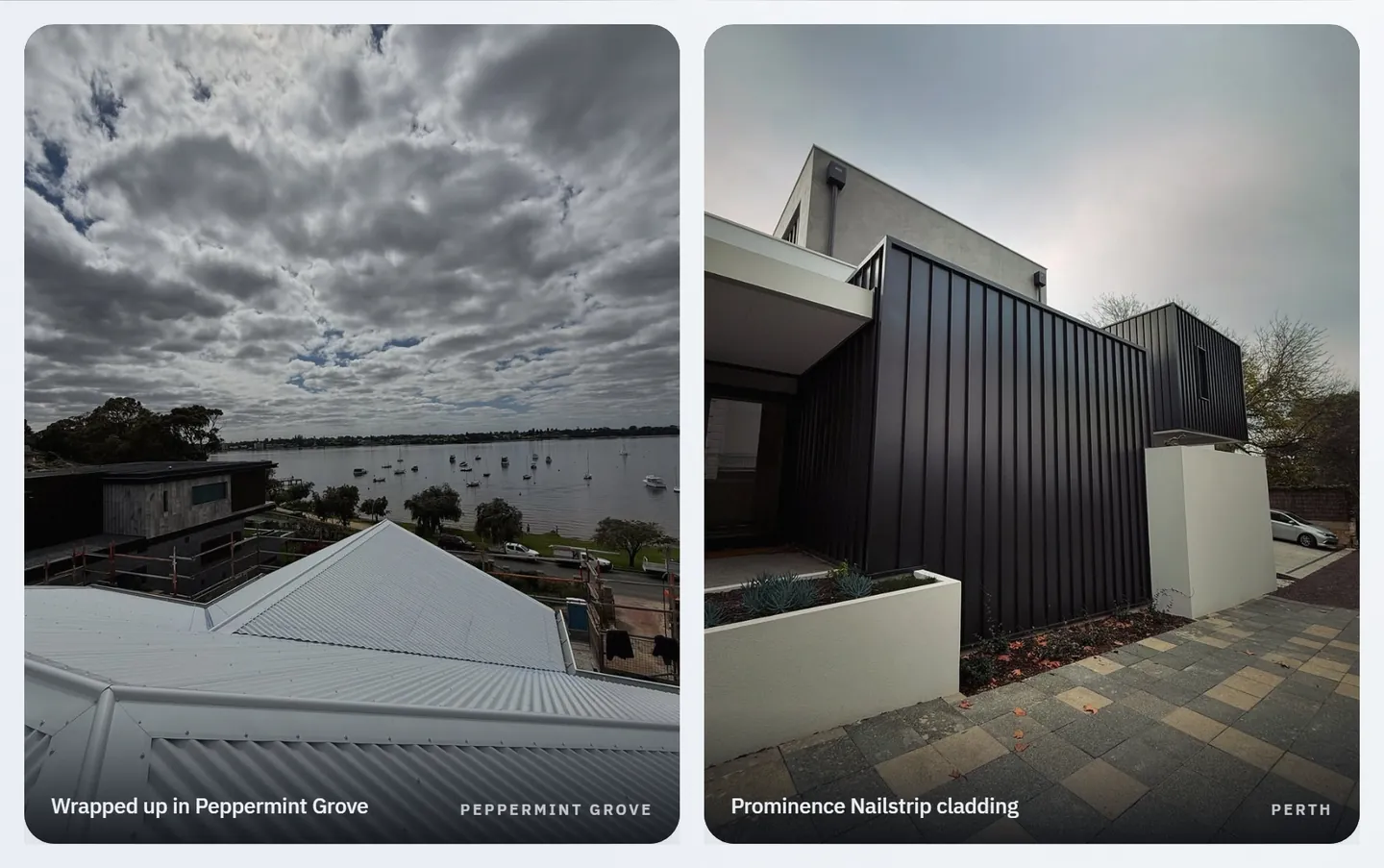
The photos on the work page each carry a caption and a place. These two read “Wrapped up in Peppermint Grove” and “Prominence Nailstrip cladding”, tagged Peppermint Grove and Perth. The portfolio is 19 of the crew’s own photos, taken from its Instagram.
A caption with a suburb does two things. The customer sees a roof near them, and it is plain the photo came from a job the crew did. A stock photo of a roof under a blue sky can do neither.
6. Job stories that link back to the original post
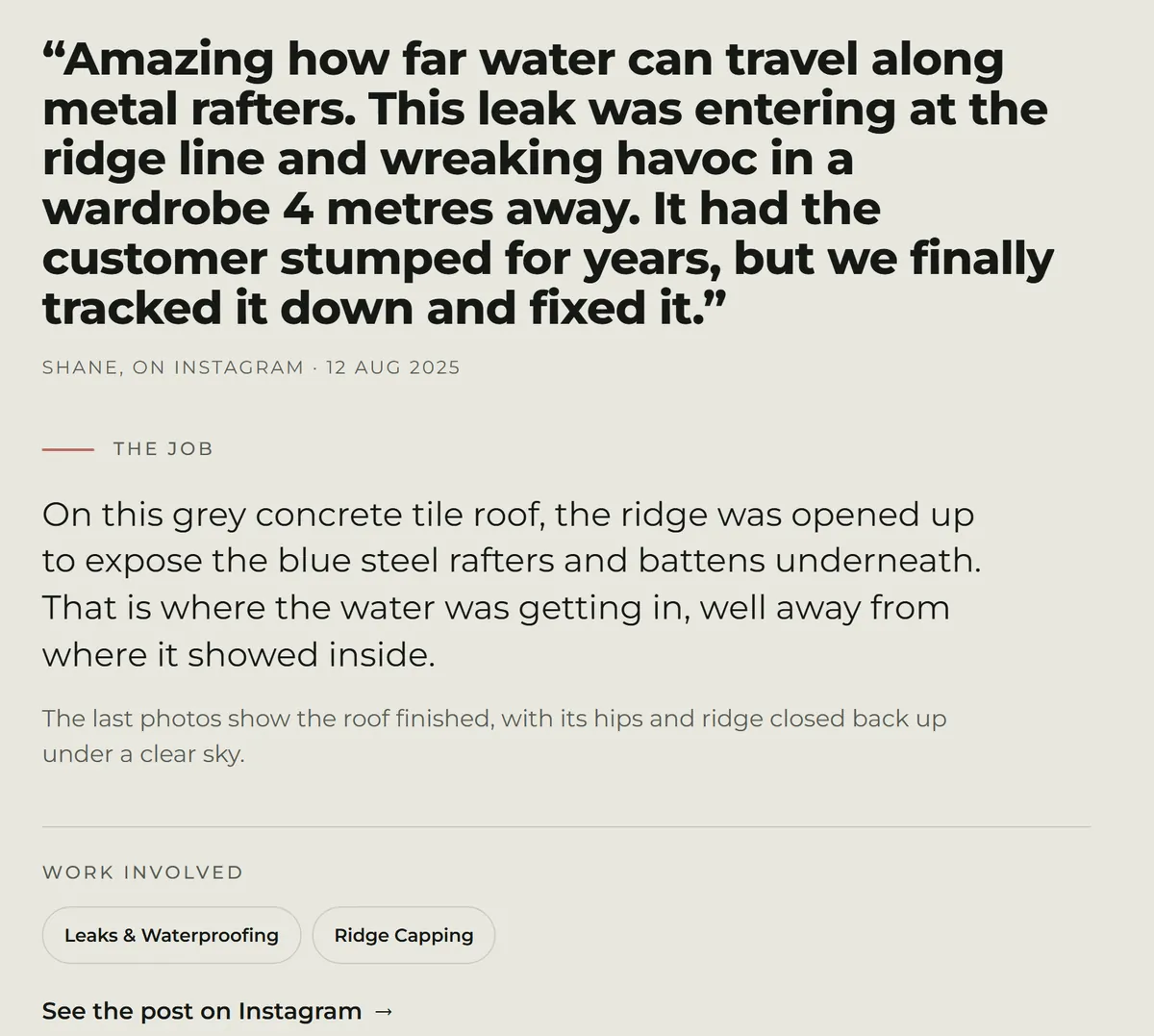
This is one of eleven job stories on the Mandurah Roofing Services site. It opens with Shane’s own words from his post of 12 August 2025: a leak that came in at the ridge line and turned up in a wardrobe four metres away. Under that it says what was done on the roof, tags the two services involved and links to the post on Instagram.
A customer can click through and see that the job happened. That does more than anything a web designer could write about quality.
The job, the price and the area
7. A page for each kind of job
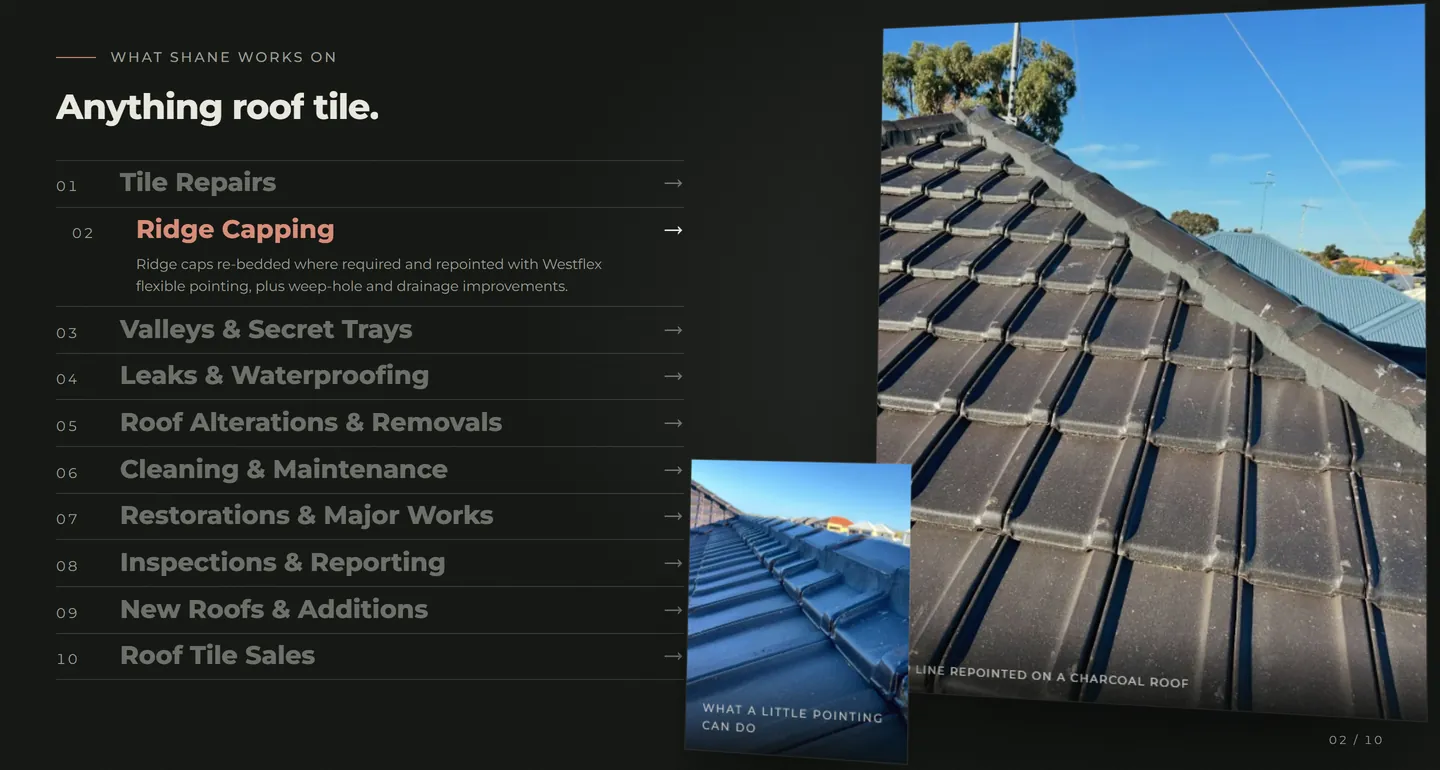
The homepage lists ten jobs under “Anything roof tile”, and each one has its own page. Ridge Capping is open in this capture, with one sentence on what the work involves and two photos of it. Eight of the ten headings are the ones Shane already used for his work.
People search for the problem they have, such as a ridge that needs repointing or a valley that leaks. A page for each job gives each of those searches somewhere to land.
The same goes for the questions people ask before they ring. Mandurah Roofing Services has five guides, from a roof leak after rain to repointing versus rebedding. For a metal roofing business the questions change: what a re-roof costs, whether going from tile to Colorbond is worth it, and what to do after storm damage before the insurance assessor comes.
8. The product explained in your own words
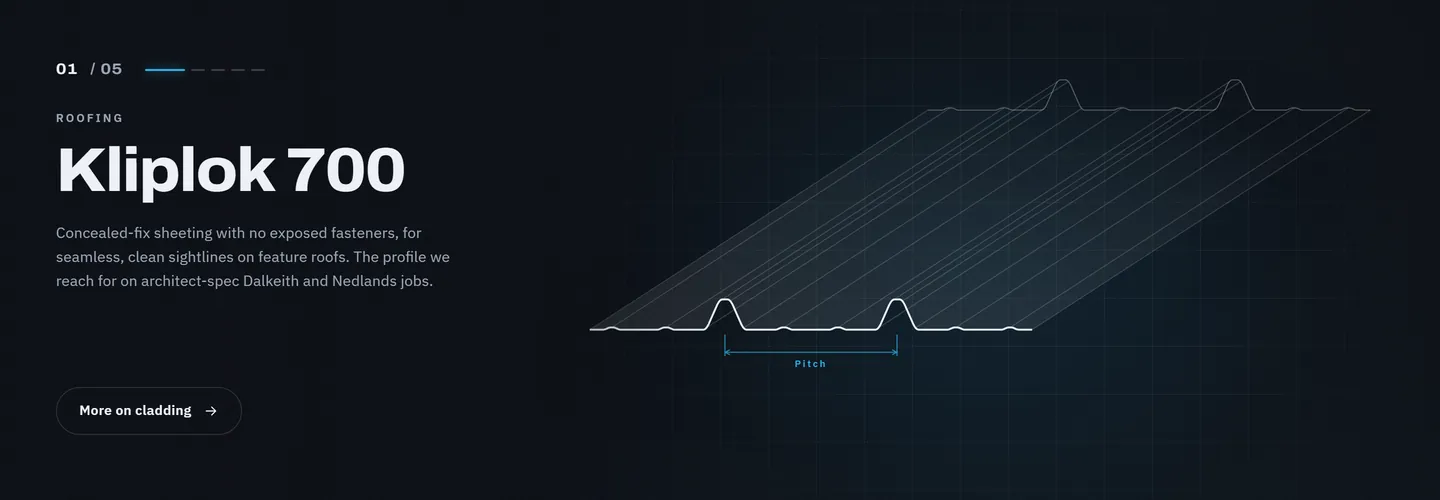
The McDonald Roofing Company homepage has a sheet of five roofing and cladding profiles. This is the first, Kliplok 700, with a drawing of the profile and a short note: concealed-fix sheeting with no exposed fasteners, and the profile the crew reaches for on architect-specified jobs in Dalkeith and Nedlands.
A homeowner who has heard the word Kliplok from their builder can see what it is and why this roofer picks it. Explaining the product in the crew’s own words shows the crew knows it.
9. A price page that explains the price and says what to send
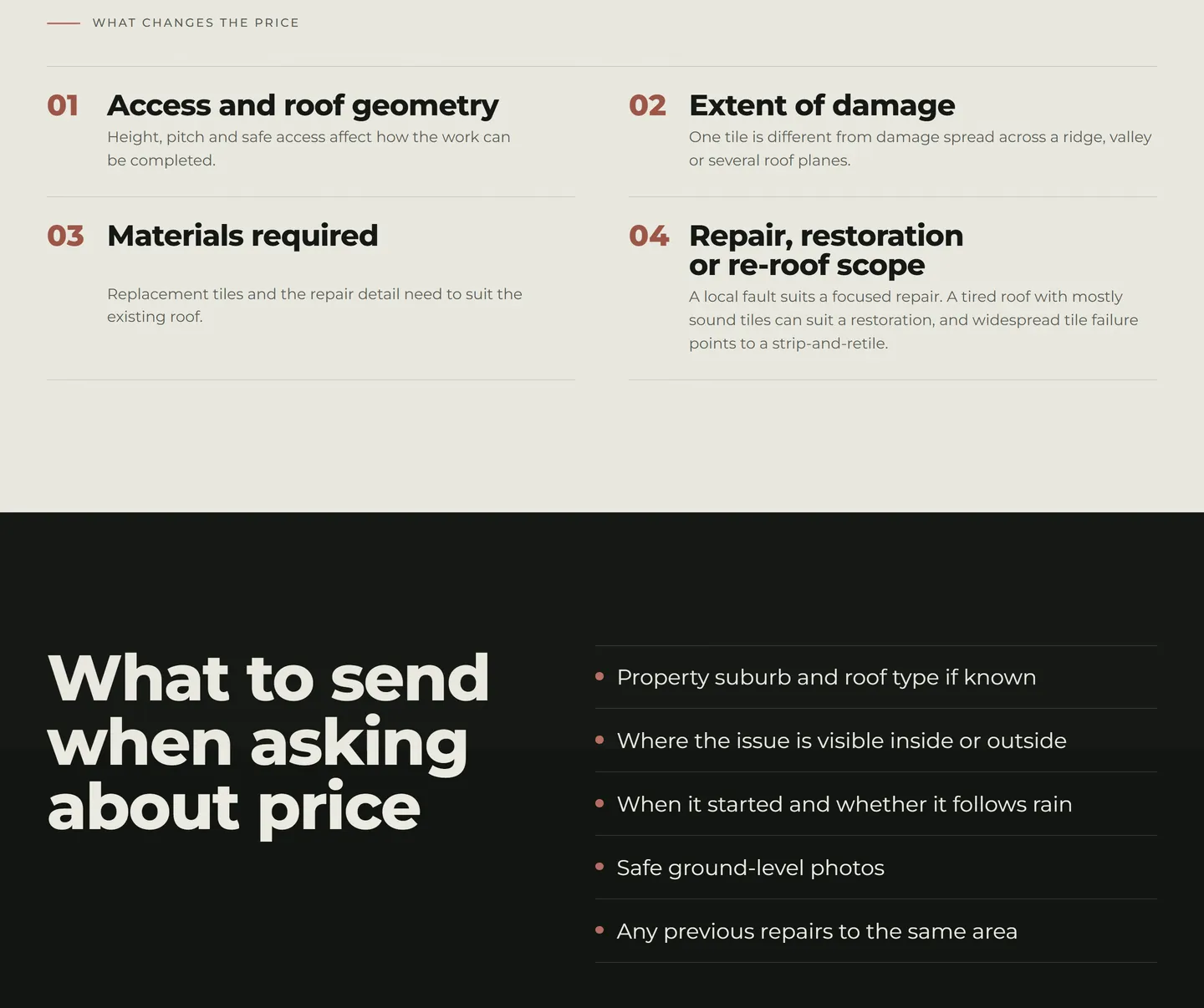
There is no price list on this pricing page. It names four things that change the price: access and roof geometry, the extent of the damage, the materials, and whether the job is a repair, a restoration or a re-roof. Then it lists what to send when asking: the suburb and roof type, where the problem shows, when it started, photos taken safely from the ground and any earlier repairs.
A customer who wanted a number still leaves with something useful, and Shane gets an enquiry he can price. If your work can carry a “from” price, publish it. If it cannot, a page like this is better than a quote form with nothing around it.
10. A map and a list of the suburbs you cover
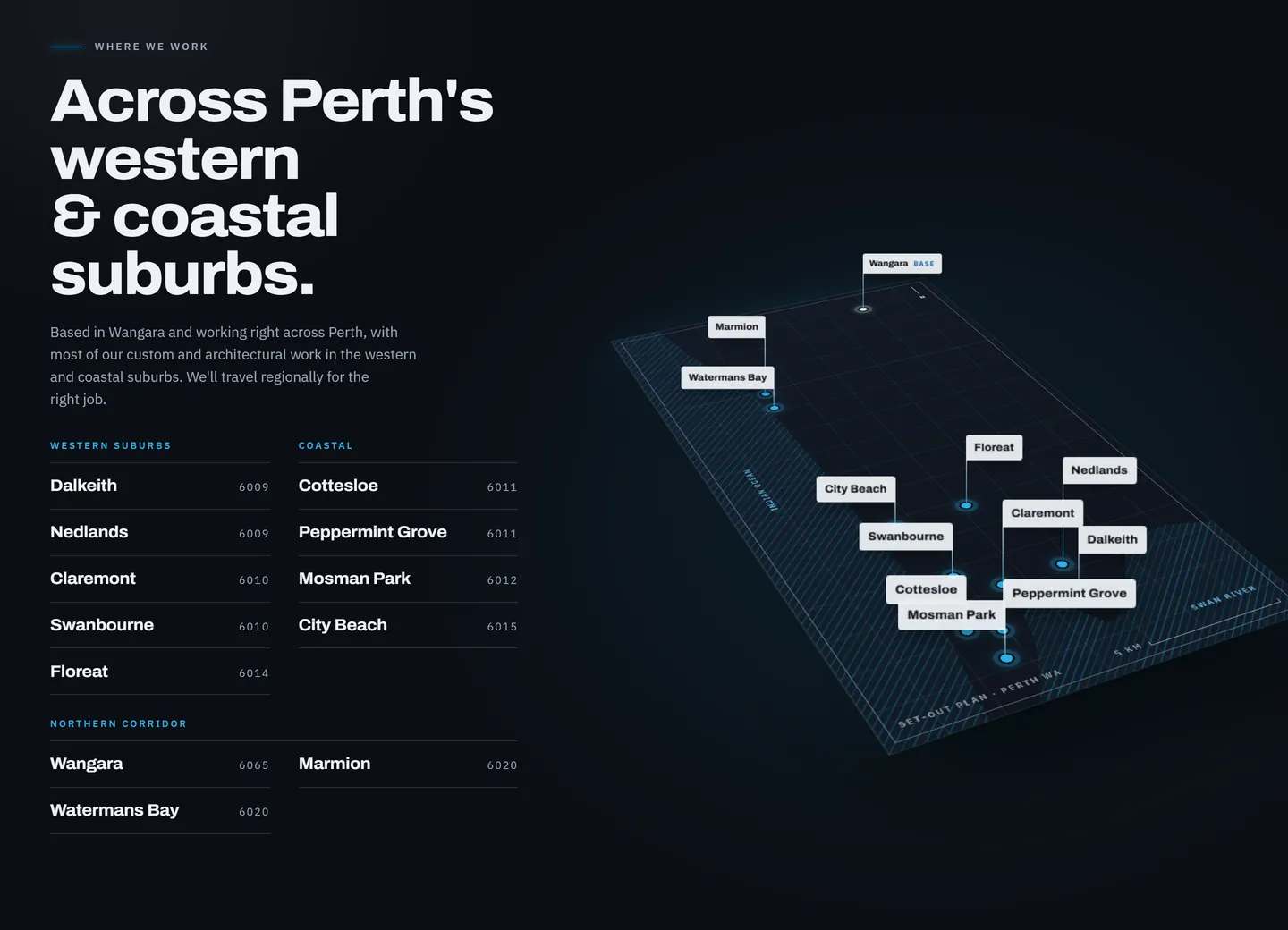
Twelve suburbs are listed with their postcodes in three groups: western suburbs, coastal and northern corridor. Beside the list, a drawn plan has a pin on each one, with Wangara marked as the base. Each of the twelve has its own page on the site.
A customer checks one thing here: do you come to me? A named suburb with a postcode answers that faster than “servicing the Perth metro area”. A suburb page is worth having when it says something true about that suburb, such as the roof stock (tile estates, older metal, heritage homes) and a job you did there.
What the screenshots do not show
Four things sit under these ten and do not photograph well.
- Structured data. Both sites carry structured data that marks them as a roofing contractor and a local business, with the questions marked up too, so a search engine reads the same name, trade and area a customer does. Whether a search engine or an AI tool mentions a business is up to that platform.
- The trust details. The ABN, public liability cover, a written workmanship warranty and, where the work calls for it, the asbestos ticket. Publish the ones you hold near the first enquiry button, not only in the footer. Never publish one you do not hold.
- Speed on a phone. Short forms, and pages that stay quick on mobile data.
- Tracking. Know which page each call and form came from. Without that you cannot tell which of these ten is earning its place.
Where roofing search starts now
Three published studies explain why the first screen and the proof matter. Each is linked to its source.
The Whitespark and BrightLocal figures are from the United States. Read all three as direction, not as a forecast for a roofer in your suburb.
Why a roofing site ends up competing on price
When the ten things above are missing, a customer has only the price left to compare. These are the five gaps I look for first on a roofing site.
- A stock-photo hero. A generic blue-sky roof reads as “this might not even be their work”.
- The same template as the next roofer. Nothing on the page says specialist, so the homeowner shops on price.
- A quote form and nothing else on price. Someone searching “tile to Colorbond cost” gets no answer and leaves.
- A buried or missing trust stack. The ABN, public liability, the written workmanship warranty and the asbestos ticket are in the footer or not on the page at all.
- No structured data. A search engine or an AI tool can only describe a business from facts it can read.
Borrow these for your own roofing site
The ten, as a checklist
- The headline names the trade and the town
- Proof sits beside the headline
- The phone number stays on screen on a phone
- Builders or customers are named, with their agreement
- Every photo has a caption and a suburb
- Job stories link to the original post
- Each kind of job has its own page
- The product is explained in your own words
- The price page explains the price
- The suburbs you cover are listed and mapped
The page set and the search work behind a build like these are on the roofing website design page and the SEO for roofers page. The full builds are written up in the McDonald Roofing Company case study and the Mandurah Roofing Services case study.
For other trades, the same exercise is done for two plumbing sites in plumber website design examples, and six builds across four trades and a greengrocer are taken apart in tradie website examples.
Want these ten on your own site?
Send the jobs you do most, the suburbs you cover and a few photos of finished roofs. I’ll tell you which of the ten the site needs first and quote the build in writing.
Frequently asked questions
What should a roofing website include?
A first screen that names the trade and the area, a phone number that stays in reach on a phone, proof a customer can check, a page for each kind of job, photos of your own roofs labelled with the suburb, a clear answer on price and a list of the suburbs you cover. Each of the ten examples in this guide shows one of those on a live roofing site.
How much does a roofing website cost?
A Kovus build costs A$500 to A$1,000, quoted in writing for the pages the business needs. Hosting and edits are optional at A$97 a month, and ongoing SEO is optional from A$197 a month. Both are month-to-month.
Should a roofing website show prices?
If the work can carry a from price, publish it. If every job is priced on inspection, say so and explain what changes the price and what to send for a quote. One of the sites in this guide does exactly that on its pricing page, with no price range on it.
What can a roofer show if the business has no Google reviews yet?
Proof that can be checked another way: the builders the crew works for, named with their agreement, finished roofs labelled with the suburb, job write-ups that link to the original post, the ABN and the year the business started. Do not show star ratings the business does not have.
Are the examples in this guide real roofing websites?
Yes. The ten numbered examples come from two live Australian roofing websites that Kovus built, and each screenshot was taken from the live site.